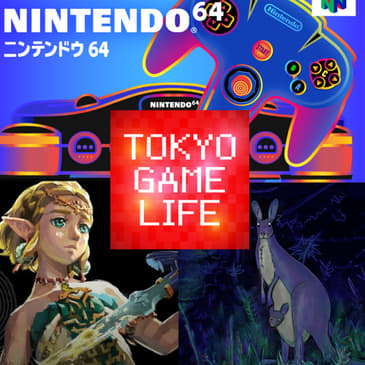
Danny Bivens from The Famicast returns to chat about the Nintendo 64 in Japan! We unravel the Japanese side of Nintendo’s first 3D console, highlight our favorite Japan-only games, chronicle the 64DD, and of course tell you the greatest N64 color you may have missed! Plus we venture back to Hyrule to chat about The Legend of Zelda: Tears of the Kingdom’s one year anniversary. I also look at the indie hit Animal Well and dig into some of the biggest Nintendo news of the decade!
Follow our guest!
The Famicast: https://www.thefamicast.com/
Twitter: https://twitter.com/dannybiv
Ultimate Nintendo: Guide to the N64 Library: https://the-punk-effect.myshopify.com/products/ultimate-nintendo-guide-to-the-n64-library-hardcover
(0:00) - Intro
Feature
(1:06) - Nintendo 64 in Japan w/ Danny Bivens
Games
(31:30) - Zelda Tears of the Kingdom One Year Later
(57:49) - Animal Well
News
(1:04:00) - Nintendo Switch successor, financial news
(1:10:23) - Nintendo World Championships: NES Edition
(1:11:14) - More Zelda merch
(1:12:13) - New Game Boy NSO titles
(1:13:02) - Nintendo ending X/Twitter integration
(1:13:57) - Dragon Quest x Graniph
(1:14:15) - Closing
Social media:
Twitter: https://twitter.com/TokyoGameLife
Instagram: https://www.instagram.com/tokyogamelife/
YouTube: https://www.youtube.com/@tokyogamelife
Threads: https://www.threads.net/@tokyogamelife
Bluesky: https://bsky.app/profile/tokyogamelife.bsky.social
Website: https://tokyogamelife.com/
Like and subscribe on your favorite podcast app!
Send questions and suggestions to: tokyogamelife@gmail.com
[00:00:01] Welcome to Tokyo Game Life, a Tokyo-based video game podcast focusing on Nintendo and
[00:00:13] gaming culture in Japan's capital. Your host Mono here to bring you a slice of gaming life
[00:00:18] from Tokyo. Today, returning guest Danny Bivens from the Famicast is back to chat about Nintendo
[00:00:24] 64 in Japan. You might know about its history in the West, but what about the Japanese side?
[00:00:30] We dig into Japan only in 64 games, the 64DD, exclusive hardware colors, and everything else
[00:00:36] under the sun as we explore the console's legacy in Japan. Danny also stays on as we chat about
[00:00:42] The Legend of Zelda Tears of the Kingdom one year later. Is it still good? Yes, but we get into a
[00:00:48] lot more than just that. And I take a look at Animal Well, the only metroidvania I know with
[00:00:53] a slinky. Let's start with the feature on the Nintendo 64 in Japan with Danny Bivens.
[00:00:59] Today's feature is about the Nintendo 64 in Japan. Nintendo followed up the incredibly popular
[00:01:11] Super Famicom with their first ever 3D console, and while you might know the story of how it
[00:01:15] fared in the West, today we're digging into the Nintendo 64's legacy in Japan. Joining me
[00:01:20] to chat all about it is a special guest. So guest, please introduce yourself. Hello,
[00:01:25] my name is Danny. I'm from a podcast website, YouTube channel called Famicast.
[00:01:29] Thanks for having me on today. Yes, welcome back to the podcast. Before we get into the unique
[00:01:35] elements of Nintendo 64 in Japan, I want to know a bit about your N64 history. Were you an N64
[00:01:41] kid? Absolutely. So my brothers and I, we got an N64 for Christmas in 1996. We got Mario,
[00:01:51] Super Mario 64 and Pilot Link 64. Before that, one of my friends, he got it. He must have
[00:01:57] got that launch because I remember playing it in like September, October of that year
[00:02:01] and just being absolutely blown away. Being a Nintendo fan anyways, it was just so cool to see
[00:02:08] Mario in 3D, just everything in 3D. It's just something that just blew my mind.
[00:02:12] Yeah, for me, Nintendo 64 wasn't my first console I owned, but that era was when I
[00:02:16] started to become cognizant of the gaming industry. Me too. I started to learn who
[00:02:20] developers were, when games were coming out, and this is when I really started to read gaming
[00:02:24] magazines and so forth. This is also when I learned about sales tax because I saved up
[00:02:29] $150 to buy an N64, but then I realized, oh, there's tax. It's actually more expensive.
[00:02:36] Fortunately, my parents spotted me like that extra $10.
[00:02:40] Ironically, I bought it in summer of 97, but I didn't own a game until Christmas of 97
[00:02:46] because I didn't have any money. So I just rented Super Mario 64 over and over again
[00:02:51] and things like that. Eventually, I did own games. I do have a ton of nostalgia for the Nintendo 64
[00:02:57] and I am a fan, so this will not be an N64 hate fest, but we will get into both the positive
[00:03:02] and the negative elements of Nintendo 64's lifespan in Japan. Let's start at square one,
[00:03:08] the launch. Nintendo 64 hit Japanese stores on June 23rd, 1996, so a few months before the
[00:03:14] U.S. date. Despite launching earlier in Japan, it actually had more launch titles than the U.S.
[00:03:20] The states only got Super Mario 64 and Pilot Wing 64, like you said, but Japan got one more game.
[00:03:25] Danny, do you have any clue on what that third game was?
[00:03:28] I think I do. Isn't it Morita Shogi?
[00:03:32] You are close. It is a Shogi game, but it's Saikyo Habu Shogi,
[00:03:37] which features Yoshiharu Habu on the cover who was a Shogi All-Star at the time.
[00:03:42] And it is actually the first game to use the controller pack. So is this game in your
[00:03:46] N64 collection? I'm going to turn around and look at my shelf.
[00:03:50] No, it is not. Yeah, that Morita Shogi, one of the other Shogi games of a handful that are out
[00:03:58] there. It's the only one that I have for a different reason. It's a very interesting
[00:04:02] cart. Maybe I'll touch on that in a little bit, but yeah, I don't have this one though.
[00:04:07] Yeah, one of the main reasons why I wanted to have you on is that you have a pretty
[00:04:09] impressive N64 collection, and I really want to dig into, I think, what is a fun element of
[00:04:15] Nintendo 64's life in Japan. Japan is exclusive to Nintendo 64 hardware and software.
[00:04:21] So let's start with the hardware. What would you say are some of the standout,
[00:04:24] Japan-only pieces of N64 hardware? I think the most obvious one is the Nintendo 64
[00:04:30] disc drive, 64DD. This is something that was going to be, at least at one point,
[00:04:35] going to be an integral part of the system. And if you don't know, this is a drive that
[00:04:40] attached to the bottom of the 64. If you look on the bottom of your 64, there's an EXD
[00:04:44] port that you can open up on most of the 64. Some of the models don't have that port,
[00:04:49] but a lot of them do. The idea was this thing connects to it. The carts, at one point they
[00:04:54] thought the cart size can't get any bigger. So we got to find a way to expand this cheaper.
[00:04:59] And not only that, you can have rewritable data and stuff like that on these discs
[00:05:04] and just basically more room to put stuff. So yeah, that's probably the most unique
[00:05:10] thing that came out here in Japan. Yeah, I think that's definitely the big one in terms of what's
[00:05:15] so different about Japanese N64s compared to the Western N64s. It is one of the more
[00:05:20] interesting pieces of hardware in Nintendo's history in general. And it was actually
[00:05:24] announced before the N64 came out, but it was frequently delayed. But Miyamoto and Itoi said
[00:05:30] that a lot of the plans they had for N64 games were based on the idea that the disc
[00:05:34] drive would be available day one. Like what you said, whatever couldn't be handled
[00:05:38] via the cart would be handled with the disc drive. And 60 games were announced,
[00:05:43] but eventually only 10 were released, with the rest moving to either just the cart
[00:05:47] or other platforms entirely. I think maybe the most famous example is Dragon Quest 7,
[00:05:52] which many assumed would come to the DD on its announcement, but instead it hit the PlayStation.
[00:05:57] So I want to get into some of the N64DD games. Since you actually own a N64DD,
[00:06:03] do you have any game recommendations or what are some of these standout titles for the DD?
[00:06:07] The best thing for the 64DD is the F-Zero X expansion kit. This game works in, you need
[00:06:14] to have a copy of F-Zero X and then you have a copy of this disc. And when they're both plugged
[00:06:19] into your system, you could have access to a couple of different things. The biggest deal here
[00:06:24] is that, well, you do get a couple of different courses and you actually have the ability
[00:06:28] to create your own courses too. It's a pretty robust editor as well. Like it was really cool
[00:06:35] to see that they could do this back in the N64 days. And yeah, it was really fun. Definitely
[00:06:41] the best part of the N64DD library. I mean, the only good thing about this is, you know,
[00:06:47] if you had a GameCube, basically a lot of those features that were in this expansion
[00:06:51] kit moved over to F-Zero GX on GameCube and it looked better too. It is interesting
[00:06:56] this is that a lot of the ideas that they had for the DD, it took kind of years for it
[00:07:00] to be realized. So it was kind of ahead of its time in a way. Yeah, I mean, I remember
[00:07:05] just thinking of all the possibilities like that cart and disc combo thing. That was like
[00:07:09] one idea of like how they can expand games, you know, other ways they can do it too is
[00:07:13] just with disc only games and then other things too, like plugging in Gameboys and stuff
[00:07:19] like that to the N64 to have some kind of functionality like that type of stuff. Some
[00:07:23] of this stuff, like some of this type of functionality is available. Like for example,
[00:07:28] there's the Mario Artist series of games that came out in the system, four different games,
[00:07:31] a paint studio, a talent studio, a polygon creator and oh my gosh, but there are four
[00:07:40] of them. And basically the idea here is as a creative studio type of a thing that you can
[00:07:44] create a lot of different things. Some of them you can hook up like your digital camera,
[00:07:48] there's like microphone stuff you can hook up Gameboy transfer pack for the 64 and do
[00:07:54] stuff with the Gameboy camera. Like there's a lot of really crazy stuff that you could do
[00:07:58] with some of this stuff if you had all the necessary parts.
[00:08:02] Right. The communication kit is the fourth Mario Artist. Not a really catchy name, but
[00:08:08] yeah, right. So yeah, it comes with a mouse. There's a special Nintendo 64 mouse with the
[00:08:13] N64 logo on it. Which do you think is better? The Super Famicom mouse or the
[00:08:17] Nintendo 64 mouse? I think the N64 mouse is more
[00:08:21] modern, if you will. I got some good memories with that old Super Nintendo mouse too.
[00:08:26] Yes. So going back to exclusive hardware. So we talked about the mouse. There are a lot
[00:08:32] of other things, especially the, I guess I would say maybe the colors are actually quite
[00:08:36] unique for Japan. Do you have any favorite Japan exclusive N64 hardware color?
[00:08:42] Yeah, I have. It's a two-tone console. Like the top of it is kind of like a
[00:08:47] translucent orange and then the bottom is black. And I believe that's a Dai, Dai limited
[00:08:54] edition or something like that. Yes. And I had just picked it up in 2010.
[00:08:59] It was a used shop for like 3000 yen. So at the time that was like 30 bucks.
[00:09:03] Yeah. It looks really awesome. It is like a Halloweeny type of N64 where it is like
[00:09:08] the classic skeleton orange on the top and on the bottom is just black.
[00:09:12] And I hear this being called the Daihawks N64 because I think the colors are supposed
[00:09:17] to be based off the Daihawks. Before the Daihawks became the Softbank
[00:09:21] Hawks, Dai was their team and I believe that the colors were instead of yellow and black,
[00:09:27] it was orange and black. So yeah, good call. Is this like a really rare N64? How much would
[00:09:32] you think would go for today? I think it's quite rare now. At the time
[00:09:36] I had no idea. Obviously I just picked it up because it's just, well, I just wanted a N64.
[00:09:40] I just moved back here to Japan, but I think they're quite pricey these days,
[00:09:43] especially if you want to get one with a box or something like that.
[00:09:46] I'm not quite sure how much they go for, probably like $100 or more or something like that. That's
[00:09:50] just off the top of my head. I was looking at something about that months ago, but it's kind
[00:09:54] of left me at this point. Yeah. Anecdotally, I did see one in box
[00:09:58] at Beep in Akihabara and it was about $300. And this was maybe two or so years ago. So
[00:10:03] I think it's probably even more expensive. Oh yeah. I can see that.
[00:10:07] But I did see on your Twitter, you posted a picture of this and I thought, whoa,
[00:10:10] that looks awesome in person. So I'm very jealous of your Daihawks N64.
[00:10:15] Right place at the right time, man. Yes. The N64 I have in Japan, I have the gold N64,
[00:10:21] which I believe in the West, it was only sold in a bundle maybe with a Star Wars Episode 1 Racer
[00:10:26] or like Toys R Us exclusive or something like that. But in Japan you could just buy a gold
[00:10:30] one and it looks quite awesome. Yeah. I've been tempted to buy that one,
[00:10:34] man. Cause I mean, I had the gold controller in the States. Like I got it from a friend.
[00:10:38] That was like a pre-order bonus with maybe it was with Ocarina of Time or something. And
[00:10:42] I eventually got it from my friend. But I remember seeing pictures of that gold N64.
[00:10:47] I've never seen one in person, but yeah, it looks super sharp.
[00:10:51] Oh yeah. Definitely yes. And I would say, yeah, out of all the Nintendo hardware,
[00:10:56] they're probably just the biggest gap in terms of Japan and the West with the special
[00:11:00] editions and unique colors of the N64. And actually ironically, the West did get some things
[00:11:05] Japan didn't get, which is going to be a trend as we get more into the episode and
[00:11:09] talk about the software. In terms of colors, Japan did not get a lot of the iconic,
[00:11:14] fantastic N64s. There's no jungle green, no ice blue, no fire orange or watermelon red in Japan.
[00:11:22] It did get some sort of other variations. Like there is a translucent blue N64 in Japan,
[00:11:28] but the bottom is clear instead of blue, which is kind of odd that it's like half and
[00:11:34] half. Japan also did not get the Poke Maniac in 64, which was an Australia only special
[00:11:40] Pokemon in 64, which is quite strange. I never heard about this until I did research for this
[00:11:46] episode. And also Japan did not get the North American blue Pikachu in 64. Japan's blue is
[00:11:52] slightly lighter. So it is technically different hardware, but if you just saw the blue Japanese
[00:11:58] N64, you would think, oh, that's the same one as in the West, but they are slightly
[00:12:02] different shades of blue. And Japan also has an orange Pikachu in 64. Do you own any of the
[00:12:08] Pikachu in 64? I do not. I think even when I was shopping around for just consoles,
[00:12:14] like that was a little bit too expensive. I mean, I just got, like I said, I got the
[00:12:17] Daihawks one just on a whim because I just wanted an N64 and I was back here.
[00:12:22] And then maybe in like 2018, I just wanted a boxed N64. This is a general box one.
[00:12:27] And I found one online for cheap and just picked it up. But yeah, I was looking at some of the other
[00:12:33] special ones, but it was kind of expensive. And I was like, I just want to see the basic
[00:12:36] one. I'll get those other ones later. Yeah. Yeah. I'm a big Pokemon fan,
[00:12:40] but even the Pikachu in 64 is a bit too gaudy for even me. It's hard to describe.
[00:12:45] It's not like so kitschy that it's cool. It just looks like kind of like a Fisher
[00:12:49] Price toy. Yeah. Yeah. It's there if you want it. That's the best way to put it.
[00:12:55] So let's get into software. While N64 doesn't have a huge library of games,
[00:12:59] only 198 games came out in Japan. It does have several notable exclusive titles.
[00:13:05] What are some Japan only N64 titles that people should check out?
[00:13:08] There are quite a few that I really like. I mean, one that some people might not realize
[00:13:13] is Animal Crossing actually got its start on the N64. And while I think the version
[00:13:19] that is on the N64, it's a lot less fully featured than the GameCube game. It's still an interesting
[00:13:25] curiosity just to kind of see where the series came from because like I said, there are some
[00:13:30] things in that version of the game that are just completely different than any other version.
[00:13:34] Like for example, the Wishing Well, it's not the Wishing Well, it's a shrine. There are a
[00:13:39] lot of really interesting differences between the versions. Yeah. There are some exclusive
[00:13:44] items that are only in the N64 version. Like it never came out to the GameCube edition and
[00:13:49] some of the holidays are different. And ironically, there's no museum. So Blathers and Co. are not
[00:13:54] in the game. Pretty weird to think about. There's an Animal Crossing game without a museum,
[00:14:00] which is really hard to think about. So yeah, that kind of makes you think
[00:14:03] like what am I collecting all this stuff for? But I mean, if you didn't have that frame
[00:14:07] of reference, it wouldn't have mattered. Are there any other titles that stand out
[00:14:11] for the N64 in Japan? Yeah, absolutely. Believe it or not, too. Some of you guys out there
[00:14:16] may or may not know this. There's a Dance Dance Revolution game on the N64. There's
[00:14:20] a dance mat that you can get as well. This is called Dance Dance Revolution Disney Dancing Museum.
[00:14:26] Yeah, I have this. I found it boxed with the dance mat. Relatively cheap. And yeah,
[00:14:36] the song list is kind of not that great. I guess if you're really into Disney,
[00:14:40] maybe you'll like it. I didn't even recognize like half of the songs, but it was just cool to have
[00:14:44] a DDR game on the system. And you don't have to play with the dance pad. You can just play
[00:14:48] with the controller. I just did that. I got out the dance pad and I was like,
[00:14:52] you know, I don't feel like breaking a sweat. I'm just kind of mashing these buttons here
[00:14:56] and that'd be a lot easier. But yeah, a couple other games that I'm a big fan of as well,
[00:15:01] Virtual Pro Wrestling. There are two Virtual Pro Wrestling titles on the N64 that are Japan
[00:15:07] exclusive. The first one is kind of like a reskin of WCW versus NWO World Tour, which came out
[00:15:15] everywhere, but it's slightly different. Like they added a couple of different features.
[00:15:19] Like for example, in the game after that in the west of WCW, NWO Revenge,
[00:15:25] they added a scoring system and on-screen referees and stuff. They had some of these
[00:15:30] elements in this Japanese version of the game because it came out in between. It's like a
[00:15:34] weird in-between release. So it's kind of like an enhanced version of that game of World Tour
[00:15:39] essentially. But the second one in that lineup of games, Virtual Pro Wrestling 2, that's considered
[00:15:46] to be one of the best wrestling games of all time. That's up for debate. But gameplay wise,
[00:15:52] it's absolutely fantastic. If you liked those, I, you know, grapple based wrestling games from
[00:15:58] the N64. It's something that you should definitely have on your radar if you don't already own
[00:16:03] the thing. For me, in terms of Japan only in 64 games, I always jumped to Rakuga Kids,
[00:16:08] which is a very visually striking 2D fighter from Konami where all the characters look like kids
[00:16:13] drawings. It comes from Rakugaki, which is graffiti, but they aren't really graffiti style.
[00:16:19] They're mostly like crayon kids drawings. This is a title I just really hope that they
[00:16:23] throw on NSO one day out of the blue because it is kind of at least worth playing to check
[00:16:28] out all the really crazy animations. And in terms of sheer quality, like you said,
[00:16:33] I really like Virtual Pro Wrestling 2 from AKI, the developers of No Mercy and all the N64
[00:16:39] wrestling games. It is an amazing time capsule of 90s Japanese wrestling. And
[00:16:45] it's like an alternative version of No Mercy. So you can kind of think of it like that.
[00:16:49] And of course, Animal Crossing, which came out only a few months before the GameCube version
[00:16:54] is just an enhanced port of the N64 version. But there's a bunch of other stuff added to it.
[00:17:00] But it is a really fun. It's like a good collector's piece, I think, even if you don't
[00:17:03] plan on playing it, it's fun to just put on your shelf. It has a really cool looking box.
[00:17:08] And it's just like, okay, this is where it all began, is the N64 version.
[00:17:12] And if you want to get crazy with the two, because there are actually two variants of the
[00:17:15] game, one that comes with the memory card and one that doesn't. But yeah,
[00:17:18] if you want to get crazy with variants, that's where it gets a little bit dangerous.
[00:17:21] If you're rich, then go for it, I guess. And Mono, one interesting thing about
[00:17:25] Rokugakids, actually, it did apparently get a release in Europe.
[00:17:28] S0n3r0p1 Oh, yeah, that's right. I'm very US centric. So I'm thinking, oh,
[00:17:31] in Denver came out. Yeah, that's very strange that why didn't come out in America then?
[00:17:35] What we were missing out. We didn't get Gururin or Rokugakids, what's going on?
[00:17:39] Or Doshin the Giant? Yeah, what's going on? So
[00:17:42] J0n3r0 To be fair, Doshin the Giant is not really a good game. So I don't think
[00:17:45] we're missing out on much. S0n3r0p1
[00:17:48] That's another like just throw it on NSO type of game that I'm really looking forward to.
[00:17:51] They got to put it up there eventually, they're going to run out of games one day.
[00:17:54] Exactly. We'll get Rokugakids before we know it. There's actually quite a lot of
[00:17:58] N64 titles that Japan did not get. It didn't get a lot of hardware that America got. But
[00:18:02] also, there are many games that Japan never got. And I think the most notable ones are
[00:18:06] Pokemon Puzzle League, which was developed by NST, Nintendo Software Technology. But it is
[00:18:13] Intelligent Systems unreleased Penodapon 64. And Dr. Mario 64, which was developed by
[00:18:19] Nintendo R&D1. But that did get a GameCube release. So it is weird that these
[00:18:24] iconic Nintendo franchises, Mario and Pokemon, did not come out in Japan.
[00:18:30] I don't really know the reasoning. I guess because for Puzzle League, since it uses a
[00:18:35] lot of the anime style, and uses a lot of the English voice acting for the anime,
[00:18:40] maybe there's some licensing thing or like Intelligent Systems was just like,
[00:18:45] oh, we don't want to release Penodapon in Japan again or something. But it is strange that there's
[00:18:50] an American exclusive Pokemon game that a lot of people don't realize. And another big title
[00:18:55] that never hit Japan, of course, was WWF No Mercy. But they did get Virtual Pro Wrestling 2.
[00:19:01] And sadly, Superman 64 never came out in Japan. Do you think Japan missed out by not
[00:19:06] getting Superman 64? Absolutely. I mean, the pinnacle of oh, wait a second.
[00:19:12] I mean, hey, just for the lulz, I mean, I think it would have been great maybe then I can
[00:19:15] actually go and pick up a copy for really cheap just from the shop or something here.
[00:19:20] I've only played that game like literally at some game shop about 20 years ago. I'm
[00:19:24] glad that's all I played. I still kind of want to try it again now to see if
[00:19:29] it's as bad as I remember. I do wonder if it came out in Japan,
[00:19:32] would it be some sort of iconic like Kusugei? Kusugei listeners, if you don't know,
[00:19:37] just means like crappy games. And there is a subculture of people who really like these
[00:19:41] types of games. So I think it would definitely enter the Kusugei pantheon if it came out in
[00:19:45] Japan. No, absolutely. And so I want to go back to the distrive a little bit. We talked
[00:19:51] about that. You know, there's a lot of problems with its delay. It didn't come out
[00:19:56] when it wanted to and it didn't really live up to its potential. And I want to get into
[00:20:00] more about the reception of Nintendo 64 in Japan. Of course, Famicom, super popular,
[00:20:05] Super Famicom, also super popular. Nintendo 64 definitely did not reach the heights into those
[00:20:10] previous two consoles. Both in the West, but especially in Japan. Do you think that Nintendo
[00:20:14] 64 reception in Japan would have been different if the DD came out day one or was bundled
[00:20:20] with the N64 at launch? Good question. I mean, I think it would have been well,
[00:20:28] with always kind of like the promise of the DD on the horizon, it just kind of like left
[00:20:32] gamers kind of confused and developers and stuff like that too. Like, well, are we going to do
[00:20:36] this or not? I think it could have made it a little bit more clear what they're trying to do.
[00:20:41] But like, I think if they were going to do that, they would have had to like bundle them
[00:20:44] together because then I think you'd obviously alienate too many people. But at the same
[00:20:47] time, then it would just shoot up the price of the system. It's interesting. It's like,
[00:20:51] what would Nintendo be willing to sell this thing for? Would this still be in the realm
[00:20:55] of what people are willing to pay? In terms of like what it could do, I think it could
[00:21:01] have been enticing as long as Nintendo explained it well enough and fans knew what it could do.
[00:21:08] So yeah, it is kind of echoed a little bit with the Connect that was bundled with the
[00:21:13] Xbox One. A lot of people did not like that. But I think the disc drive was a bit more
[00:21:17] integral to the core gameplay experience. But that is a hard proposition for gamers where
[00:21:22] it's like, okay, you need this extra thing if you want to get the most out of it. But we are
[00:21:27] selling it separately, but oh, maybe we shouldn't sell it separately. So
[00:21:31] I think it would have been better if it was one device, like not even detachable or anything
[00:21:36] like that. Just one huge, I guess, like Leviathan of a machine. So I guess we can
[00:21:43] get into some of the more bummer elements about N64 in Japan. Obviously not a huge hit.
[00:21:47] It was crushed by PlayStation sales wise, and even the Saturn outsold N64 in Japan.
[00:21:52] N64 is at 5.54 million while Saturn is at 5.7 million. But my excuse is always,
[00:21:59] oh, the Saturn was on the market for a longer period of time and launched first,
[00:22:02] but numbers are numbers. Why do you think Japan was not responsive to the N64?
[00:22:07] Probably price. Some of the games are probably a lot more expensive. I know some of the retail
[00:22:14] pricing for N64 games, but I'm not super familiar with what was on PlayStation. But
[00:22:19] I would assume it would probably be quite a bit cheaper price and then big companies like Square
[00:22:24] Enix and not playing ball with Nintendo that generation. I think that was a big one for
[00:22:31] Japan. Yeah, I think the reasons why it didn't hit as big as Japan are pretty similar to the
[00:22:35] ones about why PlayStation beat it in the West. But maybe the lack of RPGs was far more
[00:22:39] detrimental in the Japanese market. Do you think if at least Square didn't jump ship,
[00:22:44] N64 would have been equal to PlayStation or was it kind of a lost cause from day one?
[00:22:50] I think if they had a big supporter like that with some kind of big franchises,
[00:22:54] that could have really changed the trajectory of how things would have went. It would have
[00:23:00] been kind of interesting to see what an N64 developed Final Fantasy 7 would have looked
[00:23:05] like. Yeah, wow, that would be really interesting to see some alternate reality of that.
[00:23:12] I really do think that it would have kind of changed things quite a bit.
[00:23:15] I don't know if Nintendo would have come out on top generation, but I think they probably
[00:23:19] would have done a lot better if they had at least one or two companies to have that kind
[00:23:25] of support, at least here in Japan. Ironically, one good thing about Nintendo
[00:23:31] 64 not doing well in Japan is that actually retro game collecting for Nintendo 64 is a bit
[00:23:35] more accessible than a lot of other consoles. You can easily buy Nintendo 64 games in Japan
[00:23:42] for like, I think under a thousand yen, many titles I see quite cheap. So if you are a
[00:23:48] Nintendo 64 collector in Japan, I guess that is a silver lining about, oh, it didn't do so
[00:23:52] well. So there's not a whole lot of demand for N64 games in Japan. So you can pick them
[00:23:58] up quite cheap now. Sure. But while it wasn't a huge success in Japan, it did have several
[00:24:02] games that sold well enough into the millions at least. And I have in front of me the 50
[00:24:06] best selling N64 games in Japan. Danny, any guess on what the best selling Nintendo 64
[00:24:12] game in Japan is? I'd say off the top of my head, it'd probably be either like Mario 64
[00:24:17] or Mario Kart. Like those type of games always seem like they move units. So it is
[00:24:23] Mario Kart 64 at 2.24 million copies sold. I think Mario Kart 8 Deluxe sold 2.24 million
[00:24:31] copies during our talk. But nevertheless, it was the best selling N64 game. Do you have any
[00:24:37] other guesses on titles in the top 10? I'll give you a hint. One is Japan exclusive.
[00:24:42] Oh, okay. I think I know. So hold on a second. Would it be the Pokemon Stadium
[00:24:49] game? Because like, you know, Mono, as I'm sure you know, and maybe some of you guys out there
[00:24:54] too. Like, there were three versions of Pokemon Stadium that came out in Japan, one of which
[00:24:59] did not come out in the West. And it's got to be that one then. It's got to be the first
[00:25:03] Pokemon Stadium. The first Pokemon Stadium that is Japan exclusive because it only had like 60
[00:25:10] or so Pokemon in the game. And it wasn't actually that well reviewed, but it did sell
[00:25:13] like crazy. It is the fifth best selling game in Japan. And the only Japan exclusive title
[00:25:19] in the top 10. So I can go ahead and read off the top 10 here. So 10 Kirby 64, 9 Mario Party 2,
[00:25:28] 8 Mario Tennis, 7 Donkey Kong 64, 6 Pokemon Stadium Gold and Silver or two in the West,
[00:25:36] 5 Pokemon Stadium 1 but not R1 which is there too. It's hard to explain. But it's the very,
[00:25:44] very first Pokemon Stadium that's Japan only. 4 The Legend of Zelda Ocarina of Time,
[00:25:49] 3 Super Mario 64 which I'm a bit surprised. I thought that would be an easy lock for number
[00:25:53] one. Number two Super Smash Brothers really high up there and one Mario Kart 64. Now I
[00:26:00] told you I have the top 50 games. So Danny, what do you think is the 50th best selling
[00:26:05] in 64 game in Japan? I'll give you a hint. It's a Western developed title and it is
[00:26:10] pretty good. At least I think so. I was gonna say Shadows of the Empire, but I'm like, wait a
[00:26:15] second that kind of a good game, but there are some parts of it that are not good.
[00:26:19] I think this is game is better than Shadows of the Empire, but you are in the neighborhood.
[00:26:22] I'll give you that hint. Okay. Star Wars Episode One Racer? Yes. Star Wars Episode One Racer.
[00:26:27] Wow. Okay. 87,000 copies sold is the 50th best selling Nintendo 64 game. It actually
[00:26:33] does have a kind of a cool cover, the Japanese version because it has Anakin on it
[00:26:37] and then it has like the flags, the pod racers, I guess. So it is quite colorful and it really
[00:26:42] does stand out and it is on the Switch. So listeners, if you haven't played it,
[00:26:45] you can check it out quite easily. Yes. Oh, before we wrap up, let's get to talking
[00:26:50] about box art. Do you have any favorite Japanese box art for the N64? Yeah, absolutely.
[00:26:55] The Ocarina of Time box art in Japan. It's really cool. Perfect Dark is also a really
[00:27:00] cool one too. There is a lady sitting on a sofa and it's red and black. The aesthetic is really
[00:27:09] cool. Like Mono just said, the Episode One box is pretty interesting too. Yeah, I think those
[00:27:15] are probably my favorites just off the top of my head. Yeah, the Perfect Dark box is really
[00:27:19] awesome. It does look like it's a film almost. Very artistic. Also Excitebike also has this
[00:27:25] really stark red and black cover, which is pretty cool. And yeah, Smash Brothers has the
[00:27:31] more comic style. I guess the American version also has the same art style,
[00:27:34] but it looks more like a comic page, the Japanese version. And also, I guess we didn't mention
[00:27:39] this, is that one of the key differences between America and Japan, the N64 games,
[00:27:44] they come in vertical boxes in Japan like the Super Famicom did as opposed to the
[00:27:49] horizontal ones. Do you have a preference? Are you a vertical guy or horizontal guy?
[00:27:54] I really don't have a preference with that. I think the better thing about the Japanese box art
[00:27:58] is that it doesn't seem like Nintendo gave the companies any limits to what they can do. Like,
[00:28:03] all of the box art is pretty open to do whatever they want. Like as opposed to the
[00:28:07] West, especially Europe, it's like you got to put it inside of this predetermined area. You
[00:28:14] have like a space for like two screenshots on the back or whatever. But yeah, the Japanese
[00:28:18] box art is completely up to the publisher, whatever they want to do. So that's why I think
[00:28:23] we can see so many cool different types of box art. So it was just like almost no limitations
[00:28:29] on what they could do. Yeah. And it's not in a frame like the Western box art. It just has
[00:28:34] a very small N64 logo in the corner and the rest of the box is just the art, which looks
[00:28:39] really, really nice. What about the hardware box art? Are you a fan of that style?
[00:28:44] I am. Because it's quite different than the Western one because like what the Japanese
[00:28:48] one is, it's like a stylized version of the system and kind of like these like purple
[00:28:53] and blues and stuff like that. And like they for all of their hardware for the N64,
[00:28:58] the controllers, controller packs, all that type of stuff, they kind of reuse this aesthetic,
[00:29:03] kind of like what they do in the West because it's a picture of the console on
[00:29:07] the N64 box in the West. It's a picture of the rumble. It's a picture of the expansion.
[00:29:12] So they're consistent in both regions, but I think the Japanese side is a little bit more stylistic.
[00:29:18] Yeah. It almost looks like a neon kind of image to it where it's like the background is black,
[00:29:23] but the outline are these really bright colors. It looks really awesome. And yeah,
[00:29:27] like you said, it is pretty much the exact same framing of the devices,
[00:29:32] but it has like a much more artistic look to it. So before we wrap up, what would
[00:29:37] you say is the legacy of the Nintendo 64 in Japan? Failure. No, wait a second.
[00:29:42] Now, I mean, I think just like in the West, it's still full of some really great games that
[00:29:49] a lot of people here did enjoy, but lack of support, lack of RPGs is a big deal
[00:29:56] of why it did not do well. Yeah. So much time between releases and stuff as well. Yeah.
[00:30:02] Just a lot of missed opportunities. Expensive games could really do it too. So like
[00:30:07] I think people do have good memories of it, but just not as much as they do about the PlayStation.
[00:30:11] Did you pick up any of that Nintendo 64 merch that was released by Nintendo Tokyo?
[00:30:16] Yeah. You bet. You bet I did. I got a couple of mugs. I got some stickers.
[00:30:20] I'm not going to use. They're put away safely.
[00:30:24] Did you get the controller coaster? No, I didn't, but I got a t-shirt that has just
[00:30:30] like the N64 Japanese box art on it. Oh, nice.
[00:30:34] Yeah. I was like, Hey, cool. Let's do this. So yeah. How about you, man? Did you pick up any
[00:30:38] of that stuff? I have a mug. That's the number one thing I wanted. My wife keeps getting onto me
[00:30:42] about having too many mugs. That is like a really easy, because I have so much stuff
[00:30:47] that I really don't need at all. So I try to be as practical as I can.
[00:30:50] Sure. Well, a mug, you need to drink, don't you? Right. But now I have like two
[00:30:55] Pokemon mugs and two Kirby mugs and like N64 mug. And it's getting, I don't drink that
[00:30:59] much. I don't use that many mugs, but it is a fun thing to buy.
[00:31:03] All I was going to say was an easy excuse, you're thirsty, but I guess we can't do that.
[00:31:08] All right. Well, that was our look at Nintendo 64's impact on the Japanese gaming world.
[00:31:12] Some good, some bad, but the N64 lives on in all of our hearts and of course on
[00:31:16] Nintendo Switch Online. Now, Danny, you're going to stay with me as we chat about
[00:31:20] the one year anniversary of The Legend of Zelda Tears of the Kingdom.
[00:31:30] All right. This episode's game section is dedicated to celebrating, critiquing, analyzing,
[00:31:33] discussing whatever you want to say about the one year anniversary of The Legend of Zelda Tears
[00:31:38] of the Kingdom. The hype has died down, the dust has settled. So let's take a look at one
[00:31:42] of the biggest Nintendo releases ever now that it has been in our hands for a full year.
[00:31:47] So Danny, what were your immediate impressions of Tears of the Kingdom when you rolled credits?
[00:31:52] Wow. I think was the first thing I thought. I didn't come close to like 100%ing the game,
[00:31:58] but just everything about the story and I spent like 130 hours or something like that with the
[00:32:05] game. I mean, you know, as you know, man, like the older we get more responsibilities and stuff,
[00:32:10] it's harder to spend that kind of time with the game. So like anytime I spend that much
[00:32:15] time with the game and you finally see those credits, it's kind of like a weird feeling.
[00:32:19] I really love the game. That's why I played it as long as I did. It was pretty satisfying.
[00:32:24] Do you still feel the same way today? Or are you a bit more critical of the game? Or
[00:32:27] maybe even your appreciation of the game has grown? Or how would you describe your feelings
[00:32:31] onto the kingdom one year later? I think having some time to step back,
[00:32:36] that can be good for games. You can kind of reset what was kind of brought on by just the
[00:32:41] hype. But I think even stepping back and thinking about it right now, yeah, I still
[00:32:45] think it is a really super solid entry into the Zelda franchise and pretty amazing follow
[00:32:53] up to something like Breath of the Wild, which had already knocked it out of the park
[00:32:56] with being so good. And then for Nintendo to come back and make something that is even better,
[00:33:03] I couldn't believe that they could do it and they did it. So like that's kind of like where
[00:33:07] I'm at now. I still believe that it's a fantastic game. I don't think my opinion has
[00:33:11] really changed too much. Yeah, I've actually been playing it recently. I cleaned up some
[00:33:15] things I didn't do when I put the game down last year. I finally did some of those coliseums
[00:33:20] and I got the Royal Guard glider and it does take a second to remember what button does
[00:33:24] what. Sure. But I just love being immersed in that world. And I think like you, I was a little
[00:33:29] skeptical about the game when it came out because I thought there's no way it's going to
[00:33:32] touch Breath of the Wild. But to me, it definitely has surpassed it. What about you Danny? Would
[00:33:38] you rank tears over Breath of the Wild? I think so. It's just, it basically is Breath
[00:33:43] of the Wild and then some. So like just with that alone, I think that's something.
[00:33:49] It is like a very bold decision to take the same world and just build upon it. I think maybe it
[00:33:56] sounds weird, but it would be easier to just kind of like, okay, let's make a new world
[00:33:59] and let's do the same thing again. But to be forced to use what you've already built
[00:34:03] and use it in a different way, I think is a lot more challenging.
[00:34:06] So I mean, it's even different than, you know, back to the N64 talk.
[00:34:11] It's different than what you would have found with the jump from Ocarina of Time to Majora's
[00:34:15] Mask. They use a similar, if not identical engine, but the world that is in Majora's
[00:34:21] Mask versus the world that is in Ocarina of Time is different. You know, Termania versus Hyrule.
[00:34:26] You could at least freshen things up for gamers so they won't maybe potentially complain
[00:34:30] and be like, this is the same as before because you could make that argument about
[00:34:36] Tears of the Kingdom. I think it's a ridiculous argument to make because there's so much more
[00:34:40] to it. But yeah, it would have probably been easier for Nintendo to do something brand new,
[00:34:45] but pretty cool of them just to stick with this and then find ways to make it different.
[00:34:50] Yeah, I definitely get some of the criticisms about that. Obviously everything was completely
[00:34:55] new in Breath of the Wild. Even the smallest details about what button does what,
[00:34:59] how you control Link, every single gameplay mechanic was brand new. But in Tears of the
[00:35:04] Kingdom, many gameplay mechanics from Breath of the Wild move over and small things like
[00:35:08] the lazalfos being essentially chameleons. When I first saw that in Breath of the Wild,
[00:35:13] it really blew my mind. I thought, oh wow, that's such an interesting take on this enemy.
[00:35:17] But in terms of the Kingdoms, they're just as lazalfos again.
[00:35:20] Do you think Tears was hurt at all by reusing a lot of the elements from the first game?
[00:35:24] I don't think so. I think it kind of gave Nintendo a little bit more time to
[00:35:28] work on their engine too. So yeah, there are some issues with the game performance wise
[00:35:34] and stuff like that. That happens with aging hardware, but considering the scope of
[00:35:39] Tears of the Kingdom, I'm still impressed with what they were able to do.
[00:35:43] I think it's a kind of game that it's not going for like photo realism. So
[00:35:47] I think with that type of stuff, that type of style is a lot easier to go back to over time.
[00:35:50] It's something that'll hold up over time as opposed to something that's going to
[00:35:54] try to look like super realistic. Yeah, I think the idea of let's take the
[00:35:59] same game world and just add new mechanics onto it is a very Nintendo-esque philosophy.
[00:36:04] The predictable thing is like, okay, let's make another Breath of the Wild-esque world,
[00:36:08] but it doesn't take place in Hyrule and it's just a new world and the same kind of
[00:36:12] gameplay concepts are there. But here they really focused on, it's okay to reuse some elements
[00:36:17] like the same enemies and a lot of the same landscape, but the way you're going to interact
[00:36:21] with it is totally different. That is kind of Nintendo's philosophy for their hardware,
[00:36:26] if you think about it. The Switch's big hook is not, oh, look at the power,
[00:36:31] how can you interact with games in a new way? And Tears of the Kingdom is like,
[00:36:35] that's the same philosophy. You have the same world, but you're going to interact with it
[00:36:39] in completely new ways. So what are your overall thoughts on the new powers like Ultra Hand
[00:36:44] and Ascension? Where are they used to their maximum potential? Honestly, before the game
[00:36:49] came out, I remember seeing some of the trailers where you first start seeing these
[00:36:53] powers. I remember especially there was like a breakdown where Aonuma was breaking down,
[00:36:59] building things and stuff. And at that point, I was not impressed. I was actually kind of
[00:37:04] disappointed and thought, I think I'm going to hate this. Giving it a chance,
[00:37:10] there are a lot of cool things that you can do. I think building is probably my least
[00:37:13] favorite thing to do. Ascension can be a really cool one and you can actually use it in a lot
[00:37:19] of different situations. For example, there was one time I was flying in a shrine,
[00:37:24] I had to fly some kind of a device towards this platform. I missed the platform,
[00:37:29] but then I thought in my head, it was like, Hey, I'm going under the platform. I get to use
[00:37:33] Ascension and then just go right there and still be fine. So there are some ways for you to
[00:37:40] make use of some of these powers. And even with the building and stuff like that too,
[00:37:44] it's even if you're an idiot when it comes to that stuff like myself,
[00:37:48] you still can figure out puzzles by just brute forcing things sometimes. Like they want you
[00:37:53] to make a boat. It's like, I'm just going to make a bridge instead or something like that.
[00:37:59] Overall, I do like the powers and like you said, it really kind of shows that Nintendo
[00:38:05] wasn't just making something that is exactly the same gameplay wise and just changing
[00:38:10] the story a little bit. Like no, they literally change how the game plays
[00:38:14] in these very specific ways. And I think that they're pretty fun.
[00:38:19] Yeah. I'm a big fan of the new powers. I do miss some of the older ones,
[00:38:22] like the stasis that was just so useful in battle, but these there's much more gameplay
[00:38:26] variety and things you can do. And Ultra Hand especially, first of all, I just love the name
[00:38:30] Ultra Hand because it is such a callback to their original toy. Only Nintendo can do this
[00:38:34] because they've been in business so long. They can do just fun throwbacks like this.
[00:38:39] And yeah, Ultra Hand, I think a lot of the genius of Ultra Hand is not solely
[00:38:43] on how it works. Obviously it works really well. And it's very intuitive about how
[00:38:47] you can just put things together. If you think about how many things do I need to stick
[00:38:50] together to solve a puzzle? The maximum amount of items is probably three. So you don't need
[00:38:55] to get super complicated. So for those who are thinking like, oh, I'm not creative. I can't build
[00:39:00] a Fortnite level house or something in Tears of the Kingdom. You really don't need to because
[00:39:04] a lot of the puzzles can be done, which is like here's part A, part B, part C,
[00:39:09] stick them together and you're done. But if you want to put part D, E, F, G,
[00:39:13] et cetera, you can go ahead and do that. So I think a lot of the genius is that
[00:39:17] it's so flexible, but the game is not so increasingly difficult where you need to
[00:39:24] have some sort of 12 build combo that you need to master in order to get the most out of it.
[00:39:28] And dude, like you said with Addison things, you know, holding up the signs and stuff like
[00:39:32] that. Like sometimes when you figure it out, even if it looks like absolute trash, you're
[00:39:37] like, man, I'm a genius. If you look at my screenshot or video clip or something, you'd be
[00:39:42] like, wow, this guy's an idiot, but he still got it. And I think that's the thing about like,
[00:39:47] especially with the building. It's like, yeah, there are a lot of different ways you can go
[00:39:51] about stuff and none of it's wrong. It's just a matter of like, can you do it? Can you clear
[00:39:55] like what they're trying to get you to go through? And that's fun. And like I said,
[00:40:00] again, you feel a sense of accomplishment after doing that too. Yeah. And the fuse,
[00:40:04] I think fuse was a really good counterpoint to a lot of people's complaints about the weapons
[00:40:08] breaking because it was such a good idea about, okay, if weapons break, you can just kind of
[00:40:13] forge a new weapon together. And there's so many different combinations you can make
[00:40:18] a lot of really fun, silly ones like the mushroom can bounce enemies away. I didn't really
[00:40:22] feel like I was running out of weapons compared to Breath of the Wild. I'm not a
[00:40:26] weapon durability hater. I thought it worked really well in Breath of the Wild. But I
[00:40:29] think, okay, it works even better in Tears of the Kingdom. And all of the weapons you make
[00:40:34] are really cool looking. The Azoni weapons, they look awesome with like the green and the gold.
[00:40:38] So it's really fun to make those. And yeah, auto build, which is really a godsend that really
[00:40:44] helps with a lot of the traversal or you don't have to like make everything from scratch.
[00:40:49] So that's also a really great idea. Did you make the hover bike?
[00:40:54] I didn't have the patience to do it. Oh, really? Yeah. Like in how I traverse the
[00:40:58] game too is usually just get to high point and just jump and parasail or use the horse.
[00:41:04] But most of it was just parasailing. And I realized, especially after talking to
[00:41:09] as like, you know, I'm about like at that point, I was like 100 hours in and one of
[00:41:12] my friends is like, Hey, why don't you make the hover bike? He's like, well, I'm like,
[00:41:16] I wasn't anywhere close to done. Like, isn't like 100% in the game. Let's take a look,
[00:41:20] man, I got to like move on. Yeah, the hover bike super, super useful.
[00:41:24] I really only used it for the depths because of course it's like is dark and you can't see
[00:41:28] anything. So just like flying from the light routes, that was how I navigated the depths.
[00:41:32] I didn't really use it so much on the ground or the air. I just think there's, you know,
[00:41:37] there's an advantage to being on the physical ground. Right. And I think because I played so
[00:41:41] much Breath of the Wild. So there's a lot of times where I'm just, I'm still like climbing
[00:41:45] up the mountain and like trying to think about, okay, where can I get my footing?
[00:41:49] But then I realized, oh, I could just kind of fly up here, can't I? But old habits kind
[00:41:53] of die hard. I do like the hover bike for like the depths exploration and the sky,
[00:41:58] I guess, depending on your battery, the hover bike, you know, it won't get you as far as
[00:42:01] you think it can. So I never thought it was like a broken mechanic. It is really useful in this
[00:42:07] one specific area, but otherwise, yeah, it's still a lot of freedom in terms of what you
[00:42:11] can build and what you can make. All right. The story, it has one. Did the plot of Tears
[00:42:16] of the Kingdom meet your expectations after Breath of the Wild? I think so. I mean,
[00:42:20] with Zelda games, I think the whole point of a Zelda game isn't necessarily a story that's
[00:42:26] mainly the gameplay. I think that's what people could go in playing a Zelda game for.
[00:42:32] Even with that said, I did think that the story here was fine. It's not like
[00:42:36] groundbreaking or anything like that, but there were some pretty cool elements to it that I
[00:42:40] would think kind of things were kind of shocking that happened throughout. But yeah,
[00:42:46] I was overall satisfied. My expectations were pretty low. So yeah, I quite like the
[00:42:50] premise where I guess, quote unquote, spoilers. If you haven't played this game after one year,
[00:42:54] turn off the podcast and go play it right now. But some spoilers, I did like the time travel
[00:42:58] element where Zelda fulfills her own destiny. I was kind of blown away that they did emphasize
[00:43:05] the Zonai, which in terms of the Zelda fandom or Zelda theorist, the Zonai mentions in
[00:43:11] Breath of the Wild. That was a thing a lot of people hooked onto. And if you just type in
[00:43:15] Zonai in YouTube, there's just hour long videos of Zonai breakdowns and explanations and whatnot.
[00:43:22] But they really went all in on the Zonai in this game. You see the Zonai, you learn a lot more
[00:43:27] about their customs and their culture and history. So I was pretty shocked that they
[00:43:31] focused on them at all. But again, there's still so many questions you have about them,
[00:43:36] because there's only two of them like what happened to them. And also when you go into
[00:43:41] the depths, you have even more questions about, OK, what are like who built this? How? When? Where?
[00:43:48] Why? Right. So there's definitely a lot of mysteries that are not solved. So I think
[00:43:54] maybe some people might be frustrated with that. But I think that's also the point where
[00:43:57] they don't want to give you all the answers. Sure. What do you think about, I guess,
[00:44:01] as a continuation from Breath of the Wild? Do you think it was a good idea to kind of maybe
[00:44:04] have a hard cut from the story events of Breath of the Wild? Or do you think they
[00:44:08] could have built upon it more? I mean, they probably could have. It's probably smarter to
[00:44:14] do what they did, honestly. Yeah, Tears of the Kingdom is almost sort of alternate telling
[00:44:18] of Breath of the Wild. If you think about it, a lot of the elements are the same in terms
[00:44:22] of there's an ancient evil. There's a bunch of goop everywhere, which again, what the
[00:44:28] goop is differently named compared to the previous group. There is a different gameplay
[00:44:32] mechanic, but it is weird that nobody said, hey, this is like the goop from from years ago.
[00:44:38] Isn't that weird? And also nobody really made a big strong connection between Calamity Ganon
[00:44:43] and Ganondorf. Zelda says this is a weird name once. Yeah, there's no stronger connection there.
[00:44:50] They made it so you don't need to play Breath of the Wild to understand the story.
[00:44:53] Yeah. But if you did, it is kind of weird that they kind of just dropped everything
[00:44:57] from Breath of the Wild and are sort of retelling same type of story, which new
[00:45:02] characters, why not? And like you said, too, because it's harder and harder to maybe
[00:45:07] as a game company to expect someone to have played something in your library, especially
[00:45:13] at that point it had been six years. Right. Yeah. I mean, elementary school kids go from
[00:45:18] being a little kid to like almost being in junior high school or something. So
[00:45:21] it's smarter than to make something open enough where you don't have to
[00:45:25] worry about knowing what happened in the past game. It kind of sucks for more hardcore
[00:45:29] fans that want to have some kind of interconnected story. Yeah. I think that's
[00:45:33] a big criticism about a lot of the hardcore fans that, OK, well, a lot of the questions from
[00:45:38] Breath of the Wild were not answered like what happened to all the Sheikah technology and
[00:45:41] whatnot. But I do understand that Nintendo is trying to pitch this to brand new people.
[00:45:46] And there are some references, of course, to what happened in Breath of the Wild, but
[00:45:50] they're not as strong as maybe they could be. But I do understand
[00:45:54] they want us to start from scratch in some way. Even I go back to Sega,
[00:45:58] they did change Kiryu as the protagonist in the Yakuza games because there were just so many,
[00:46:04] I guess now, like a dragon games. They're like, OK, people can't jump into the five or six. We
[00:46:09] need to make a hard cut and give it a new protagonist. So I do understand that thinking.
[00:46:14] Is there any element of Tears of the Kingdom that you think is underappreciated or something
[00:46:18] the game does that people don't give it enough credit for? Yeah, good question. Yeah. I mean,
[00:46:24] I would say the depth or something like that, the Skylands. It does seem to me like a lot
[00:46:28] of people. I think people generally kind of enjoy or maybe are afraid of the depths,
[00:46:35] which is fine. I am too. But I don't hear a lot of people talking about the Sky Islands.
[00:46:40] I thought it was kind of an interesting place in the game. It's quite bare compared to the
[00:46:46] regular ground and maybe compared to depths with like things that are out there. But I
[00:46:50] think there's some really interesting things that can be found in the sky. I think maybe
[00:46:55] that's a little bit underappreciated. I don't know. That's kind of what it seems like to me.
[00:46:59] Is it the best part of the game? No, but it seems like it's something that a lot of people
[00:47:03] overlook. Yeah, I am a big fan of the Sky Islands as well because there are three different
[00:47:09] sort of gameplay loops that all sort of again tied together. The Sky Islands, they're mostly
[00:47:13] focused on puzzles compared to the other parts. So you're thinking about, OK, there's puzzles
[00:47:18] on each individual island, but also navigating from one island to the next is also kind of
[00:47:23] a puzzle within itself because you have to think about what you need to build, how you need to go
[00:47:27] there. The ground, of course, is more for adventuring and questing, and the depths are for
[00:47:33] kind of more challenging gameplay elements and also farming materials. They're all tied together.
[00:47:39] For example, like the sky, you collect the Sun Bloom or the items and you collect the
[00:47:43] Zonai devices to help you build things. And then on the ground, you can find the things that make
[00:47:48] you light up the depths and then you can use your Zonai devices on the ground to help you.
[00:47:53] And then when you get to the depths, you find Zonite, which helps you upgrade your battery,
[00:47:57] which helps you build better and bigger devices, which again you can use in the depths.
[00:48:02] So they all kind of blend together. You constantly need to go back and forth
[00:48:05] to get the most out of the experience and to, quote unquote, level up link to his
[00:48:09] maximum potential. So I thought it was really creative about how they did that.
[00:48:13] And yeah, I really love the sky islands. I love the aesthetic, as you know, Danny,
[00:48:17] the ginkgo trees in Japan and fall, the yellow leaf trees. I think that's such a really
[00:48:22] striking look to have. And I love the music on the sky islands. And just like the idea of
[00:48:28] that, if you want to go from island A to island B, if you fall, that's it. You fell.
[00:48:34] So you've got to really think about it. I do like that consequence of,
[00:48:37] of course, the shrine's up there so you can walk to there. But there are some spots where
[00:48:41] it's like, you better nail this or you're done. It's like, I'm trying to go to a shrine and I
[00:48:45] literally just fell off onto the, oh my God, I've had stuff like that happen.
[00:48:49] It can be kind of frustrating, but still fun at the same time.
[00:48:52] Yeah. And I thought a lot of the puzzles were really creative about how they work.
[00:48:55] And there's so many just crazy things you can find in the sky.
[00:48:59] I always go back to like the big ball. Yeah. Those are just like, you know,
[00:49:03] what's in there? What is that? And when you go inside, it's like this really unique
[00:49:06] fun puzzle that you can do. A lot of the puzzles are so huge in scope. I remember one of the
[00:49:11] ball puzzles, you've got to launch something out of the ball onto the island and you're just like,
[00:49:16] I really hope I line this up correctly. Otherwise this crystal is just going to
[00:49:21] plummet to the depths of the earth, but it's really satisfying when you nail it.
[00:49:25] So yeah, I'm a big sky Island fan. It looks so beautiful when you see like the sunset
[00:49:29] and everything. And going back to another underappreciated element of the game,
[00:49:34] it's really amazing how it runs on the switch. This in terms of square footage,
[00:49:39] I kind of wonder is this the biggest open world game ever? Maybe like Minecraft is technically
[00:49:44] bigger. Like a progen map is like technically bigger in terms of square footage. But
[00:49:49] in terms of something that's handcrafted, I think this has got to be number one. And
[00:49:54] this is running on a switch, which is like iPhone 12 level hardware. So, and I recently
[00:50:00] played a Baldur's Gate three, which is not an open world game, but it is a huge epic sprawling
[00:50:06] game. And that's great game. But there's a lot of bugs in there. There's quests that are broken.
[00:50:12] There's glitches, there's mechanics or abilities that don't work. But in terms of the kingdom,
[00:50:18] I've had any glitches or any game breaking things or anything that impeded my gameplay,
[00:50:25] even though there's so many crazy physics, mechanics, ideas all jammed together in this game.
[00:50:30] Yeah, no, I completely agree. I will say sometimes there are some hiccups depending on where you go
[00:50:36] on the game world. But it's nothing like you see in a lot of other open world games where things
[00:50:40] are just completely broken. I mean, Nintendo, it's just a little bit different whenever they
[00:50:45] make games, especially on this scale. It seems like there haven't been, I can't think of
[00:50:49] any huge games like this that they've made that have had any big swings and misses or
[00:50:54] some kind of game breaking bugs. I mean, they're usually pretty good about making sure
[00:51:00] that type of stuff doesn't ship with their big games. There's probably some exceptions to this,
[00:51:04] I think generally speaking. Yeah. It's crazy to think how big this freaking world is and then
[00:51:09] just how smoothly you can go within it and not have something be broken. It's pretty crazy to
[00:51:16] think about. Nintendo has been putting the game back to the spotlight recently with
[00:51:20] Merch Collabs in Japan. Have you had a chance to check out the new merch at Nintendo Tokyo
[00:51:24] or the shirts at Uniqlo? I was at Nintendo Osaka last week. I hadn't been to Osaka in like 10
[00:51:32] years. That was a fun trip, went to Universal Studios Japan, Super Nintendo World and
[00:51:38] Nintendo Osaka. My wife was kind enough to let me snoop around in there for a little bit.
[00:51:43] Yeah, I did see a lot of Zelda stuff there, all of it. Something that I didn't realize was
[00:51:49] new. I just remember thinking like, wow, I haven't seen this. Yeah, I have not made it to Uniqlo
[00:51:54] for the Kingdom shirts yet. I do want to get at least one of those. So we'll see how it goes.
[00:52:00] Yeah, they pretty much shadow dropped new merch. Nintendo Tokyo and Osaka in Kyoto,
[00:52:05] there's now a bunch of new Tears of the Kingdom merch that is on sale right now.
[00:52:08] And I'm like, whoa! And it was announced Friday and I went Saturday to Nintendo Tokyo.
[00:52:13] And yeah, they have all that stuff laid out there. I think the coolest thing is the Glider
[00:52:17] rug. I wanted to buy this, but my wife said don't buy it. So I didn't. But I did pick up a shirt,
[00:52:22] like the button up shirt, which is really cool because it has the geoglyph patterns on it.
[00:52:27] It's subtle, but also if you know, you know.
[00:52:29] The black one?
[00:52:30] Yeah, the black one. I got one of the secret stones. It's like a pin badge. It's a blind
[00:52:36] box. I got the wind secret stone, which is probably the most useful one out of all the
[00:52:41] ones in the game. And yeah, I went to Uniqlo as well. I got two new shirts. So it
[00:52:45] is really fun to see that Nintendo is for their one year anniversary. It's just like,
[00:52:49] remember Tears of the Kingdom? Here's a bunch of stuff. And now that people have played it,
[00:52:53] you get into more really fun spoiler types of things where yeah, they're selling the secret
[00:52:58] stones. They're selling a key chain of the pillar or the sign that Addison is holding.
[00:53:02] Yeah. Other cool things like that. These are real deep cuts into the World of Tears of
[00:53:06] the Kingdom. What do you think the game's legacy is going to be say 10 years from now?
[00:53:12] Well, I think visually speaking it's still going to hold up. It's not a realistic style. So I think
[00:53:16] that's the thing that will hold up. I think also hold up because of just the scale of what
[00:53:20] it's trying to do. Not just necessarily the world, but even this is stuff with the physics
[00:53:25] with all the powers and like all that type of stuff. It's not something that a lot
[00:53:28] of developers try and it seems like Nintendo went out on a whim and tried it and it worked
[00:53:34] and it was still fun to play. I think this is going to be something that's going to be
[00:53:37] looked back on fondly.
[00:53:38] Yeah, I definitely agree. And I think it will even be more unique as time passes because
[00:53:42] unlike Breath of the Wild, I don't see a whole lot of people copying the mechanics of Tears of
[00:53:47] the Kingdom in their game. Is Ubisoft going to put Ultra Hand in the next Assassin's Creed
[00:53:52] or whatever? I don't think so. That seems like such a hard thing to implement. So I
[00:53:56] think a lot of developers would be like, let's just not put that in there. Or even something
[00:54:00] like Ascension. Think of all the debug work that went into making sure Ascension worked.
[00:54:05] I think a lot of the mechanics will be very singular compared to games 10 years from now.
[00:54:10] There'll be things you can do in Tears of the Kingdom now that you can't do in other
[00:54:14] games years and years from now. So I think the legacy of Tears of the Kingdom will be
[00:54:19] more and more positive as time passes on because like Breath of the Wild, there have
[00:54:23] been Breath of the Wild clones, but nobody did it as well. And it really did open up a
[00:54:27] new kind of gameplay philosophy in terms of what you can do in open world games.
[00:54:31] It has been copied and built upon since then. Tears of the Kingdom, yeah, it's hard to build
[00:54:36] upon it. But I think it will be very unique years from now. So Danny, final question.
[00:54:42] How on earth are they going to top this game with the next Zelda title?
[00:54:46] Oh my God. Yeah, that's always the question. That was the same question with
[00:54:50] Breath of the Wild. Right? Like how did they get to top this? And then they did it.
[00:54:54] But yeah, it's going to be crazy to think about, man, because obviously the next Zelda
[00:54:59] is likely going to be on the next iteration of the Switch. Like, I mean, obviously one thing
[00:55:05] they could do is if it's a resolution bump, you know, 4K, but like that's not exciting.
[00:55:09] I mean, yeah, it's great to have a higher resolution, better graphics and all that
[00:55:12] type of stuff. But like, if they go back to just a higher visual fidelity, but like
[00:55:18] less gameplay. Yeah, it's going to be tough to top this one, man. I really don't know
[00:55:22] what they can do, but I think there's enough crazy people at Nintendo who that have a lot
[00:55:27] of interesting ideas that if any developer on the planet can do it, it's definitely them.
[00:55:32] Yeah, I remember in a Famitsu interview with I think Aonuma and Fujibayashi, the director,
[00:55:36] the interviewer just say, oh, you know, where do you go from here? And they're like,
[00:55:39] oh, don't worry, we have a ton of ideas about Zelda. I'm like, oh, that's,
[00:55:43] that's a very bold thing to say after you just put out Chios is the Kingdom.
[00:55:46] Right. And I remember when Breath of the Wild came out, I was thinking about what they
[00:55:49] could do for a sequel. I was thinking, oh, they should put like caves in the next
[00:55:54] Zelda game. That would be really fun to have the open world game with caves.
[00:55:57] Well, not only did they do that, they went far, far beyond just caves.
[00:56:01] You nailed it. They had depths, caves, same thing.
[00:56:04] Yeah. It's like what a hundred something caves in the game that's not even in the
[00:56:09] county of the depths and the wells. I love the wells. That's such a,
[00:56:13] you don't need to put that in the game at all, but they just did it and there's 60 of
[00:56:16] them. They're all fun to go through. So yeah, I'm very small brain compared to the geniuses
[00:56:21] at Nintendo. I would have been happy with just here's Breath of the Wild with caves,
[00:56:24] but they went far, far beyond that. Well, those are our thoughts on Chios is the Kingdom
[00:56:29] one year later. Listeners, if you haven't played it yet, check it out. I promise it's still worth
[00:56:33] playing. So Danny, thank you so much for joining me for not just one, but two whole
[00:56:37] segments. Where can people find you? So you can find me a couple of different
[00:56:42] places. If you want to follow me personally, like individually, you can follow me at Danny
[00:56:46] Biv, D-A-N-N-Y-B-I-V that's both on Twitter and blue sky. I'm also editor and host of a podcast
[00:56:54] in Japan here called the FamiCast. You can find us at thefamicast.com that's the FamiCast
[00:57:00] F-A-M-I-C-A-S-T.com. You can find us on YouTube also the same on Twitter and blue sky.
[00:57:08] And yeah, I think that about covers it for me. Oh, and you know,
[00:57:12] I'm taking, well, maybe I didn't mention this. Gosh, I can't even remember, but I've written a piece
[00:57:17] for a book called Ultimate Nintendo Guide to the N64 Library. I wrote a piece about the 64DD
[00:57:23] there. This book isn't out yet. It's coming out soon. If you're interested in that type of
[00:57:27] stuff, like, hey, yo, check it out. If not, hey, it's cool. Yeah, definitely. FamiCast is my
[00:57:32] go-to if I want to check out the new updates on Power Pros and what's happening there. So
[00:57:37] I really appreciate you putting forth the effort there. Yeah, we got you covered there.
[00:57:41] So the links to everything will be in the podcast description. So listeners, check it out.
[00:57:44] Danny Bivens once again, thanks for joining me. Thanks for having me, man.
[00:57:49] I do have one more game to talk about, Animal Well from Billy Basso. Though the publisher is
[00:57:53] the one who's been getting most of the press. It's the first game from video game Dunkey's
[00:57:57] publishing company, Big Mode. If you don't know who Dunkey is, he's quite a famous
[00:58:01] YouTuber and a lot of people were skeptical when Dunkey started his publishing company,
[00:58:06] especially since he kind of pitched it as, hey, just tell me your game and I might help you make
[00:58:10] it. But obviously, it was much, much smarter to just push a game that was close to being done.
[00:58:15] So Animal Well came out, got rave reviews, and I decided to pick it up since people were
[00:58:20] saying it's an early game of the year contender and one of the best Metroidvanias
[00:58:24] ever. I rolled credits and while I'm not quite convinced it's in the upper pantheon
[00:58:29] of Metroidvanias, it is a very good game with a lot of clever puzzles and fun items.
[00:58:34] The premise is as simple as can be. You're a little curby looking guy and you're apparently
[00:58:38] in some sort of well with animals. In pure Metroidvania fashion, you explore one huge map,
[00:58:44] find items to help you solve puzzles, and then traverse said map and have a couple of battles
[00:58:48] along the way. What sets Animal Well apart from a lot of other Metroidvanias is that it's not
[00:58:54] combat focused at all. There are enemies, but you get rid of them by either running away
[00:58:58] or distracting them. There are certainly some intense encounters, including a few chase
[00:59:02] segments, but you're likely not going to be resetting over and over again because you can't
[00:59:06] get past some enemy. In lieu of combat there are dozens and dozens of puzzles. Many of the
[00:59:12] puzzles are mechanically simple like just pressing a button to unlock a door or hitting switches
[00:59:16] or raising platforms, but they will absolutely force you to think carefully about the layout
[00:59:20] of the area and your moveset. I'm quite impressed that the game really just has a handful
[00:59:25] of puzzle types, but manages to integrate the map layout into the puzzle so well that
[00:59:30] it never feels like you are repeating puzzles or just hitting things mindlessly.
[00:59:34] It's a Metroidvania, so yes, some puzzles can't be solved without getting the appropriate item.
[00:59:39] There is a day tears of the kingdom level of freedom here. There's one solution and you just
[00:59:43] do it. But the items do have a little bit of freedom in how you use them, and all of the
[00:59:47] ones in the game are very fun to use and are very clever conceptually. They are a bit free
[00:59:51] form in their use as well. Many are directional or let you use them in multiple ways. There
[00:59:56] are some secret items too, some you might not come across in your playthrough or some that
[01:00:00] are exclusive to the post game. But all the ones I got my hand on nailed the feeling of being
[01:00:04] confused once you got it, but then being amazed once you started using it. The game also has
[01:00:09] a good mix of puzzles that force you to use multiple items. It's often not apparent what
[01:00:14] item you need to use to solve certain puzzles and you're constantly learning what each item
[01:00:18] can and cannot do. Animal World lets you experiment with them in creative ways and you
[01:00:22] can see the breadth of each item when you're solving the often head scratching puzzles.
[01:00:26] I really enjoyed the emphasis on puzzles over the combat. One reason I don't really gel with a lot
[01:00:30] of thevania part of Metroidvania is that the combat can be a little clunky or frustrating,
[01:00:35] especially when you think about stats and weaknesses and whatnot.
[01:00:39] One Metroidvania I think is super underrated is the Strider reboot from about a decade or so
[01:00:43] ago because it was so focused on speed and pretty much every enemy died in just one hit.
[01:00:49] Animal World says, let's just excise all combat together and focus on brain twisters
[01:00:54] and some light twitch platforming. Nothing too crazy in terms of needing good reflexes,
[01:00:58] but there are several puzzles where you need to hit a switch then quickly move to
[01:01:02] another part of the area and do something else. Oh, and I haven't even mentioned this
[01:01:05] yet, but one of the standout elements of the game is the evocative and moody art style.
[01:01:10] Since the game takes place in a well, many areas are quite dark,
[01:01:13] but they're often illuminated by neon plants or other objects in the background.
[01:01:17] The contrast between the often black backgrounds and the bright objects on the screen
[01:01:21] sets a really unique mood. It also has a pixel art style that can be incredibly
[01:01:25] detailed or minimalistic depending on what it portrays.
[01:01:29] The soundtrack is equally as atmospheric along with some intense tunes during some of the more
[01:01:33] frightening moments of the game. It's not a horror game, but there is a mysterious and
[01:01:38] kind of oppressive atmosphere throughout your adventure. If I had to throw out some
[01:01:41] criticisms, there are a few chase sequences in the game where a big monster is after you
[01:01:45] and you need to go to a particular part of the map or solve some puzzle.
[01:01:49] These are frustrating, I can't lie. I don't think how you beat these segments is particularly
[01:01:54] interesting either. You really just keep doing what you've been doing, but now there's
[01:01:57] something that could easily kill you. The penalty for death isn't really anything though,
[01:02:01] you just warp back to the last save point. And the game is quite generous in having
[01:02:05] some puzzles register as being complete even if you die after finishing them,
[01:02:08] but before saving. So except for a few very rare instances, you won't be needing to redo
[01:02:13] puzzles you've already completed. Also, I suppose this is not a criticism of the game,
[01:02:17] but instead of one about hype, I do think it's a very good game. But the way some people have
[01:02:22] been talking about it makes me wonder if we've been playing the same game. So many people are
[01:02:27] saying go into it completely blind, don't look up anything. Which I really don't get.
[01:02:32] It is a fairly standard Metroidvania in terms of the flow of the game. It doesn't
[01:02:36] really have a major twist on the conventions or suddenly reframes what you're doing.
[01:02:40] Now the game does have some ARG elements and meta elements, which is what the postgame seems to
[01:02:45] focus on. For me, I'm not really into those types of things. Yes, I am aware that the
[01:02:50] background of this part of the map actually has a secret Morse code that you can deduce or
[01:02:55] whatever. But I rolled credits, had a good time, and I'm done with the game. It takes
[01:02:59] about seven-ish hours to roll credits, which is pretty standard Metroidvania length.
[01:03:04] The ARG is there if you really want it though. Another big part of the postgame is
[01:03:08] collecting eggs, which are hidden throughout the game. They are worth getting, especially
[01:03:12] since a certain number of them are tied to optional items, but I never felt the impetuous
[01:03:16] to get all the eggs. That's just me though. I can maybe see some people rolling credits and
[01:03:20] then thinking, I got a dig into every little secret this game is hiding. But if you're not
[01:03:24] into that at all, Animal Well is still a very good Metroidvania with a stellar art style,
[01:03:29] a focus on smart puzzles, and it's filled with cool items to play around with.
[01:03:33] Can't say you'll be disappointed if you're into the genre. And if you're not that into
[01:03:36] the genre, you might like this one more than the others due to the de-emphasis on the combat.
[01:03:42] And there's a bunch of meta ARG stuff there if that's your jam.
[01:03:45] Does it reveal that the main character is actually related to Kirby? If so,
[01:03:49] maybe I should get into it then. That's it for games, now for some news.
[01:03:59] I think it would be easier to talk about what didn't happen these past two weeks,
[01:04:03] but clearly the biggest news item of the week, the month, the year, maybe the decade for Nintendo
[01:04:08] fans is that Nintendo has finally confirmed information about a successor to the Nintendo
[01:04:13] Switch. Nintendo President Shuntaro Furukawa jumped on Twitter to tweet out the following.
[01:04:18] This is Furukawa, president of Nintendo. We will make an announcement about the successor
[01:04:22] to the Nintendo Switch within this fiscal year. It will have been over nine years
[01:04:26] since we announced the existence of Nintendo Switch back in March 2015.
[01:04:30] We will be holding a Nintendo Direct this June regarding the Nintendo Switch software lineup
[01:04:34] for the later half of 2024, but please be aware that there will be no mention of the Nintendo
[01:04:38] Switch successor during this presentation. A lot to pull from this. For one, as stated here
[01:04:44] and clarified by the Q&A, Nintendo is going with the phrase successor to Nintendo Switch
[01:04:48] to describe the new system. All the rumors and links point to this thing being nearly
[01:04:52] the exact same form factor as the existing Switch, so calling it a successor makes a
[01:04:57] lot of sense. Before Switch was revealed, Nintendo described it as a new hardware with
[01:05:01] a brand new concept and going even further back, Wii U was described as a system to succeed Wii.
[01:05:08] So the terminology is definitely closer to the Wii U than the Switch, which is a little concerning
[01:05:13] if you just compare it like that, but even then, Wii U wasn't just a straight power
[01:05:18] upgrade to the Wii, which is what many assume the Switch 2 is going to be. I am still
[01:05:23] wondering if Switch 2 will have any notable hook or immediate thing you see that makes
[01:05:27] you realize, hey, this is markedly different from the Switch. Nintendo has a very tough
[01:05:32] hill to climb in differentiating Switch 2 from the original and also convincing casual gamers
[01:05:36] to make the leap to the new hardware. But then again, Sony hasn't had any trouble convincing
[01:05:40] people to jump from PS4 to PS5 despite some thin early years when it came to the software.
[01:05:46] But then again, part two, a lot of people come to PlayStation for the power,
[01:05:50] so they expect and want a straight power upgrade, while I think people want Nintendo
[01:05:54] to innovate a bit more when it comes to how you experience the games.
[01:05:58] But then again, part three, I think consumers, especially casual gamers,
[01:06:03] are a bit more adept in understanding the need to upgrade hardware.
[01:06:06] When Wii U came out, we were on what, the iPhone 5? I think at that time many smartphone
[01:06:12] users probably had just bought one smartphone ever in their entire life. My first was iPhone
[01:06:17] 4, and it took a few years before I realized, okay, every X years I need to replace it.
[01:06:22] Maybe I am overthinking it, and the question of I already have a Switch, why do I need a new one
[01:06:26] is not that prevalent among casual gamers. Another point of interest is that Futukawa states
[01:06:31] that it will be announced this fiscal year, emphasis on the fiscal part of that sentence.
[01:06:36] This means the announcement is anywhere from two seconds from now to March 31st, 2025. So no
[01:06:42] guarantee it will be this year, but if it is a holiday 2025 item, a March 2025 announcement
[01:06:48] isn't out of the question. But if they want to launch it like the Switch in early March,
[01:06:53] it would have to be announced later this year with a launch early next year.
[01:06:57] So we were going to be playing the waiting game for a few months,
[01:07:00] and they specifically said that the June Direct, which hey was also announced in this,
[01:07:04] won't have any Switch 2 info. This is all tied in with their latest financial report,
[01:07:08] so let's get into that. Switch has now sold 141 million units worldwide, and they expect to sell
[01:07:14] 13.5 million this fiscal year. This is pretty lofty considering they sold about 15 million last
[01:07:20] fiscal year, so this year's drop isn't expected to be significant. Now I'm not sure if you
[01:07:25] remember what last year had, but it had a brand new Zelda game, Pikmin 4, a brand new
[01:07:30] 2D Mario, and oh Nintendo in general was boosted thanks to the Mario movie. So they
[01:07:36] had the perfect hand to play with, but this year the first half titles have been very niche
[01:07:40] or spin-offs. I have heard people theorize a price cut, but I think that's a stretch.
[01:07:46] They've gone so long without one and when Switch 2 comes out, having such a huge price
[01:07:50] disparity between 1 and 2 might be a little off putting. I do wonder what they could possibly
[01:07:54] have for 2024 that moves hardware. A new Mario Party game is rumored, which yeah will sell
[01:08:00] well, but I don't think people will buy a Switch for it. Prime 4, again this is not a
[01:08:05] huge system seller. The biggest game on the horizon is Pokemon Legends ZA, but that will
[01:08:09] launch Q1 2025 at the earliest. If they really want to wrangle up some casual gamers who haven't
[01:08:15] jumped on the Switch yet, maybe a brand new Tomodachi Life with the emphasis of hey this
[01:08:19] is kind of like Animal Crossing could be a big hit. For games that did come out, Mario
[01:08:23] vs. DK sold 1.12 million with Princess Peach Showtime hitting 1.22 million. That last number
[01:08:30] is especially impressive considering it was only out for about a week before the financial
[01:08:34] quarter wrapped up. If it can leg its way to 2 or dare I say 3 million, safe to say that it's
[01:08:39] a big hit for Goodfeel. On Pikmin Watch, Pikmin 4 has sold 3.48 million which is great,
[01:08:45] but I am still hoping it can leg it out to 5 million. 4 million seems pretty safe,
[01:08:49] but 5 would bring it to the next level. It has been selling incredibly well in Japan,
[01:08:54] so like Splatoon, it might just be one of those franchises that is very Japan-centric.
[01:08:58] But I think for the next Pikmin and Splatoon game, they might want to make a big swing to
[01:09:02] more popular overseas. Tears of the Kingdom is at 20.61 million and its legs haven't been that
[01:09:09] great compared to Breath of the Wild. Just this past quarter, Tears sold 330k,
[01:09:14] but Breath of the Wild sold 240k. That's pretty absurd considering you'd think that
[01:09:19] a lot of people would just jump into Tears first, but maybe people jumped in with Tears
[01:09:23] and are going backwards? Or do they still feel the need to beat Breath of the Wild before
[01:09:28] they even play Tears of the Kingdom? Obviously, Tears wasn't going to immediately outsell
[01:09:32] Breath of the Wild. It had a 6-year head start, was pretty much a cultural phenomenon in the
[01:09:37] gaming sphere, and Tears just being a straight sequel might have turned some people off.
[01:09:42] But if every Zelda from here on out sells 20 million copies,
[01:09:46] I don't think Nintendo will be too stressed.
[01:09:49] There are some franchises where one game will always be the best-selling title.
[01:09:53] Do you know the best-selling Pokemon game? It's Red and Blue. Yes,
[01:09:57] Pokemon has never topped those first games in terms of sales.
[01:10:01] But I think I'd still consider the Pokemon franchise to be a fairly successful one,
[01:10:05] even though it's never topped the sales of those original games.
[01:10:08] But I do imagine this is going to be a trend with the Switch 2 era.
[01:10:12] I don't see Mario Kart 9 outselling 8 or the next Animal Crossing outselling New Horizons.
[01:10:18] So get ready for a lot of discourse around that for the next, oh, maybe decade or so.
[01:10:23] But you know what game will sell 20 million copies?
[01:10:25] Nintendo World Championship's NES Edition coming July 18th.
[01:10:29] It has the subtitle Famicom Sekai Taikai or Famicom World Tournament in Japan.
[01:10:34] This is in the vein of the NES Remix games,
[01:10:37] where there are several fixed challenges for classic NES games.
[01:10:41] Honestly, the game didn't put me on the edge of my seat.
[01:10:44] It's there for those who are into speedrunning and score challenges.
[01:10:48] I still might pick it up, but I don't know.
[01:10:51] I think an even crazier NES remix,
[01:10:53] or if it had SNES and N64 games or something, would be way more enticing.
[01:10:58] This is called NES Edition, so is SNES Edition coming?
[01:11:02] DS Edition?
[01:11:03] Virtual Boy Edition?
[01:11:05] Nintendo hasn't announced the dev,
[01:11:07] but someone at Indie Zero did retweet the announcement,
[01:11:09] so I assume they are handling it like they did NES Remix.
[01:11:13] Also going back to Zelda for a bit,
[01:11:15] we got some big announcements including the Tears of the Kingdom Masterworks book
[01:11:18] is coming August 30th in Japan.
[01:11:21] This is the big art book for the game similar to the ones we've seen in the past for Zelda.
[01:11:25] They showed off some promo pages including a lot of art with Rauru and Sonya,
[01:11:29] plus concept hairstyles for Zelda.
[01:11:31] These are always fun to flip through,
[01:11:32] so hardcore Zelda fans might want to make an effort to check it out.
[01:11:35] Also the OST which includes 9 CDs and 344 songs will hit on July 31st.
[01:11:41] It will come with a cool Master Sword pedestal USB drive.
[01:11:45] Box Set looks fantastic and will sell you back 19,800 yen,
[01:11:49] which I think is about 4 US dollars thanks to the yen depreciation.
[01:11:53] But maybe you should save your money since Bandai has announced that they will put out
[01:11:56] a replica Master Sword for 22,000 yen.
[01:11:59] This is as life sized as can be, 105 cm long,
[01:12:02] and you can press a button to make it play some sound effects.
[01:12:06] Pre-orders are available now with a release in September.
[01:12:09] I'm not going to buy this thing, but I do want to hold it.
[01:12:12] NSO is also back this time with new Game Boy titles, Super Mario Land,
[01:12:17] Alleyway, Baseball, and in Japan, The Frog for Whom the Bell Tolls.
[01:12:21] Those first three games were launch games,
[01:12:23] so it makes sense for them to finally return for the Game Boy's 35th anniversary this year.
[01:12:28] But the Japan exclusive game is one I've already talked about on the podcast,
[01:12:31] though ironically called it For the Frog the Bell Tolls,
[01:12:34] which was a popular English translation,
[01:12:37] but according to Smash the name is The Frog for Whom the Bell Tolls.
[01:12:41] We gotta go with that.
[01:12:42] Go back and listen to that episode if you want my in-depth thoughts.
[01:12:46] Just go down to your podcast app or search for Frog on Tokogamelife.com.
[01:12:50] I tried out a bit of Super Mario Land, which is not an amazing game,
[01:12:53] but it is impressive that four years after Super Mario Bros.,
[01:12:57] there is a portable Mario platformer.
[01:12:59] And of course, it's got great music.
[01:13:02] Another Nintendo announcement, X aka Twitter,
[01:13:04] will no longer be connected to your Nintendo Switch as of June 11th.
[01:13:08] This means you will not be able to directly post images through the Switch onto Twitter,
[01:13:12] and also the Splatoon 3 graffiti you make won't automatically go to Twitter either.
[01:13:16] Nintendo is the last across the finish line when it comes to removing X integration,
[01:13:20] as Sony and Microsoft removed it a while ago.
[01:13:22] I'm honestly surprised Nintendo held out that long,
[01:13:25] but Twitter is extremely popular in Japan,
[01:13:27] and it's more integrated into specific games like Splatoon 3,
[01:13:30] so maybe it took more time to transition.
[01:13:33] If you're wondering why all the major platform owners are removing X integration,
[01:13:36] well, they are now charging tens of thousands of dollars per month for API access,
[01:13:41] so you know, why pay it?
[01:13:43] You can still post images and videos to your games to social media, including Twitter,
[01:13:47] if you send them to your smartphone via a QR code you can scan.
[01:13:51] A bit cumbersome, but I've always done this,
[01:13:54] since I prefer typing messages on my phone than on the Switch.
[01:13:57] Last bit of news, Dragon Quest and Grand Theft have a new collab.
[01:14:00] This is actually their fifth collab,
[01:14:02] and they've introduced over a dozen new items.
[01:14:04] Perhaps the standout for me is the Slime button-up shirt and the Slime Knight socks.
[01:14:08] Grand Theft is a great Japanese clothing brand if you're into t-shirts,
[01:14:12] so definitely check out their online store.
[01:14:14] Whew, that's a lot of news.
[01:14:16] And that'll be all for the episode.
[01:14:18] Thanks as always for listening.
[01:14:20] Be sure to like and subscribe to this podcast on your favorite app.
[01:14:23] Leave a five star review as well, it really helps with visibility.
[01:14:26] This podcast is also available on YouTube, so like and subscribe there as well.
[01:14:30] I'm on Twitter, Threads, Blue Sky, Instagram.
[01:14:32] Just search for Tokyo Game Life or find the links in the podcast description.
[01:14:36] If you like the podcast, be sure to share with your friends and on social media.
[01:14:39] If there's anything you want to talk about or cover, don't be shy,
[01:14:42] just message me on Twitter.
[01:14:44] The next episode will be on June 2nd.
[01:14:46] See you next time.
[01:14:47] Matane!