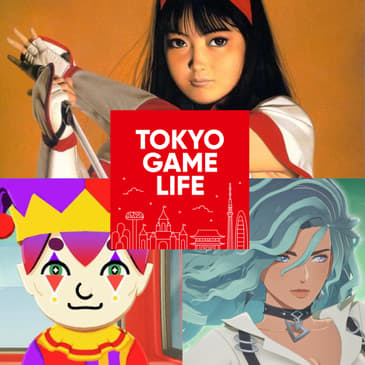
Type designer and YouTuber Kaihatsu returns as we chat about Ainu in video games! We discuss how northern Japan’s indigenous people have been portrayed in games like Ghost of Yotei, Samurai Shodown, Pokemon Legends Arceus, and how their culture may have influenced countless games. Plus I give some final thoughts on Tomodachi Life: Living the Dream and Monster Hunter Stories 3! And I dig deep into a lot of Nintendo news including the newest Star Fox game and analyze the financial report!
Follow our guest!
YouTube: https://www.youtube.com/Kaihatsu
Bluesky: https://bsky.app/profile/kaihat.su
Twitter: https://x.com/KaihatsuYT
(0:00) - Intro
Feature
(0:55) - Ainu in Video Games w/ Kaihatsu
Games
(52:34) - Tomodachi Life: Living the Dream final thoughts
(1:02:30) - Monster Hunter Stories 3 final thoughts
News
(1:09:47) - Star Fox, Nintendo FY26 analysis, Tokyo events
Social media:
Bluesky: https://bsky.app/profile/tokyogamelife.bsky.social
Twitter: https://twitter.com/TokyoGameLife
YouTube: https://www.youtube.com/@tokyogamelife
Instagram: https://www.instagram.com/tokyogamelife/
Threads: https://www.threads.net/@tokyogamelife
Website: https://tokyogamelife.com/
Like and subscribe on your favorite podcast app!
[00:00:07] Welcome to Tokyo Game Life, a Tokyo-based video game podcast focusing on Nintendo and gaming culture in Japan's capital. Your host Mono here to bring you a slice of gaming life from Tokyo. Returning guest and Ainu expert Kaihatsu is here to chat about Ainu in Video Games. We explore how the indigenous people of northern Japan influenced games like Ghost of Yotei, Samurai Shodown, Pokemon Legends Arceus, and more. Plus, in the game section, I share some final thoughts on Tomodachi Life Living the Dream and Monster Hunter Stories 3,
[00:00:38] and I dive into a ton of Nintendo news like Star Fox, Financials, and new events in Tokyo. Let's get into the feature on Ainu in Video Games with Kaihatsu. Today's feature is titled Ainu in Video Games. We're going to look at how the Ainu people are portrayed and their cultural influence on games, which may be more vast than one would expect. Joining me is a special guest. So guest, please introduce yourself.
[00:01:07] Hello, I'm Kaihatsu. Some people call me Daniel Kaihatsu. That's what I go by on the internet. I am an Osaka-based type designer, video maker, and most importantly for this segment, scholar slash grad student in the field of indigenous studies. That's what I'm doing at grad school. At undergraduate school, I majored in game design, and one of the things I looked at was cultural representation in games,
[00:01:31] and that's something that I'm taking forward, doing a degree in the field of indigenous studies, specifically with Ainu culture in games and Japanese media more generally. Thanks for coming back on the podcast. You were here last time as we talked about Nintendo fonts, a very niche but deep topic. And now you're back again to talk about another niche yet deep topic, and that is the Ainu people in video games. Now, a lot of people out there probably are unaware about who we are even talking about.
[00:01:58] So let's lay the groundwork with obviously a very simple question I'm sure you can answer in two seconds. Who are the Ainu people? Fundamentally, the Ainu are the indigenous population of northern Japan, which is mainly centered on Hokkaido, but they were also present in Pohoku, as well as the Kuril or Chishima Island chain and the island of Sakhalin, which is now controlled by Russia.
[00:02:20] So it's difficult to know where to go from there because what a lot of people want to do is they want to go way, way back in history and talk about what happened 20,000 years ago. Inevitably, what happens is you end up talking about the Jomon people. So yeah, a very long time ago in Japan, the main population all across the archipelago was the Jomon people, who were probably quite a diverse population. We classify them based on whatever they left behind.
[00:02:50] So a lot of pottery fragments and Dogu, the sort of mysterious looking figures. When we're talking in these sort of ancient or archaeological terms very long time ago, this is about material culture. So all across Japan, tens of thousands of years ago, you had the Jomon people. And then in Honshu, you had the Yayoi people who came across from the continent, from Korea, from China, who introduced things like rice farming and other such things.
[00:03:15] And those two groups mixed down there and eventually created the Yamato people, who are the main sort of Japanese ethnicity. When people say Japanese in English, you're probably thinking of someone who is of the Yamato ethnicity. Further to the south, things happened a little bit differently. You ended up with the Ryukyuan people, who have a higher amount of Jomon DNA compared to mainland Yamato Japanese.
[00:03:39] And then in the north, you had the northern Jomon population, which became the epi-Jomon population, because the Jomon period lasted for a lot longer in Hokkaido. And the epi-Jomon eventually turned into the Satsumon. Again, these are all archaeological cultures. Right. So we don't really know a huge amount about... Because they never wrote anything down. But you had the Satsumon.
[00:04:04] And then from the north, you had the Ohotsk people, who brought the Ohotsk culture, who mixed with the Satsumon. They mainly settled on the sort of northern coastlines of Hokkaido and the Kuroos and whatever. They were seafaring people. They relied a lot on fishing and that kind of thing. It's believed that the Ainu, the bear cult, probably one of the most well-known things about the Ainu with the association with bears and the Iomante bear ceremony, that probably came from the Ohotsk people. And a lot of the Ainu spiritual tradition also probably came from the Ohotsk people.
[00:04:33] But they mixed with the Satsumon. And also there was the Tobinitai culture, which was another culture which was present in Hokkaido that was influenced by the Satsumon and the Ohotsk. And then, yeah, basically those sort of groups were absorbed into the Satsumon. And the Satsumon turned into the Ainu people that we know today. And that was around about the 12th, 13th century. But it's basically the same as how you had the Jomon period and the Yayoi period in Honshu. And then you had the Kofun period.
[00:05:02] And then that turned into the Nara period and then the Heian period. So it's this gradual continuum, this gradual change of culture. But the people in the end were ultimately the same people. So the Ainu are the most direct descendants of the northern Jomon and then Satsumon population in northern Japan. And then depending on what game we're talking about, I can go into the history later than that. I brought us up to the 13th or 14th century. But yeah, I mean, depending on what we talk about,
[00:05:32] if we talk about Yotin and we talk about something like Legends Arceus, that's the order of you go from 16th, 17th century and then to the 18th century and so on. Oh yeah, we're definitely going to get into those games and many more. And I don't know if you are officially an Ainu expert, but for at least the length of this podcast, I would dub you as one. So how did you become interested in the Ainu people and culture? That's a good question. I think my first sort of encounter with Hokkaido was probably Pokemon Diamond
[00:05:59] when I was like seven, eight years old. Yeah, seven years old, January of 2008. And I ended up with Pokemon Diamond. And that's a game that I love very much. That's my favorite Pokemon game. My first Pokemon game, my favorite Pokemon game. And I've spent a lot of time thinking about Pokemon Diamond, Pearl and Platinum. And obviously those games are set in the Sinnoh region, which is based on Hokkaido. And eventually I started to read a lot about Hokkaido,
[00:06:28] just because you notice from the map, it's quite obvious with Pokemon. You look at it and think, oh, this looks like this bit of Japan. And then you read more about it. And it was through that that I came across the Ainu people and culture. And yeah, when I started my YouTube channel in 2016, and I was talking a lot about Pokemon, but just culture and games in general, how does Japanese culture influence games and that kind of thing. I had ideas about, I wanted to talk about Ainu culture.
[00:06:57] I never did get around to it at the time, but I had stuff that I wanted to cover. And it just was there in the back of my mind. And I kept writing things down that I wanted to look at, because I kept going further and further into these Pokemon games. And they draw from a lot of different cultures, but where is the Ainu culture in this? And that's something I can talk about later. There's not a huge amount, but there are things in there. Because we know from leaked development files that they did write a lot when they did research in Hokkaido for those games.
[00:07:27] And yeah, that sort of kept going. And it got to a point, I'd say it was at 2021, you had Legends RSS was announced. And that's when it came to the forefront, because obviously that game is set in a setting that's based on colonial Hokkaido. So for the first time, I could actually talk about it a lot. And people would listen. Because before that, I could talk about it. And actually, there were quite a few things that I predicted that I got correct. Because I made some predictions beforehand about if there were remakes,
[00:07:56] I think XYZ would happen. And so people would listen. And at that point, I was still living in the UK. But what happened is I was awarded a scholarship by the Japan Society of Scotland to study in Japan back in 20... I'm just backtracking a little bit. This was the start of 2020. And things just got messed up. Initially, the Olympics meant that I got passed to another university. And then the pandemic meant that it just got cancelled altogether.
[00:08:24] So what I ended up doing afterwards was when I moved to Japan, I started doing grassroots cultural exchange with the Ainu community in Nibutani Village. And Nibutani is the only place in Hokkaido, the only administrative division. The smallest administrative division because it's a village. But it's the only place in Hokkaido that's still majority Ainu. Around about 80% of the inhabitants are Ainu, not Yamato Japanese.
[00:08:48] And the reason I got involved there is because the village once hosted a Scotsman back in the 1940s. There was a guy called Neil Gordon Monroe. And he lived in Nibutani. So he was a doctor who moved to Yokohama initially. He worked in a hospital in Japan. But he traveled up to Hokkaido and he got involved in a lot of archaeological work and anthropological work. Specifically with the Ainu people.
[00:09:18] But he decided to move to Nibutani and he built a house there. And he settled there. That's where he lived for the rest of his life. And he is buried in the local cemetery in Nibutani. And he had a really good rapport with the local Ainu people. And he wrote a lot about them. And he was advocating for their betterment. And he was advocating to preserve their culture and way of life to the Japanese government. And so every year now they have a memorial for him in front of his house where there's a little memorial plaque.
[00:09:48] And so I was in contact with the local Nibutani Ainu museum. And now I go every year as a sort of representative of the Japan Society of Scotland. And as a Scot, I do a little speech. I dress in a kilt. I talk to the people there. And I go up. I went up probably about five, six times last year for various cultural events. Just to be there, I think it's a really important connection to maintain and to develop. So that's something that I'm trying to do.
[00:10:18] And alongside that, I still had this interest in cultural representation in games, which was something that I studied when I was doing my game design degree. And as a result of that, I also was invited to write for an academic volume about indigenous peoples in games. I wrote about Pokemon and the Legends Arceus and Ainu culture and Ainu history. And just that sort of progressed from there.
[00:10:43] And then as a result of that and the work that I'm doing in Nibutani, I ended up being admitted on to a graduate indigenous studies course as well. So that's what I'm currently doing alongside my regular job of doing font design, which I spoke about last time. That's a pretty amazing journey from Pokemon Diamond to wearing a kilt at the official Ainu museum. So that's an amazing journey you've gone on.
[00:11:11] And I've always had some interest in the Ainu, albeit, to be honest, I'm not super knowledgeable about them outside of some surface level knowledge. And to be honest, I don't think I've actually ever met an Ainu person. And if so, I didn't know they were of the Ainu diaspora. But I do have friends from Hokkaido who have said, yeah, I had Ainu friends growing up or they at least knew Ainu people. But I think my experience is representative of a lot of people's experience with Ainu culture in general. That being, we are mostly exposed to it via pop culture.
[00:11:40] So let's dig into the Ainu in video games. And not just specifically Ainu characters, but also how Ainu culture and art may serve as the inspiration for the aesthetics of many games. Now, when I say the phrase Ainu in video games, what is the first thing that springs to mind? That's a good question. I think if you're talking about recently, obviously the first thing that comes to mind is Ghost of Yote, which I think is probably the best Ainu representation or portrayal that you have in video games.
[00:12:10] But aside from that, if you talk about Ainu in games, the other thing that comes to my mind is Pokemon. But that's just because I've done so much work in writing about Ainu stuff in Pokemon. That comes to my head. But I think, yeah, you talk about Ainu in games, Ghost of Yote. The other thing that people bring up a lot is samurai spirits. But obviously we have Nakoruru, very well-known Ainu character in that game. I think those are probably the two main things that I think of. Yeah, I guess let's just jump to Ghost of Yote, because this is probably the biggest example of Ainu in games,
[00:12:37] or the most recent and maybe most popular representation of Ainu in games. Yes, 2025's Ghost of Yote, the follow-up to 2020's Ghost of Tsushima. But we are off of that island and onto a new one. And Hokkaido, aka Ezo, circa 1603. And the Ainu people do indeed appear in the game. And there are also collectibles called Ainu findings, which are the Ainu artifacts and items. Now, full disclosure, I have not played this game, so I cannot give some detailed analysis. But from impressions and cutscenes and readings and writings,
[00:13:06] the Ainu are not really integrated into the main plot, which mostly centers around the samurai who have ventured into Ezo. And Atsu, the main protagonist, maybe is not of Ainu origin, unless I am just totally wrong. So let's get into it. What do you think about how the Ainu are portrayed in Ghost of Yote? I think, like you've said, yeah, they're not integrated into the main narrative, which I think is one of the biggest issues that I have with that game. But yeah, the protagonist as well is not Ainu. They're Wajin, which is ethnic Japanese.
[00:13:37] That's a word that's used a lot to contrast Ainu and Yukians with mainland Yamato Japanese is the word Wajin. And I suppose probably what I should do is I should start with just a little bit of an explainer of what's happening in Ghost of Yote. So it's set in 1603. And so at the time, Hokkaido did not exist back in 1603. That was a name that was given to the island by the colonial administration after the Meiji Restoration. So at the time, it was Ezo or Ezochi, the land of the Ezo.
[00:14:06] And the Ezo is an old Japanese. It's an exonym that was given to the Ainu by the Japanese. Which, if you translate the kanji, it means like shrimp barbarian. I think it might be an ataji of an earlier word. It developed from Emishi. And Emishi is an older sort of name for the non-Yamato people that lived in anywhere basically in Tohoku and north of that. Some of them probably were Yamato Japanese. They just didn't want to submit to the Japanese court.
[00:14:35] But a lot of them probably were like in some way related to the Ainu people of today. Again, the Emishi didn't really write anything about themselves because they didn't have a written script. So anything we know about them came from the Japanese court. So they weren't particularly charitable. But that Emishi eventually became Ezo. And the Ezochi used to be anywhere that wasn't... It was beyond the pale, not controlled by Japan. And as they kept advancing forward, that eventually landed in Hokkaido. So you had the...
[00:15:05] At the time, you had the Ezochi. And you had the Wajinchi, which is the Japanese land. And the Wajinchi was basically... If you think about where Hakodate is, like just basically that little... The Oshima Peninsula, that little bit... That little sliver of land around Hakodate and a little bit further north of that at the time, I believe was... That was the Wajinchi circa... Probably... Actually, that would have been about the 1660s. You go a little bit further back than that,
[00:15:33] you had Matsumai because the area was controlled by the Matsumai clan. The Wajinchi was the domain of the Matsumai clan. They were a very small clan. And they controlled the very small southern tip of Hokkaido as Japanese land. And so it was segregated. You had the Japanese lived there. You had the Ainu that lived in the rest of Ezochi. And that was it. Like, in principle, Japanese people were not permitted to live in the Ezochi. Vice versa, there was this segregation. But the Matsumai clan, they're a very sort of small scrappy clan.
[00:16:02] They couldn't really grow their own rice like the other clans could because at the time, they just couldn't grow rice in Hokkaido. Well, that well or at all. That's a modern invention. So they relied a lot on trading with the Ainu for all sorts of goods. And in 1603, they were renamed to the Matsumai clan because they used to be called the Kakizaki clan. And they were recognized as independent from the Ando clan in 1585, who were on the other side of the Tsugaru Strait in Tohoku.
[00:16:32] And then three years after that, they built Matsumai castle. And I believe in the game, there is actually like a Japanese-style castle that appears, which that's ahistorical because in 1603, there weren't any such castles in Hokkaido. But it was the last castle that was built in a traditional Japanese style. So Japan was coming out of conflicts. They were united with the Tokugawa shogunate, everything. There was this unity. And they authorized the Matsumai to control trade and entry to the Ezochi in 1604.
[00:17:00] There was, I think, the Black Seal Order that was given that allowed the Matsumai to deal with the Ainu and to be the sole authorities of trade with the Ainu. And this was the start of the creeping Japanese sort of dominance and control over the Ainu. Because I think up until this point, it was the Ainu who had the upper hand. Because the Japanese were such a small minority settled in the southern portion of Hokkaido. And they used to cross over from Hokkaido to Tohoku to trade.
[00:17:29] And at the time, there were Ainu living in northern Tohoku as well, but that's another story. But they now had the authority to control who the Ainu could trade with. So they decided to prohibit all trading that was not done through their own trading post. So the Matsumai would set up trading posts in and the Ainu became a link through what's called the Santan trade. So goods were brought to Japan from China via Sakhalin. And they would come all the way down to Hokkaido via the Ainu. So obviously, they had Sakoku in Japan.
[00:17:58] So when that happened, the Ainu would bring in goods from the north, from China through Sakhalin into Hokkaido, which was one way that trade was permitted to be done. And the other way that trade was permitted to be done later was also through the Nukyuan kingdom in the south. So those were the only kind of two ways that things came into the country. But at the start of this period, when we had Gosoviote set, the Matsumai domain was trying to shore up its authority, which was... This was Japan's northern frontier.
[00:18:26] They were in this sort of weird liminal area where they weren't... Like, it wasn't Japan, Japan, but it wasn't completely foreign. It was this weird in-between. It was this land they viewed as wild and untamed, and these primeval forests and plains and... Like, the story says when you read the website, and people would get sent up there, like, people that wanted to go hide, outlaws, or whatever. Or people that wanted to escape persecution, or when there was conflict on the mainland,
[00:18:56] people would go and settle up in the Wajinchi. But you also did have Japanese people that would, quote, go native, and would end up mixing and going to live with Ainu. Or I think when you deal with maps, and you have the line on the map, and it says this side is this side, and this side is the other side. Like, there was crossover, and there were people that would go and live with Ainu, or Ainu that would eventually go and marry into Japanese, whether voluntary or otherwise. But yeah, the land, it was peppered with these Ainu Kotan,
[00:19:24] and they were organized into... Kotan village is just the Ainu word for village. But they were organized into these individual Kotans, which functioned, I guess, as a sort of a tribe. And you would have these sort of larger Ainu communities centered on river basins. So this domain would be called an Iwar. So basically up to the edges of a river basin. And that was the area in which Kotan would... They would do their hunting and gathering, and so on and so forth. So in Iotei,
[00:19:53] the one Ainu Kotan that we come across is largely based on the Sarunkur. And that's because Sarunkur are the Ainu of the Saru river basin. And that's because the main cultural consultants on the game are from Nibutani. The people that I actually know, and that I've met a few times. So yeah, a lot of the culture that we see in Iotei, and also the stories as well, the Ainu stories that are in the games, are from the Nibutani Kotan.
[00:20:23] The story of Opushinopuri, which is a story of how, I believe, the sort of Ainu culture hero, Oki Kurumi, through a, like a spear or an arrow, through a mountain, and it pierced a hole in a mountain. That's the story that's in the game. And that's from Nibutani, because Nibutani has a, there's a place on the other side of the Saru river called Opushinopuri, that you can see from Nibutani. And it does look like there's been a big hole punched in it. So that's a really interesting thing. There's a lot of things from Nibutani that are in the game.
[00:20:53] Although, if they wanted to be more accurate, I think they would probably want to look further down, because you're taught, like the Yakumo dialect of Ainu would probably have been more appropriate if they were setting a game that's mainly based on the Oshima Peninsula. Whereas Saru Ainu is one of the most well studied and well documented and still most used and taught dialects of Ainu. But it's not one that would come to mind if you're thinking of a game that's based around that part of,
[00:21:23] that period of Hokkaido and you're talking about a protagonist that's going from the Wajinshi to the Oshima Peninsula and around Yote. It would be a different dialect that's spoken there. But yeah. So yeah, you had the Ainu, they had Wajin, the Ainu called them Shisam, which just means neighbor. And yeah, they would trade. It was initially on equal terms, but then it became gradually more and more unequal as the Matsumai exerted more control over the Ainu population. But that started to happen a little bit later than when the game set.
[00:21:52] So yeah, I think the main issue that I have with the game is I think it overplays the amount of Wajin presence in the rest of Hokkaido. Because when you look at the game and they talk about, oh, there's this, these rebels and whatnots and everything all spread out through Hokkaido. That's not really what 1603 Hokkaido or Ezo was like. You had trading posts and you would have had maybe some Japanese who were allowed to go in to go to trading posts or to go maybe explore or what have you. because there were Japanese people who were writing about the Ainu back then as well.
[00:22:22] But I think the amount of Japanese Yamato, Wajin people we come across and then the Ainu people we come across, it does come across as very unbalanced and not particularly realistic. And in addition to that, yeah, you have this one Kotaan. Obviously, one of the main characters, Huchi, does mention other Ainu Kotaan in some dialogue, but we never see them. There's, you know, it's very limited the amount of Ainu we come across. We have the Kotaan, there are some Ainu NPCs that you can trade with and talk to.
[00:22:52] And the main character, Atsu, always makes this big point of, oh, I have no quarrel with the Ainu or my parents always taught me that they know the most about this land and all these things. And I think it's important to be very respectful because I think that was one of the main things that the consultants were considering going in is you have to consider how to be respectful. And the other line that one of them used was the fun of fiction, obviously, is something that you have to think about. But yeah, the game does not address
[00:23:19] sort of any discrimination or marginalization or anything of that sort that happened because there was, especially a little bit later on, a lot of awful things happened, which I don't actually know how it is they would have approached these things. For one thing, slightly later than the game is set, obviously, the Matsumai began using forced labor and they would go around and recruit, quote unquote, recruit Ainu men
[00:23:48] and boys from villages to go and work in fisheries and other such things. And that would leave the woman behind. And obviously, that had a detrimental effect on these communities for one thing. But then it would also mean that a lot of Ainu women were sexually assaulted by Japanese who were in Ezochi. either you would have Ainu women that felt that their communities had been so decimated by their men and children being taken away to these fisheries that they would have to go
[00:24:17] and sell their bodies or in a lot of cases, just when you had them left alone and the men and the boys were taken to go be forced labor or what have you, just any Japanese that came by could just, there was no, there was this unequal power imbalance. They could do whatever they wanted and they would force themselves upon these women and it's awful. There's things like that. The Matsumai used to, they used to get Ainu that they would trade with very drunk so that they could shortchange them and they would
[00:24:47] weigh down things like barrels of rice and sake and all these things to exploit them and trade. So there's a lot of things like this that aren't addressed at all by the game. I think the thing is, I don't really know if players would be ready to engage with that sort of thing or if, I think it is possible the game could have handled it better. I think they could have showed another side of the Japanese who were there. I think they probably could have done more to show that, yeah, there were a lot of people that didn't want anything to do with them
[00:25:17] or viewed them with contempt and obviously the protagonist, I think at one point in the game does reflect on what it would be like if they were Ainu or if they were raised by Ainu but it doesn't really go beyond that. I don't think there's really much a reflection. I think for one thing the historical discrimination because obviously discrimination in Hokkaido and towards Ainu has changed a lot throughout the years but I don't think the game really was trying or I don't really know how the game
[00:25:46] would have addressed that specific historical period of discrimination. It seems like the Ainu are, they are present and they are respectfully treated well in the world of Ghost of Yotei but they are sort of, I don't want to say window dressing, that might be a little too rude considering they did put a lot of effort into it but they are sort of a background element. I do get what you mean they're not, they're the side piece that's not really central to the main story. There is a world where you could just solely focus on the Ainu's reaction to these people coming in but instead they did focus on
[00:26:16] okay the audience knows what the Japanese people are like at this time of period they don't know a whole lot about Ainu. Yeah, I think the main issue is you have the way that it's typical in a lot of other games as well or other media when you have Ainu appear alongside Japanese and there's this sort of emphasis on we're all in this land and we have to get along which is a sort of narrative that's the, I think the Japanese government and a lot of institutions put on this narrative of coexistence and harmony
[00:26:46] so that's something that they emphasize they don't really go into the do these people really want to have all these strangers turn up and settle here? that's not really addressed and I think it also there's the danger of if people view it as being too historical then do people consider that this might have an effect on how well foreigners and Japanese people view Hokkaido because of how a lot of the environment was supposedly based on Hokkaido a lot of it doesn't really look
[00:27:15] much like Hokkaido especially not back then there's a lot more planes in the game than there was a lot of a lot more of Hokkaido was covered in forest back then and just the way that you look at Ainu place names Ainu settlement Ainu interaction in the game I think it can potentially erode the sense of Ainu sovereignty and indigeneity in Hokkaido compared to the Japanese people who came and settled yeah Tsushima was also like that where oh obviously this is not accurate to Tsushima because
[00:27:45] these games are mostly inspired not so much by history but more by like samurai cinema so they tried to evoke that but yeah it is interesting that they did make a pivot to Hokkaido for the second game and as for me for Ainu representation in video games the number one person that pops in my mind is Nakoruru from Samurai Showdown and she is essentially the Chun-Li of that series which makes her definitely one of the most prominent Ainu characters in all of video games if not the most prominent and she has appeared in other crossover games
[00:28:15] like Capcom vs SNK2 and she has a costume and a spirit in Smash Ultimate so maybe the only Ainu representation in that game though feel free to correct me and her background is that she is a shrine priestess who is very keen on protecting nature and she has partnered with a hawk named Mamahaha what do you think about Nakoruru and how she represents Ainu culture? The first thing is obviously the whole connection with nature is very stereotypical of people that talk about the notion of the noble savage or the way that a lot of I say western but also in this context
[00:28:44] Japanese people would view Ainu or other indigenous people as they're very this idea of ah yes we sit around and make flower crowns and very connected with nature and it's very stereotypical and reductionist of these peoples and cultures but yeah that is an image that a lot of Japanese had of Ainu people and a lot more Japanese people in general when you speak to Japanese people about things like Shinto and they will talk about how Japan is also very in touch with nature and all of this but it's a line
[00:29:14] that you also hear a lot with Ainu culture and the Ainu are very connected with nature and that's the sort of stereotypes about this sort of interconnectedness with nature is something that you see in Nakoruru but actually yeah I have a quote from an Ainu scholar who wrote about Nakoruru a man called Chubuchisekor basically what he said is a distorted image of Ainu people is getting amplified
[00:29:44] and it's terrifying to think what happened if we leave it be but the games are indeed beloved all around the world so Nakoruru and Rimururu are portrayed as pure virtuous and cute and they're enjoyable to play as characters in the game but when I consider it from an Ainu perspective it's really quite awful to wonder about how much the creators of these games actually know about the Ainu that's something he wrote in 1997 he had that concern about it washing over a lot of Ainu culture to portray something yeah very stereotypical very simplistic very
[00:30:13] not orientalist but I suppose exotic and different from regular Japanese and a big issue that he had as well the sort of main thing that was being written about was he did not appreciate the fans approach to the characters in so much as he did not like the sort of pornographic doujin culture that surrounded these characters he actually would go to these stores where they were stocking these doujinshi and whatever he would buy as many of them as he could
[00:30:43] he would try to buy all of them so that nobody would have to to be exposed to any of it because he found it incredibly offensive and embarrassing that people would try to fetishize these characters and that's something that still continues to this day and that is a point of contention with Ainu people and I also take issue with that kind of thing regardless of what culture it is but with Japanese people I don't think they really it's not something they think about a whole lot I think Japanese fan creators and also Japanese
[00:31:12] developers and creators in general I think they take often a different approach to culture and cultural appropriation or using things from different cultures than maybe a lot of other creators of different nationalities would yeah she definitely plays into some stereotypes regarding oh of course the non-technologically advanced indigenous tribe has some supernatural connection with nature that the industrialized people just can never have which is not solely specific to the Ainu but it is interesting how that concept
[00:31:41] is a worldwide phenomenon and yeah they did have good intentions when they tried to create Nakaruru they thought oh this is a great chance to promote Ainu in some way but it does fall into a lot of the traps where oh are you romanticizing Ainu culture are you stereotyping it or is this an authentic portrayal there's definitely a lot of like landmines you would have to dodge yeah in a lot of these cases I don't think that it's malicious I think a lot of it's based on ignorance
[00:32:12] and it's not like the sort of bad willfully ignorant I think just it's the consequence of how society teaches people about these things and when I wrote for this for the academic volume about Pokemon and Legends Arceus and Ainu history and colonialism the thing I said is that it's part of what I would call the Wajin worldview it's this view of things that's promulgated spread in Japanese society about Ainu culture and also Ryukyu and Okinawan culture and other Pokemon games like in
[00:32:42] Hoenn but just this view of how they relate themselves to the history of Hokkaido and the history of Okinawa which are these what people describe as internal colonies to Japan and Hokkaido people call Japan's first colony which it pretty much was and their understanding of history so I think a lot of the issue is not it's not willful it's just how the Japanese view their own relationship to the Ainu and how they consider that
[00:33:11] history as the frontier of oh people worked hard and they built it up and people worked together and there was this vision of coexistence which that's not what happened but that's what people think that's how they perceive it this is the most common viewpoint and way of thinking about it which trickles down into these media products and then that just reinforces this view of how people think about the history of Hokkaido and the Ainu and so forth now you and I are big Nintendo fans so
[00:33:41] of course the most prominent representation of Ainu culture in a Nintendo game is probably Pokemon Legends Arceus which takes place in Hisui a land inspired by ancient Hokkaido that would later go on to become Sinnoh and you are a modern day kid flung back into time to Dublifetown which is the base of the galaxy expedition team a group from an industrialized land which I guess in the lore of Pokemon is the I guess Kanto they didn't really explain it but it does have the concept of one group of people exploring the land and running
[00:34:11] into the indigenous people of Hisui which are the Diamond Clan and the Pearl Clan run by Adaman and Irida respectively and to me this is an obvious Ainu analog so what did you think about how these clans are stand-ins for the Ainu during this time in Japanese history? Yeah ultimately I was not a fan of how they did that because it essentially is a kind of erasure I think that the issue is they went into it and I think probably they realized that it was
[00:34:40] quite a complex issue I think probably what they wanted to do is they wanted to eat their cake and have it essentially they wanted to have this setting but they didn't really plan on really properly addressing any of the issues there's a very sort of surface level tackling in the games of things like colonialism there's mentions of from Galaxy Expedition team of oh remember we are interlopers in this land and we have to be very considerate of the Diamond and Pearl Clan's wishes but it doesn't that's where it stops there's no
[00:35:10] it's it's just like icing there's no substance to it underneath really and so I think what they wanted to do is they wanted to sidestep having I knew culture in the game because then you would have issues like you have I knew patterns and a lot of these patterns they're specific to to particular families a bit like tartan so you know that's not something that you can copy because it's particular to one group of people and then how would you go about implementing material I knew culture into the game
[00:35:39] without any sort of consultants because Game Freak like they they don't involve any sort of outside consultancy as far as I know and they definitely did not for this game because I do remember when I believe it was Sword and Shield were being developed and at that point James Turner who is British was working at Game Freak as the art director and I think in an interview he was saying how he had to constantly correct the development team about things in the game that they were trying to put in like the signage was the example he used in
[00:36:09] Britain the developers wanted to make it very stereotypically medieval and ye olde in sort of stuff and he had to tell them no that's not what signs look like in the UK this is what they look like this is more proper and I think they could have really done something great if they involve some sort of outside consultancy from if you look at Yote for example they had a history they had historians right consulted but they also had I knew people consulted who work directly with them on things like I
[00:36:39] knew words I knew stories and history the sort of surroundings and the look of the I knew cotan itself but also the sort of the patterns and things like the I knew clothing in the game is clothing that was made by people that were consulted for the game and same with a lot of the I knew artifacts as well like the makiti the knives and other things like that these are all actual things that were made by people who were consulted whereas Legends Arceus is very they go in the direction of oh a sort of generic indigenous
[00:37:09] looking group of people they live in dwellings reminiscent of things that the Plains Indians the Plains Native Americans would live in like teepees or wigwams or whatever and there is this sort of western pioneer aesthetic to it you have in the game those there are a couple of those sort of wooden pioneer wagons as well like Oregon Trail style things they go in a weird direction with it but I think what they were trying to do is they were trying to signal to the people that yeah they are this indigenous group but
[00:37:39] there's this generic indigenous group and they're not you shouldn't think of them as I knew that's I they wanted to skirt around it because if they didn't then there are a lot of things that they would have to address that I don't think they wanted to go into which is the main issue but there are some I knew things that are in both the Pokemon and in the people like Adaman the head of the Diamond clan wears an earring in his ear which is something that I knew men do they would wear earrings I think the
[00:38:08] issue that I would then take with that is the problem is they set the game in a time period where the colonial government banned I knew men from doing that that's another thing that I think a lot of people wouldn't pick up on but I noticed it is it supposed to be some kind of call back to something that I knew men do and they were doing perhaps in defiance of the colonial government or is it just something that they didn't really think about so yeah and then you move on to the galaxy expedition team
[00:38:37] and they're obviously clearly an analog of the settlers the pond in hay which were the farmer samurai so these were former samurai who you know after the major restoration were sent to the frontier of the Japanese state as a military force who were to counteract any potential encroachment from Russia because they felt very threatened by the Russians who were settling they were moving down from Siberia into the Kural Islands and Sakhalin so the idea was that they would be stationed there and they would clear the land and they would farm the land on which they settled and that's a very popular image of the colonial the
[00:39:07] Kaitaku period of Hokkaido the sort of post-meiji colonization of Hokkaido the people think about that period they think of these farmer samurai and it was a militaristic affair which is why the galaxy expedition team they have the survey corps and the building corps and whatever it's it is very militarized and you have these sort of indigenous groups that are involved in the story but they're still portrayed as quite passive and they come to the sort of
[00:39:37] colonial administration when they have quarrels with each other and want the colonial administration to mediate which actually to be fair is when the Matsumai as far back as when the Matsumai were first on the southern tip of Hokkaido this is they would actually mediate as a neutral party between Ainu groups but in the case of Legends of Arceus it comes across as they're coming and then at the end obviously the both sides work together in the climax but it is this kind of we need to help each other and work together and it's very again
[00:40:06] pushes this narrative of this sort of peaceful coexistence and nothing really bad happened and they just were happy to live amongst each other which in the credits shows all of them including a lot of the people from the clans dancing around what is very obviously a sort of Japanese Obon sort of Japanese festival and to me I just felt like that was in very poor taste like I know what they're trying to get at it's like a very happy ending sort of image but in in this sort of time period it
[00:40:35] just feels strange and a little bit like tone deaf right if you if you get what I'm saying I agree with you on that it's a very surface level and also they don't really have anything to say about the Ainu culture or anything about that and also the moment you talked about they don't even let you screenshot it via the switch home screen so you cannot screenshot everybody coming together and partying which was a very odd thing that is interesting that they do want to integrate in some way but
[00:41:04] they don't have anything interesting to say about it but one thing I really wanted to get into is the influence of Ainu art and fashion on video games because I think for a lot of people they may be unaware of there might not be Ainu characters in the game but if you've played a JRPG where there are villagers and they're wearing clothes that are probably inspired by the Ainu like for example I just played Monster Hunter Stories 3 and in that game you come across a small village run by an elder and the elder is essentially wearing a maybe
[00:41:34] you can correct my pronunciation but I'm Matanpushi which is a traditional Ainu headgear and I feel like so many JRPGs have this trope of some tribe or some people wearing robes with a symmetrical geometric motif wearing the Matanpushi and to me these are all heavily Ainu coded have you also noticed this or am I crazy and can you think of some examples where something in a game isn't specifically called out as being from the Ainu yet it feels that way I think I can see what you're getting at with the sort of geometric patterns I think
[00:42:03] yeah in a lot of cases there are maybe these sort of villages or whatever where you have the sort of Ainu influence where the first thing actually when you speak about that it's not a game that comes to my mind but the Avatar the Last Airbender series there's a group in that series which is this mixture between Japanese and Ainu influences they have these sort of geometric shapes very simple mind you it's you can see the influences there so I can see what you're getting at and there's also a lot of cases where people assume something is Ainu when it isn't I remember there were some people who were talking
[00:42:33] about Breath of the Wild and they were under the influence that there were the one of the villages was Ainu inspired but it wasn't really but yeah I think it's sometimes it can be difficult to tell the difference because fundamentally like if you look at Ainu robes today and you look at Japanese robes the sort of the basic shape if you just look at the way the cloth hangs they're very similar so it can be quite easy to mix them up but like you say with the Matan Pushi it's quite the sort of the headband it's that's something
[00:43:02] that's more distinct and I remember obviously with Legends of Arches you had some people trying to look at and initially when I saw it thinking about the sort of the protagonists where the where the sort of white head cloth that's not something I knew that's like a Japanese thing so I think that's the other thing sometimes the thing you have to be careful of is are you reading too much into it or not or is that is this an actual inspiration or is this just something that you can see in it that's not really there and also the other thing that you have to be aware
[00:43:31] of obviously like you know you talk about with Monster Hunter and also Legends of Arches is when you for example look at Ghost of Yotei that is that's trying to be Hokkaido it's saying very clearly this is Hokkaido these are the Ainu these are the Wajin this is the story whereas a monster hunter you have these are so and so people and they're their own thing and they might have inspirations from a culture or some other cultures ultimately they are kind of they stand alone as their own thing and it's the same with Legends
[00:44:01] Arches the Diamond and Pearl Clans they're not Ainu they're the Diamond and Pearl Clans are they trying to be Ainu yes and that's what makes it complicated but ultimately you have to consider them in relation to how they're inspired by whatever culture they're drawing from but also you have to look at them themselves because they are trying it's the same with Pokemon designs Pokemon designs are their own thing they're something new so they draw from a lot of different sources and this is the same for a lot of games that are fantasy they're
[00:44:30] drawing from a lot of sources but ultimately they're making something new so you have to consider not only the cultures they're drawing from but also have to consider this new thing that they are and how that relates to whatever they're drawing from if that makes sense yeah is there a Pokemon you would say is the most Ainu coded or one based off of Ainu mythology or legends there's quite a few that I can think of and there's some there's some that I could get into but I should probably save for like a YouTube video or something because it gets complicated but you have
[00:45:00] Basquilegion which is in Legends Arceus and that's that's influenced by the way that Ainu would view salmon Kamuichep the sort of godfish it was a very salmon is the probably the most important fish to Ainu and a very important food source and it's was yeah one it was a staple and also it means maintains relevance today because there are Ainu groups that are fighting for their right to fish salmon because that's something that the Japanese government restricts at
[00:45:27] the moment and they allow it for cultural purposes in very small amounts but there is one Ainu group the Rapporto Ainu nation who is currently trying to get the court system to recognize their right to to fish so that's still that's still a big issue and then aside from that I think the other thing is the lake trio Mesprit Azzelf and Yuxi in the games they're conceptualized as these spirits that they live in the lakes and there's a lot of Ainu tales about Kamui or spirits that reside in Hokkaido's lakes and are guardians
[00:45:57] of the lakes or what have you there are a lot of parallels there as well when I think about the sort of climax of well Legends RCS and the original Diamond Pearl Platinum games you go on to Mount Coronet and obviously there's a lot of parallels you can draw with Mount Fuji and the sort of kami that are linked to the top of Mount Fuji or reside there but also you have an Ainu Kamui Mintar the the playground of the gods that's the way that everyone likes the popularly translated
[00:46:25] Kamui Mintar so to the Kamikawa Ainu who live in the Kamikawa region of Hokkaido which is next to the Daisetsuzan mountain range Kamui Mintar was the Daisetsuzan mountain range and Asahidake these really tall mountains on top of which the sacred peaks where the Kamui would reside or come down to gather or party or whatever so you have that which is mixed in with Japanese notions about sacred peaks and then also on top of that spear
[00:46:53] pillar and the temple of Sinnoh is obviously very Hellenic so you have links to Mount Olympus so that there's this kind of layering that goes on there's these different cultural stratum of sub sub strata that are layered on top of each other so you have the sort of Hellenic layer and all the sort of Hellenic theology that's built into to those Pokemon games and then you have the Japanese stuff that's there as well that plays a big part with Diaoga and Pauki and Izanami and Izanagi and Japanese the Japanese creation story and then
[00:47:22] you also have Kamui Mintar the sort of playground of the gods and Oputate Shike which is a mountain peak with an Ainu name because there was a story about one of the Kamui throwing a spear which obviously then you think about maybe that also influenced spear pillar along with the Ame no Nuhuko spear which Izanami and Izanagi used to create the first islands of Japan which you know that kind of forms a big part of the influence that went into creating spear pillar and that whole deal
[00:47:50] with the climax of the Sinnoh games yeah best you Legion is a good pick so I think that one is a like a great representative of maybe Ainu culture in Pokemon is there a franchise that you think could implement more aspects from Ainu culture in the future oh that's a difficult one I don't know it's difficult to say I mean with Pokemon it was easier because you have they went in this historical angle and they have this sort of regional it's very regional you have Kanto
[00:48:19] which is the Kanto region Joto and so forth you have Sinnoh which is Hokkaido so obviously there's going to be a little bit of Ainu stuff in there I think one of the things that I really like seeing was Animal Crossing New Horizons had Ainu clothing in the game and I think that was a good step forward I think they need to work on some of their naming because they called the robes Atush which is a specific type of Ainu robe and the ones in the game
[00:48:41] don't particularly look like that kind of specific robe but I think things like that offering more clothing options or just this sort of I think having this sort of presence where you know like for if you're gonna have Japanese clothes in the Japanese game then also having other options for Japan's other people's as well I think is a good way of promoting a sense of inclusion.
[00:49:03] obviously it's not particularly deep but it does go a long way you know there's a friend of mine who made a who's Ainu American and they have made this wonderful island with Ainu clothing and a lot of this material culture and it looks wonderful and that was really cool to see.
[00:49:23] so I think customization obviously is one part of it but if we're talking about history I think a game that's centered on the Ainu experience instead of from a Japanese perspective or like Ghost of Yote was developed by Westerners so it's a kind of a Western perspective or also a Western perspective of a Japanese perspective of this history. I think ultimately what I would say is just Ainu involvement in games should increase.
[00:49:51] so I think Yote was a good start because they had consultants. I think that's something that needs to become more common and I would say that for actually all cultural consulting if you're going to do something historical or very cultural where there's a lot of contact with actual things that not necessarily fantasy but things you want to be accurate. then I think involving people who have that experience and knowledge who live that culture. I think that's key.
[00:50:17] Yeah for me I think Zelda could be a candidate because the wild games have a lot of inspiration from Japanese and Asian history like breast of the wild's aesthetic is heavily inspired by Jomon pottery of all things and. Oh yeah there's a lot of Jomon stuff in Zelda. Yeah tears of the kingdom also draws in a lot of its aesthetic influence from Zen Buddhism and Chinese bronze work. So the devs on the Zelda team are really digging deep in terms of influences. What do you think about an Ainu inspired Zelda? Is that on the table?
[00:50:43] Yeah I think if they wanted to move on from the Jomon stuff I think there is obviously because the Ainu descended from the northern Jomon in Japan. I think there is a thread that you could connect there and develop that. I'm not exactly sure how they would go about doing that rather. But I think that's definitely something that they could do. I think that would be an interesting progression from Jomon to Ainu stuff because there's things that you can develop on there.
[00:51:09] But I mean you know in Breath of the Wild you already have the Koroks which are they're from Ainu culture. You have the Korpukuru. So that's something that the Koroks are inspired by that comes from Ainu culture. So there are little things that are already there. So I think there are things that they could develop. Whether or not they would go in that direction I think the issue is I think probably the way developers handle these things probably has to change a little bit before they would consider going in that direction. But it's hard to say.
[00:51:38] Especially with Nintendo because they have their own way of going about things. But I'm just going to call it now the next Zelda will be Ainu inspired. I'm going to make that prediction now and then if it's right then I can reap all the social media points. I would be very interested if it was. So that was a look at Ainu in video games. So Kaihatsu where can people find you? They can find me on YouTube at youtube.com forward slash Kaihatsu. Where hopefully I will get around to making some videos about Ainu in games.
[00:52:07] People can also find me on Twitter at Kaihatsu YT where I tweet a lot about Ainu culture and Ainu culture in games. And they can also find me on Blue Sky at Kaihat.su. Perfect. And the links to everything are in the podcast description. So listeners check it out. Kaihatsu once again thank you so much for joining me. Thank you very much for having me. Yadaikadei. Haven't picked up any new games recently.
[00:52:36] Honestly the wombo combo of Pocopia, Monster Hunter Stories 3 and Tomodachi Life in about a six week span. I mean you could just play all those games for the rest of the year. You're set. I still have a bit of a backlog too. But before I wipe that out. I wanted to give some final thoughts on Tomodachi Life Living the Dream and Monster Hunter Stories 3. Let's start with Tomodachi Life. Obviously the Nintendo published game gets to go first. I haven't quite reached credits yet. But I have unlocked the Final Island expansion.
[00:53:04] And there are no more major features or buildings to discover. So I have seen pretty much everything the game has to offer. I talked about the game a few episodes ago. And my opinions haven't changed that much. But I wanted to give a brief post-mortem on my time with it. Like I said in the previous episode. This is shamefully my first Tomodachi Life game. It should be completely up my alley. And there's even a Japanese exclusive DS game. Which I badly want to check out and cover on this podcast. But as somebody who likes these social casual games like Animal Crossing.
[00:53:34] It is a little odd that I never checked out the 3DS game. I think I had a hard time wrapping my head around what the game actually was. And if it had enough gameplay to actually satiate me. But now I totally get the premise. The appeal. The infinite gameplay possibilities. But also understand why it wouldn't be somebody's speed. Compared to more propulsive games like Animal Crossing or Pocopia. And man it is kind of funny that Nintendo launched Animal Crossing New Horizons 3.0. Plus the Switch 2 edition. Pocopia. Then Tomodachi Life.
[00:54:03] In about a 90 day span. You would think there would be a massive overlap between these audiences. And maybe that's what Nintendo wants. The Switch 1 has a massive casual user base. Who is the least likely to upgrade to new hardware. But these games that specifically target that user base. Might make upgrading a bit more appealing. The Switch 2 edition boosted sales of Animal Crossing. And Pocopia became a legit system mover. And Tomodachi Life is hugely successful thus far. Despite having no real Switch 2 features. And between these three games.
[00:54:32] If you ask three quote unquote cozy gamers. Which one is their favorite. I honestly wouldn't be surprised if you got three totally different answers. Animal Crossing excels with its excellent atmosphere. Focus on interior design. The heavy emphasis on the real-time clock and daily life aspect. And also the multiplayer focus. Pocopia has a deeper story mode if you want to call it that. And it also balances between exploration and building. Plus it's got the Pokemon in it. And now Tomodachi Life is here. And its bright spot is the unlimited customization options.
[00:55:01] And unpredictable social interactions. It is pretty incredible that Nintendo is covering pretty much all their bases. When it comes to the idea of. Okay you're living in a town. And go. And Tomodachi Life is definitely the most. Okay here it is. Go have fun. Figure it out. Of the three. It is the one that requires you to have the strongest imagination. And it's up to you to propel your island to greatness. There aren't many carrots on the stick in terms of mission design. You do unlock buildings as you expand your Miis. But that's basically it. There's no mission checklist like.
[00:55:30] Make two Miis fall in love. That unlocks a new type of house. Or a mission like. Feed one Mi ten types of food. That unlocks new hats. Very quickly you realize that what you see is what you get. Yes the fountain wish mechanic is there to show some progress. But the unlocks there are not that game changing. And you can fulfill wishes pretty much however you want. Whether it's making all your Miis pig out. Or just giving them new outfits. The game doesn't give you much direction at all. Which I can see being a problem for some people.
[00:55:57] Especially since Pocopia was so great in always introducing game changing mechanics. And revealing really interesting things to engage with. That was wrapped around a genuinely compelling story. But Tomodachi Life is not like that at all. However. I did like how aimless the game feels. Because it does really encourage you to interact with the creation features. I mean you can create anything. And I mean anything. The only limits are your skill and imagination. And I hate to admit it. But the bar for both of those things for myself is quite low.
[00:56:27] But despite this. I did have fun creating what I could. Albeit they are humble creations. Seriously. Don't look up this game on social media. You will feel sad that some people have created the Gardens of Babylon. While your Miis live in a bizarre 8x8 grid with no decorations. The best part of the game. Shockingly for me. It was the expanded Mi Maker. This was a major point of controversy. Because hey. You cannot share Miis. And of course. You probably just want to download the Baron Harkonnen Mi from a QR code. Right?
[00:56:55] But I gained a greater appreciation for the Mi Maker. Because the game forced you to engage with it. If we could just share Miis. I would have made my family. And then just downloaded Velma from Scooby Doo. But the fact that this game manually makes you create every single Mi. Mi. It's hard to say that was the right decision. Because I do find tremendous value in letting us share creations. But hey. I ended up enjoying making the Miis. It's like when your parents forced you to eat broccoli. And hey. It's actually pretty good and healthy. Yeah. I want some donuts.
[00:57:24] But I do see the value in broccoli. I did build pride when I made a really good Mi. My Mario and Luigi aren't half bad. I have a pretty good Cleopatra. My Velma. Okay. Yeah. She's easy to make. But it does look perfect. I made an alien. I have a black and white version of Tony Storm. I've got Dracula. I've got Blade. I've got Elsa and Asuka. I've got Scott Steiner in a muscle suit. And also the acclaimed Japanese author Natsume Solseki. Who is friends with Frida Kahlo and Martin Scorsese. I've made 35 Miis so far.
[00:57:53] And that unlocks the final island expansion. And I always look forward to making them. And I had a ton of fun manipulating the options it gives you. Yes. You can just draw their entire face. But I rarely engage with that. Because I did appreciate the challenge of using the built-in tools to make the most accurate Mi possible. I mean. I made Mona Lisa. And my wife said. Hey. That looks like Mona Lisa. Mission accomplished. But the creation aspects don't stop there. You can draw anything to be used practically any way. You draw a sports car.
[00:58:22] That sports car can be your pet. Or you can eat it. Or you can put it on your shirt or hat. Or make it a repeating pattern for a building. It's like they put Adobe Illustrator in the game. If you've got the know-how, you can bring it to life. To be honest. I didn't mess with it so much though. Due to my lack of drawing skills. But they do give you some pre-made patterns and objects. But I would have definitely liked way more patterns at my disposal. I mean. Just like with Animal Crossing. I'll put effort into maybe one drawing or one pattern. And then I've drained my well when it comes to creativity.
[00:58:53] I am more of a change the colors type of customization guy. Rather than a the universe is in the palm of your hand type of guy. But if you're not creating stuff. You can mess around with these social elements. Where Miis have conversations with each other. Or interact with the environment. It does feel like a giant ant farm at times. You are the omnipotent creator. Viewing every single detail of their lives. Kind of weird no religion has spawned on my Tomodachi life island. Though you would think I would have a lot more worshippers. The dialogues between the Miis. And when they are by themselves. Are often very funny.
[00:59:22] Considering you can make them say anything. And as their vocabulary grows. They can have some very funny and unpredictable conversations. You never know who will get along. Who will be lovers. Who will be mortal enemies. Though to be honest. That last one really doesn't happen. The game is far too nice. Rarely do you see Miis fighting or not getting along. I would like it if their relationships were more diversified. Beyond just different levels of close friendship. I want rivals. I want enemies. I want people who are kind of indifferent to each other. But everyone gets along pretty well no matter what.
[00:59:52] And there is the question of. How much autonomy do you want your Miis to have? Should the player be the arbiter of every interaction? Or would the game benefit from more hands-off events playing out? For example. I am pretty sure you have to manually make people meet for the first time. And to get the final island expansion. You need 35 Miis. So to make all the Miis meet each other. One Mi needs to meet 34 different Miis. But then that means it also counts for the Mi they met. So they do only need to meet half. Or listen. I don't know the math.
[01:00:21] But you got to drag a lot of people to a lot of people. If you want those relationships to grow in a notable way. Maybe the sweet spot is not 35 Miis. But instead something like 12 to 20. But I wouldn't mind it if the Miis had more autonomy. I don't really care about planning out each individual's Miis life. I am more interested in seeing how they all interact with each other. In a more dynamic and unexpected fashion. I personally don't mind the random elements. During a dev interview. Nintendo talked about how they worked on this game for 9 years. Obviously not 9 years non-stop.
[01:00:50] And Sakamoto has many games under his belt since 2017. But to be honest. It definitely doesn't feel like they poured 9 years of ideas into the game. Conversation scenarios repeat quickly. There are only a handful of mini games. Even the quirk system. Which lets you flesh out Miis personalities. By affecting things like how they walk or interact with objects. That feels very sparse. There's only about a dozen different ways to walk for example. And some of them are really good. And perfectly suit my Mi. But often times it feels like. Huh.
[01:01:20] None of these quirks really suit this Mi. It doesn't feel all encompassing. The quirk system. I feel like there needs to be hundreds of options here. Maybe that's too pie in the sky. But when a quirk matches your Mi. It adds so much flavor. But when you're flipping through all the quirks. And none match the personality you want to convey. It is a little disappointing. In Animal Crossing and Pocopia. I feel like I was constantly being surprised. Even after dozens of hours of gameplay. But in Tomodachi Life. I was more surprised by how quickly. I had pretty much experienced all the social interactions.
[01:01:50] But that said. I kept playing it. And I will keep playing it. To be honest. I kind of want to wrap up Tomodachi Life for a bit. So I can go back to Pocopia. And do some building projects. But I put like 30 hours into Tomodachi Life in a month. That's a great bang for your buck. I very much got my money's worth. And then some. Now while I prefer Animal Crossing and Pocopia. Again. I can definitely see some people vastly prefering Tomodachi Life over those. Especially if you have any modicum of artistic talent. It has the potential to be an infinite game. If you love designing.
[01:02:19] Somebody definitely already has 2,000 hours in Tomodachi Life. And I'm not even sure if the game has been out for 2,000 hours. But I think if you are a fan of Animal Crossing or Pocopia. You should at least put it on your radar. And the last game I want to touch on a bit. Monster Hunter Stories 3. Game cleared. Credits rolled. Monsters slain and or ridden. This is the newest JRPG from Capcom. And hey. They don't really make a whole lot of RPGs do they? I already did a big segment on Monster Hunter Stories 3 a few episodes ago. With the great YouTuber Oceans.
[01:02:49] So go check that out if you haven't. And one of the things we talked about. Is that it's kind of weird that Capcom has this incredibly fun. High production value JRPG on the market. And so many people just kind of ignore it. People are like. Oh man. Capcom has had a killer year so far. With Resident Evil 9 and Pragmata. And Onimusha is coming soon. Guys. I think you missed a game. And I'm not talking about Mega Man Star Force Collection. If Capcom announced Breath of Fire 7 for example. With the same production values as Stories 3.
[01:03:17] I would think it would ironically get way more press and attention. People would absolutely say Capcom has returned to JRPGs. Guys. They returned a while ago. And the new one is right here. I loved 2 on the Switch in 2021. And this one is better in literally every single way. Yeah. They cut out the co-op. And the post game is kind of not there. But hey. I don't care. Everything else from the graphics. To the presentation. To the story. To the combat. To the monster racing. Plus all these other new features and mechanics. Just straight up better than 2.
[01:03:46] I honestly am having a hard time thinking of a recent sequel. That completely topped the previous game. In every conceivable way. Even my precious Tears of the Kingdom. I would say Breath of the Wild did at least some things better. But for Monster Hunter Stories. 3 is just a huge step up. And I think the most engaging upgrade is easily the combat. It was previously derided for being two rock, paper, scissors. But now there are just so many layers on the combat cake. That each battle really forces you to think carefully. You can't just do. Okay. They're doing the red attack. I'm going to pick blue.
[01:04:15] Though that certainly does help. The combat system this time around really does focus on turn manipulation. And that you want to reduce the chances your enemy has to strike. Sometimes if you really know what you're doing. They're not going to attack at all. You countered their attack type. You gave them some status effect. You staggered them at the perfect moment. Bam. Battle over. They did nothing except get whooped. It does feel amazing when all of it comes together. Sometimes you're in a 15 minute battle. Lose. And then once you swap out your gear or your attack strategy.
[01:04:44] You win in about five minutes. The game definitely prioritizes strategy over pure stats. In a lot of JRPGs. If you lose. You get to grinding. Not here. I had battles where the X factor was just putting on some armor that had a specific resistance. Or utilizing a specific attack that really staggered the enemy. Battles do have a puzzle element to them in a way. But you have so many options when it comes to team building. That it never feels like you need to get a specific monster with this one specific attack to win. And raising monsters is so much fun with a new habitat restoration mechanic.
[01:05:14] Where you can give them dual types. And also unlock special abilities based on where they were raised. Or you can just ignore the egg abilities. And instead focus on something hyper specific. All the monsters have kind of like a tic-tac-toe grid. Where you place abilities. And depending on where they are on the grid. These can give you further boosts. For example, three fire attacks in a row give you a boost to fire attacks. And you can also just freely swap out abilities between monsters. Do you want to give your Archveiled Kuzu's signature attack? You can.
[01:05:43] Literally nothing is stopping you. And do you regret doing that? Just swap it back. There's no penalty or currency. The game doesn't punish creative team building. But instead rewards it. And on top of that. You've got these huge dense areas that are teeming with secrets and fun battle scenarios. Everything is so well designed and fun to traverse. Just flying around on a giant dragon. You don't really get to do that in a JRPG now do you? Ironically though, you are on the dragon like 95% of the game. You can dismount. But why?
[01:06:11] The infield action abilities are also really fun to use this time around. As you are busting down walls. Or head-butting monsters. Or shooting fireballs at trees. Even though it is a turn-based JRPG. They do mix in some nice action elements during the field exploration. Now while I do feel that the titular story of Monster Hunter Story 3 is better than 2. It didn't feel like that big of an upgrade. And the story definitely plays second fiddle to the excellent gameplay. They should just call it Monster Hunter gameplay now that I think about it. The gameplay easily trumps the story.
[01:06:39] And the story does have a pretty strong premise and some intriguing plot elements. Like your mother being a quote-unquote traitor. The war between the two lands. The role of the rangers in the war. Simon's past and so forth and so on. But with all Monster Hunter and Pokemon stories. It's going to shift away from the character relationships and inner struggles. And instead the crux of the story is. Hey there's some big monster causing a natural disaster. And we got to stop it. The final boss of these types of games is not going to be like Sephiroth. Somebody who you have a close personal relationship with.
[01:07:09] That's built upon throughout the game. Instead it's going to be a big monster. And this final boss. It is a truly heinous mechanic where you auto die. If you don't finish the last phase in X amount of turns. Slight spoilers. But just on the off chance that you are near the end of stories 3. I got to give you some advice. You have like nine turns to stagger the enemy in the very last phase. Or it is instant death. No retries. You start at the very beginning of the battle. The first time I tried this. The battle took like 40 minutes. And I died because of this vague turn limit.
[01:07:39] I was honestly kind of furious. More furious than any. Monster in the game. But I slept on it. Chilled out. Skipped all the cut scenes in the last battle. And beat it on my second try in about 15 minutes. Sleeping between boss battle attempts. A really underrated strategy. That's how I beat Silksong. The game is definitely pretty challenging. Especially when you battle the invasive monsters. Some of which are so highly leveled. That the game wants you to come back after you've leveled up. Say 30 more times. But again.
[01:08:07] Victory comes less from how many levels you grind. And more from how you are taking advantage of type differences. And enemy turn manipulation. But Monster Hunter Stories 3. Is just good eating. Here's a big world. Here's a ton of team building options. Everyone you meet is going to look cool. Go explore. Go fight. Go have fun. There will be some cut scenes. But they won't be too long. And they'll be at least kind of interesting. Spend your time getting that dual electric type. For bloodbath diabolos or something. It can get a little grindy. When you're trying to boost the egg status. Of a certain monster in a habitat.
[01:08:37] But you can go at your own pace. If you get tired of doing main missions. You can just be like. You know what? Time to get that Lagai Criseg up to S rank. If you want some massive JRPG on Switch 2. I mean. Here it is. Obviously it is very unconventional. When compared to a lot of other games in the genre. You aren't visiting a dozen towns. Fighting endless trash mobs. Or upgrading everybody's boots. There's honestly no other JRPG structure like it. This subseries definitely feels incredibly fresh. Compared to a lot of its peers.
[01:09:06] The game took me about 40 hours to complete. But you can easily play it for 100 hours. If you're a completionist. And hey. There is a demo on the eShop. Though ironically. All the interesting team building elements. Unlock immediately after the demo ends. But. The demo does give you a good. Feel for the quote unquote gameplay loop. But it's always great to see a day one. Brand new JRPG on a Nintendo console. In its first year. Yes. I am that easily impressed. I mean. I am kind of still blown away. That I can play Capcom vs SNK2 portably. It used to be only on the TV.
[01:09:36] And now the TV is in my hands. Okay. That's all for games. Let's check out the news. We are ramping up the peak news season. And there's a lot to touch on. Both in terms of new games. Nintendo financials. Plus some cool Tokyo events. I mean. We gotta start with the big F. As nobody calls him. Star Fox is back. In. Star Fox. Coming June 25th for Switch 2. Yes.
[01:10:05] They do the dreaded reboot name. So we have to call this game Star Fox Switch 2. Or Star Fox 2026. Until the end of time. This annoyed me so much with Hitman 2016. But thankfully. They kind of merged those games. And gave it a new name. So maybe in 10 years. This will be called Star Fox World of Assassination. But this is. Brace yourselves. Another remake of Star Fox 64. Which was kind of a spiritual reimagining. Of Star Fox on the Super Nintendo. And then we got Star Fox 64 3DS.
[01:10:34] And then Star Fox Zero. Which was once again. Kind of a spiritual remake. Of Star Fox 64. Which again. Is kind of a pumped up version of Star Fox. On the Super Nintendo. If you think about it. Half or maybe most games. In this entire franchise. Are just some sort of reimagining. Of that first game. We are in full blown. The Last of Us territory here. Now Star Fox 64. I love that game. I would say it's one of my favorite games ever. Though to be honest. If I sat down. And wrote a top 100 games list.
[01:11:04] It would be pretty boring. It would be like 3D Mario's. And 10 Pokemons. And things like that. But Star Fox 64. That would probably be in there somewhere. At the time. It was a genuinely mind-blowing game. In terms of visuals. Voice acting. And the legendary Rumble pack. To this day. I feel that Rumble has been a step down. Maybe my hands just got bigger. But when that thing rumbled. It rumbled. It was also one of the first games. I remember where I actually tried. To get good at it. I mean it took a lot of runs. Before I even got to Andross.
[01:11:33] And then when I found out. There was a brain Andross. I locked in. But a Star Fox 64 remake. Kind of the safest avenue. You could take for the series. I've seen people say. Well you gotta reintroduce Star Fox. To a new audience. But guys. Star Fox 64 is on NSO. In fact. I beat it on NSO. A few years ago. Just for fun. Plus. I think a lot of people do know. What Star Fox is. Via Smash Brothers. It's not a completely alien concept. And it is quite rare. Or maybe unprecedented. For Nintendo to remake a game.
[01:12:03] That is already on NSO. I mean. Has that happened before? We've seen remakes. Then the NSO drop. But I don't think we've seen the opposite. But Nintendo did use the phrase. Based on Star Fox 64. So maybe there are more differences. Than we saw. And there is some new content. Like expanded cut scenes. And new modes. Like a challenge mode. And a brand new multiplayer mode. The Star Fox 64 multiplayer. Which was really just dogfighting. Insanely underrated. It gets overshadowed. By a lot of other great local co-op games. On the N64.
[01:12:33] But Star Fox 64 multiplayer. Was a blast. So I am weirdly excited. About that prospect. Of online Star Fox. Even though the modes. Are more objective based. Than battle focused. But when you see the levels. You see the enemy formation. It is Star Fox 64. Nothing in terms of the actual gameplay. Was surprising. To me. This just screams. No one has any idea. What to do with Star Fox. At Nintendo. And if that's the case. Why do this? It seems like a strangely conservative move. To try to revive a franchise.
[01:13:03] With a remake. Than with a more ambitious title. Like. That's what third parties do. They remake a game. Test the waters. Then if it lives up to expectations. They might put out a new game. Like with Crash 4. But we have seen Nintendo. Do the remake. Then new game thing before. Like with Samus Returns. Into Metroid Dread. With Mercury Steam. And Link's Awakening. Into Echoes of Wisdom. With Grezzo. But those are third party developers. While Star Fox. Well we don't know the dev just yet. But I wouldn't be surprised. If it was an internal EPD team.
[01:13:32] Or maybe even NST. And Metroid and Zelda. Were obviously not dormant franchises. When they got those remakes either. I would honestly be a little more excited. If it was revealed. That some exterior team. Was handling this though. Because it would be more apparent. They are gearing up for an original Star Fox title. Now the look. Gotta be honest. Don't like it. But it's like the SNES puppets. Look at those puppets. And look at Fox. And tell me they are one-to-one. They're not. In the past. They were basically humans. With animal heads. But now it's like you shoved a real fox.
[01:14:02] Into a jacket and pants. He has a bizarre hunch. Because yeah. Foxes don't stand upright. And if they did. It would look awkward. Fox even has hind legs. And let's not even get into Falco's bird legs. Do the Arwings have like foot pedals? I have a lot of questions now. I would have vastly preferred a more cartoonish. Or stylized art style. Not too dissimilar from the Galaxy movie. I kind of don't get the play here. Are they trying to appeal to an older audience? Are they trying to make Star Fox seem like.
[01:14:31] It's at least a Metroid level of seriousness. Or are they trying to really position it. As Nintendo's Star Wars. The presentation of those cutscenes. Were very reminiscent of Star Wars. I don't think that was an accident. And oh yeah. The Arwings are just the X-Wings. But let's pretend they're not. The original character designer. Takashi Imamura. He did say that they were very close. To what he imagined in the original game. So maybe there is something to that. Maybe they've always had that more realistic vision. But haven't really been able to pull it off until now. But for me it's one of those things where.
[01:15:00] Restraint is actually a benefit. Just because you can doesn't mean you should. And touching on the presentation a bit more. They really emphasize the cutscenes in the story. Which have been fairly minimal in most Star Fox titles. A lot of the story of what's happened. Has been conveyed during the gameplay. Via the calls with the other pilots. So a more active way of telling the story. But here we have a lot more traditional cutscenes. That look like a lot of effort went into them. This might help pad out the length of the game a bit. Since you can complete a typical run of Star Fox 64. In you know an hour. If you know what you're doing.
[01:15:30] The structure of the game is very different. From what you would expect. From most single player narrative games. It does feel like more of a roguelite. Where each run has some different element to them. In this case the levels you access. And it looks like this game will follow that same path. But they might need to be more direct in telling players. Hey play this multiple times. That's what you're supposed to do. I mean I can see a lot of people doing one single run. And then just dropping it. Oddly enough. I do think the challenge mode might be the most interesting new addition for me. Since I played Star Fox 64 so many times.
[01:15:58] Again the core gameplay loop. Does focus on replaying levels over and over again. Accomplishing different things to affect your route. I mean I always felt like an actual Star Fox roguelite. Would have been the most logical path. Like you start with Fox. And throughout your run you recruit different team members. Upgrade your ship. And pick what levels you engage with. Like one run you can recruit Slippy and Falco and Kat. And you equip your ship with a slower but more powerful laser. Or a different type of bomb. And then you pick Zone S. But this time Zone S has some new environmental hazard.
[01:16:28] The next run your teammates are Bill and Peppy. Maybe you start off with a totally different ship. That's not the Arwing. You go down a different route with different upgrades. So a mix of the Star Fox rail shooting gameplay. And kind of a deck building element. In terms of building out your team. And your ship. I am a little surprised that's not the game. Because it seems so obvious. And Nintendo has been roguelike crazy recently. With the DLC for Splatoon, Donkey Kong, and Pokemon ZA. Is somebody making a Star Fox roguelike? Should I make it? I might seem a little negative.
[01:16:57] But I mean I am going to buy it. This game is 5,400 yen in Japan. And 50 dollars in the west. Digitally at least. So Nintendo has been more aggressive in using different price points. Which is great to see. Thank you Mario Tennis for your 70 dollar sacrifice. I mean if it was Mario Baseball. It would have easily sold 1 to 2 million by now. And also the pitch of. This is the ultimate version of Star Fox 64. That's intriguing on paper. But yeah. I would be far more excited if this was an original Star Fox title.
[01:17:26] Or had some really distinct twist on the gameplay formula. But you know what I'm most excited for? New Star Fox merch at Nintendo Tokyo. I mean it's coming. You don't revise Star Fox and have no new merch. Even Metroid got some new merch when Prime 4 came out. Sané did announce new plus sheets of Team Star Fox that look fantastic. But Nintendo Tokyo always has more original ideas and deeper cuts. So we will see what they pull off. I mean. They're going to sell the jacket right? Nintendo financials for Q1 and also the past fiscal year.
[01:17:56] They're out there. Switch 2 is at 19.86 million sold. Which clears Nintendo's forecast of 19 million for the first year. If you remember the original forecast for Switch 2 in the first year was only 15 million. Which everyone agreed was a conservative estimate. And even 19 million felt a little conservative to me. I honestly expected something like 20 to 22 million. Which Nintendo will likely land somewhere in between once the next quarter results come out. That said. Nintendo has dropped their forecast for the next fiscal year.
[01:18:24] Saying they expect 16 million Switch 2s for the next fiscal year. Now this is not unheard of. Nintendo has made forecasts that were lower in year 2 before. The 3DS for example. Now what's the reasoning for this? For one. I do think that 16 million is again a purposefully conservative estimate. I would not be surprised at all if they boost it later in the year. And Nintendo does clarify that even with the reduced estimate from year 1. It will still be higher than Switch 1 launch aligned. And in fact higher than any Nintendo console ever.
[01:18:52] Seriously look at the graph of all the different generations. It is a little crazy how far ahead Switch 2 is. Compared to the other Nintendo consoles. Even the Switch 1. Which a year in everyone agreed was a huge hit. But even if Nintendo only sold their estimate for this past fiscal year. Which they have already surpassed. And only 16 million in year 2. It would still be the fastest selling Nintendo console ever. So I don't think people should doom and gloom about a reduced estimate. Especially since Nintendo's estimate for net profits are expected to be their second highest ever. Yes.
[01:19:22] Ever. Out of the 130 plus years the company has existed. Now. What is the highest year? Ironically. It was this past year. Yes. Nintendo brought in more money than ever. It's easy to fall into the trap of all of Nintendo's earnings come from how many Switch 2s are sold. But no. They get money from Switch 1 games. From the Mario movie. They get money from the theme parks. The merch. Seriously. I do need to do a deep dive in how much money Nintendo is pulling in just from the plushies alone. Is that propping up their entire business in secret? In their explanatory material.
[01:19:52] They do have a section labeled IP related income. Which includes royalties and merchandise sales. And that's at 73.5 billion yen. Which is actually down about 10% from the last year. But is Pokemon included? And it says from official stores. So what about if you buy a Mario plushie at Bic Camera? Is that number included? These are the main things I care about. How much is that moss from Pikmin 4 plushie bringing in each quarter? So very strong results from this past fiscal year.
[01:20:22] And Furukaro is optimistic about the momentum. The biggest news is actually the clock has struck midnight. And yes. Switch 2's price is going up. It's going up nearly 10,000 yen in Japan. Though ironically the online only multi-language version is not increasing in price. And it's going up $50 in the States. I did predict on this podcast that the price wouldn't raise in the first year of the Switch. And I am kind of right except for Japan. The price hike is May 25th for Japan but September in the States.
[01:20:49] Reactions haven't actually been that hostile online since yeah everybody kind of expected this. And there are bigger problems in the world than the Switch 2 is now $50 more expensive. And yes Sony and Microsoft have also recently raised their prices. So everyone was just waiting for the Nintendo shoe to drop. People have said it. But it is crazy that the best time to buy a console is literally day one. Price drop? Never happening. Ever. Now Japan though where I live. That got the brunt of the price hikes.
[01:21:18] In Japan NSO is even going up. Only about 1,000 yen a year for the expansion pack. Which is fine. That's not too bad. But even the Switch 1's are getting a price hike. With the OLED hitting 47,000 yen. Which is nearly the launch price of the Switch 2. I can only imagine this is going to further slow momentum for the Switch 1's sales. But on the flip side also encourage people to upgrade. Which they are doing in droves now in Japan. Since while the West has until September for the price hike.
[01:21:47] Japan like I said before only has until May 25th. Which is you know a few days from now. Anecdotally I have seen Japanese users on social media share the long lines at stores of people nabbing a Switch 2. And also anecdotally. I went Saturday morning to my local Yodabashi and Bic cameras. And sure enough Switch 2 sold out. The next few weeks of sales numbers should be very interesting. The combined golden week sales for Switch 2 in Japan were over 217,000. Which were great numbers. And the next few weeks might even be higher and higher.
[01:22:16] And man it is a little cold-blooded to raise the price of Switch 2. Before Splatoon Raiders comes out in Japan. Can we wait like one week after? But though I said the lower forecast is fairly normal and dependent on many factors. Obviously the price hike is one of those factors. I do wonder about a world where the component prices aren't skyrocketing and there are no US tariffs. What a utopia that would be. Nintendo accidentally released a console pretty much at the worst time. Unless it's going to get worse and then the PS6 will be the worst time.
[01:22:44] Both the production and distribution methods are being massively disrupted. But what can Nintendo do except release compelling games? Even though Switch 2 has had nothing but an uphill battle. It is still extremely successful. But you do got to wonder if it could be even more so if it launched in more favorable conditions. Would it be at 25 million right now? That might be a little extreme. But I have to think it would be a little higher than it is now. I do think if everything was A-OK it would hit at least 22 million. And yes even the Hanafuda cards in Japan are getting a price hike.
[01:23:14] They now have quote open price. What does that mean? Is it up to stores to set their own price? Can big cameras say that Hanafuda cards are now 10 million yen? Game sales. The two big juggernauts are Pokemon Pocopia which has sold 4 million in 5 weeks. And despite not coming out last quarter Nintendo still said hey by the way Tomodachi Life living the dream is now at 3.8 million in 2 weeks.
[01:23:38] I've said it before Tomodachi Life has potential to be the best selling piece of software released by Nintendo in 2026. Interesting to note they said that 40% of players are playing it on the Switch 2 despite the fact that there are no real Switch 2 enhancements. That Tomodachi Life fanbase? They're in no rush to upgrade to Switch 2. So it is interesting to see that a huge chunk of players are playing it on the hardware. Anecdotally but on the Tomodachi Life Reddit I saw many people saying they were going to buy a Switch 1 for the first time solely to play this game.
[01:24:06] And both this and Pocopia are going to have tremendous legs and sell for a long long time. Oh and Pokemon Fire Red and Leaf Green sold 4 million copies in about a month. Remember when everyone complained that these were too expensive? Well 4 million people were okay with it. Actually we never did get the numbers on how Gen 1 and 2 did on the 3DS. Smaller install base than Switch 1 and 2 but there was more hype around those releases. And there are more games so collectively did those virtual console titles sell what?
[01:24:36] 5 million? 10 million? It is incredible to see the demand for those old games. I think Nintendo has run the numbers and figures that NSO is more valuable than individual virtual console releases. But Pokemon really is the true outlier. Mario Kart World is at 14.7 million units. And it should be interesting to see if they can maintain momentum at the $80 price point. Pokemon Legends EA has sold at least 12.7 million. But there is the incredibly weird issue with the Switch 2 Digital Edition counting as a Switch 1 game.
[01:25:06] And the publishers are different across different countries. Either way it's pretty much in line with Arceus. Donkey Kong is at 4.52 million units with about 270k sold this past quarter. It's still selling pretty well but we will see if it has any lags for the long term. It'll clear 5 million easily but the road to 10 million? That's going to be pretty long. I think a lot of people do underestimate how hard it is for an exclusive game to sell over 10 million copies. And Kirby Air Riders is at 1.87 million with only 110k sold this past quarter.
[01:25:34] So I'm not sure if that's going to have any real lags. But it should eek past 2 million. Which are typical Kirby numbers. And definitely considering it is a spinoff this is going to likely be the best selling Kirby spinoff ever. I'm curious about the Kirby fan base in a post-Forgotten Land world though. That game sold over 7 million. But the Kirby games after that like Air Riders and Return to the Dream Land DX have sold about 1.5 to 2 million. So again normal Kirby numbers. Are people just waiting for the next quote unquote 3D Kirby game?
[01:26:01] But maybe people are a little hesitant on $70 for Air Riders. Because you know what game did not chart? Mario Tennis Fever. Meaning it sold under a million. This is a massive step down from Asus. Which sold about 1.8 million in its first quarter alone. Asus was $60. Fever was $70. And you might think that $10 doesn't matter. But Asus was better reviewed. Had a lot of hype and marketing. While Fever didn't have any of those factors. I'm not saying Fever caused Nintendo to price games lower.
[01:26:30] But I do have to think Nintendo is starting to understand what games they can slap their $70 price tag on. And what games they cannot. Could Nintendo retroactively do a $60 digital price tag for some games that are sitting at $70 now? Maybe but Nintendo isn't one to admit defeat like that. I am very curious if they do $70 digital and $80 physical for Fire Emblem now. Which is something I assumed they would. Let's look at some Switch 1 games. Mario Kart 8 is at $71 million. And just casually sold $2.8 million last year because why not?
[01:26:59] The single download versions of the Galaxy games are at $5 million total. Again, this doesn't include the dual digital bundle nor the physical version. But either way, Nintendo has made a lot of money on Galaxy. Now we are getting into ambiguous territory. As Mario Party Jamboree sold $2.48 million last year. And Animal Crossing sold $2 million. And the upgrade packs don't count. But the digital sales of the Switch 2's SKUs count as a Switch 1 game. It's just so dumb how they count this.
[01:27:26] But those games undoubtedly got a boost because of these Switch 2 versions. Now there's another Switch 1 game that sold 2 million units last fiscal year. I'll give you a guess. What Switch 1 game could have possibly sold 2 million in the year the Switch 2 launched? That's right. Nintendo Switch Sports. It's now at $18.32 million. I think a lot of people don't realize what a juggernaut this game is. Because it doesn't appear on the top 10 Switch 1 games list. Because it is slightly below the 10 spot.
[01:27:54] There is a rumor that either a Switch 2 Sports is coming. Or Switch Sports will get a Switch 2 edition. I would prefer a new game. But if that original is still selling. Might as well put out a Switch 2 edition to see if that user base bites. Other Switch 1 games that sold over a million this last fiscal year. Include Pokemon Scarlet and Violet. Smash. Mario Wonder. Mario Odyssey. And Breath of the Wild. Guys. You can buy Tears of the Kingdom. It's okay. Now is the time if you haven't done so already. So Switch 2 fastest selling console ever.
[01:28:24] But I still think there is a lot of uneasiness regarding the production cost rising. They did finally raise the price. So it does feel like that bandaid has been ripped off. But hey. They could always just raise the price again. We are not out of the woods just yet. Regarding the escalating price of gaming. But I think it will retain its price for at least another year. It is kind of hard to imagine like a Switch 2 Lite. The Lite came out 2.5 years after the Switch. So we still have about a year and a half left. But what is a theoretical Lite going to cost? $400?
[01:28:54] Not exactly the greatest bargain on earth. But gone are the days of $50 Game Boy Pockets and $99 GameCubes. And another major announcement. Takashi Tezuka is retiring. The personnel list mentions him under retirement as an executive officer. So there might be some chance that he is still with Nintendo in some capacity. But this could be it for one of the most legendary game designers of all time. Miyamoto gets a lot of credit. But to me, this is the man who is on par with Miyamoto.
[01:29:21] He joined Nintendo in 1984 and was pivotal in the creation of Super Mario Brothers, Yoshi, Zelda, Pikmin, Animal Crossing. It is hard to find somebody with a more impressive gamography. If he only directed Super Mario World and then quit forever, he would still be a legend in my mind. I am interested in maybe doing a career retrospective about him on the podcast since I am having a hard time thinking of another creator who has made so many of my favorite titles. But recently we've had a flurry of important people leaving Nintendo. Tanabe retired.
[01:29:50] Goro Abe left Nintendo. I think we do take for granted just how long these people have been working at Nintendo and we assume they will be there forever. Yeah, when I turn 70 years old, I'm sure Miyamoto and Anuma will still be working on Mario and Zelda, right? Sadly, probably not. Now, what's going on in Tokyo? I think the biggest FYI is that Beep, the iconic retro game shop, is moving. They're going from Akihabara to another part of Akihabara.
[01:30:16] They will be in a building called Seek Base No. 3 that is close to Akihabara Station starting on June 6th. Very curious to check out their new shop since the original location is maybe one of the most cramped stores in all of Japan. And that's saying something. If you want to check out some exhibits, one themed around Pokemon local acts is coming to Odaiba from May 29th to June 1st. The original mascot Pokemon will appear, plus the local products will also be on sale. And there will also be original merch featuring the mascots at the pop-up shop.
[01:30:44] This is a great way to experience all the different collabs in one place, so I'll definitely be checking it out. But I do expect it to be extremely crowded, and some of the more popular collab items will sell out pretty quickly. And there will be yet another Earthbound pop-up shop at Seikatsu no Tanoshimi 10 in Shinjuku, an event I talked about last year on the podcast. It runs from June 1st to June 7th, with the theme being Summer of Mother. And they've revealed a few items like a Tumblr, an umbrella, nothing really super amazing to be honest. So you should save your money for those Star Fox plushies.
[01:31:14] That was a long news section and a long episode, so let's wrap it up. Thanks as always for listening. Be sure to like and subscribe to this podcast on your favorite app. Leave a five-star review as well, it really helps. This podcast is also available on YouTube, so like and subscribe there as well. I'm on Blue Sky, Threads, Twitter, Instagram, just search for Tokyo Game Life, or find the links in the podcast description. If you like the podcast, be sure to share it with your friends on social media. The next episode will be on May 31st. See you next time. Mata ne!