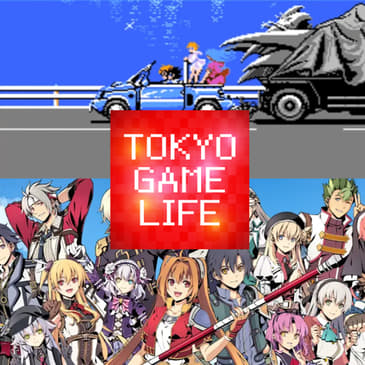
Is Metal Slader Glory the most important game ever? Maybe! Author Lewis Packwood joins as we unravel the incredible history of HAL Laboratory’s Famicom adventure game, Metal Slader Glory. Perhaps the most ambitious Famicom title, its tumultuous development may have led to the creation of the Nintendo we know today! Plus, I take you to beautiful Tachikawa as we hit up its gaming hot spots!
Follow our guest!
Site: https://lewispackwood.com/
Book: https://www.casemateipm.com/9781399073776/curious-video-game-machines/
Social: https://x.com/LewisPackwood
(0:00) - Intro
Games
(0:57) - Metal Slader Glory w/ Lewis Packwood
Feature
(31:43) - Gaming in Tachikawa
News
(41:00) - Nintendo’s big news week
(47:06) - Gaming events in Tokyo
(49:14) - Closing
Social media:
Twitter: https://twitter.com/TokyoGameLife
Instagram: https://www.instagram.com/tokyogamelife/
YouTube: https://www.youtube.com/@tokyogamelife
Threads: https://www.threads.net/@tokyogamelife
Bluesky: https://bsky.app/profile/tokyogamelife.bsky.social
Website: https://tokyogamelife.com/
Like and subscribe on your favorite podcast app!
[00:00:08] Welcome to Tokyo Game Life, a Tokyo-based video game podcast focusing on Nintendo and gaming culture in Japan's capital.
[00:00:15] Your host, Mono, here to bring you a slice of gaming life from Tokyo.
[00:00:19] Today, author Lewis Packwood joins as we chat about Metal Slader Glory, an obscure game from HAL Laboratory that has had a major impact on the company and Nintendo as a whole.
[00:00:28] We dive into the history of this incredibly ambitious Famicom game, its unusual legacy, and how it may have changed the course of Nintendo.
[00:00:36] In the feature section, I take you to the futuristic suburb of Tokyo, Tachikawa, as I chat about the gaming hotspots in the neighborhood.
[00:00:43] Plus, a lot of news that's exciting as it is strange.
[00:00:47] Let's start with the games and Metal Slader Glory with Lewis Packwood.
[00:00:56] Today in the game section, we're going to take a look at a very under-the-radar yet incredibly important game in Nintendo's history, the Japan-only title Metal Slader Glory.
[00:01:05] Joining me to chat all about it is a special guest. So guest, please introduce yourself.
[00:01:08] Hello, I'm Lewis Packwood, and I'm a freelance video game journalist for places like Edge and The Guardian.
[00:01:16] And I also wrote Curious Video Game Machines, which is a book all about rare and unusual consoles.
[00:01:23] Thanks for joining me. This is not a console, but I would say the game we're talking about is rare and unusual.
[00:01:28] And this is an episode I've wanted to do for a long time because it really is a fascinating subject.
[00:01:33] And even among a lot of hardcore Nintendo fans, it's a title I think a lot of people are not aware of, despite it quite having a big impact and kind of a butterfly effect on Nintendo and maybe even the gaming industry as a whole.
[00:01:46] So for those who are unaware, give us the basics. What is Metal Slader Glory?
[00:01:51] Okay, well, I should say I never heard of this game either until relatively recently.
[00:01:57] Gavin Lane is the editor at Nintendo Life. He kind of came to me and said, there's this game Metal Slader Glory.
[00:02:03] I'd really like to write something about it. I don't really have the time. Could you research it and write something for the site?
[00:02:09] And I was like, I've never heard of this game. But the more I looked into it, the more fascinating it was. It's got a really interesting story.
[00:02:18] It's kind of gone down as the game that pushed Hal Laboratory to the edge.
[00:02:24] So those who don't know, Hal Laboratory is a studio that works very closely with Nintendo nowadays.
[00:02:32] And you're probably most well known for Super Smash Brothers and Kirby series, but they've also done Earthbound and loads of other games.
[00:02:40] And essentially, they're kind of almost like a second party for Nintendo.
[00:02:45] There's hardly a glimmer of light between the two companies, but they're not owned by Nintendo.
[00:02:50] It's kind of one of those weird relationships where they work side by side constantly.
[00:02:54] Hal never makes games for anything else except Nintendo consoles, but they're not officially owned by Nintendo.
[00:03:00] And Metal Slade Laurie had a really interesting kind of role in how that partnership kind of came about and how it was kind of like cemented.
[00:03:08] And particularly the career of Satori Iwata, who went on to her head Nintendo after being head of Hal.
[00:03:15] Of course, what it basically is, is that it is a game on the Famicom that came out in 1991.
[00:03:21] So yeah, pretty late in the life of the Famicom.
[00:03:23] But it has, like you said, a very interesting development history.
[00:03:27] And I'm trying to think back about how I heard about it.
[00:03:30] Honestly, I can't even remember.
[00:03:32] I was always a big Hal fan, even as a kid.
[00:03:35] And I'm sure I learned about Metal Slade of Glory through just reading about Hal.
[00:03:38] And considering it had such an unconventional development and release, plus the impact it had on Hal,
[00:03:43] once you learn about the game, it is very hard to forget.
[00:03:46] And this is a game where the history and the background surrounding the game
[00:03:50] is probably a bit more interesting than the game itself.
[00:03:53] So we're going to be talking mostly about that.
[00:03:55] So let's really get into square one, Hal Laboratory.
[00:03:59] I'm an American, so I hope you don't mind me saying Laboratory.
[00:04:01] But now we think of them as like a Kirby factory,
[00:04:04] and they have dozens of classic games under their belt.
[00:04:06] But they have a bit of an unorthodox origin for a video game company.
[00:04:10] What were the early days at Hal like?
[00:04:13] Yeah, so it was basically like a little group of people forming a little software club in a shop,
[00:04:20] you know, a savory department store.
[00:04:21] And this is quite common back in the kind of late 70s and early 80s.
[00:04:25] There's a great book called Japan Soft and Oral History,
[00:04:29] which kind of explains these little coding clubs that popped up in computer shops in Japan.
[00:04:35] Essentially, people who couldn't afford their own computer would go to these shops
[00:04:41] and sit there all day and just code little games and programs on the computers in the shop.
[00:04:46] And they'd get to know other like-minded people who would come in and sit there and tinker around the computers all day.
[00:04:52] And that's exactly what happened here.
[00:04:54] So essentially, Mitsuhiro Ikeda, who was running kind of one of these little computer stores,
[00:05:01] I think it was in a Seibu department store.
[00:05:04] And he ended up going to form Hal Laboratory.
[00:05:08] And Satoru Iwata was very young at the time.
[00:05:11] I think he was still at university.
[00:05:12] He used to go into this shop and kind of form this little computer club.
[00:05:15] And then after he graduated, he ended up working full time,
[00:05:19] being one of their kind of earliest employees.
[00:05:20] I think that was about 1981 or 1982.
[00:05:24] And then Iwata kind of ended up working on loads of their kind of early games.
[00:05:30] Balloon Fight is probably the one he's most famous for.
[00:05:32] Yes.
[00:05:32] And then later on, he ended up becoming the head of development at the studio.
[00:05:36] And of course, they didn't always do Nintendo stuff.
[00:05:40] Right at the beginning, they kind of did personal computer games.
[00:05:43] I think they worked on the Commodore 20 and various other things and the MSX system as well.
[00:05:48] Then pretty soon, they were almost exclusively making Famicom games.
[00:05:52] And in Iwata's book, he talks about how they could see that's the trend.
[00:05:57] That's the way it was going.
[00:05:58] People were gravitating towards the Famicom.
[00:06:01] And then they were responsible for loads of the early Famicom games like Golf.
[00:06:06] I'm trying to think of some of the other ones.
[00:06:07] You can probably name a few more.
[00:06:09] But they weren't quite a lot of them.
[00:06:11] And even started doing third-party publishing.
[00:06:13] They published other games by, I think, Human Entertainment and things like that.
[00:06:18] So everything was going really well.
[00:06:20] And then it all started to go a bit wrong in the late 1980s.
[00:06:25] Iwata, in his book, talks about how they started rushing through development.
[00:06:29] They lost money on the game, so they'd rush through development to put another game out.
[00:06:32] And then that didn't do very well because the quality wasn't quite there.
[00:06:35] And then they'd be in an even bigger hole and it kind of snowballed and snowballed.
[00:06:39] But perhaps one of the biggest things that kind of put them into the red in their bank account was this game Metal Slay the Glory, which was enormous.
[00:06:47] It took four years to make, which is unheard of in the 1980s.
[00:06:51] No games took four years to make in the 1980s.
[00:06:54] Some of them took a matter of months to make.
[00:06:58] So it's phenomenal that it took them this long.
[00:07:01] And by the time the game came out, I think it was 1991, I think you said.
[00:07:06] By that point, the Super NES, the Super Famicom had come out.
[00:07:10] And so everyone was moving on to the 16 bits and they're still kind of...
[00:07:14] This Famicom game came out right at the tail end of everything.
[00:07:18] But yeah, it was a crazy old story.
[00:07:22] The mad thing about it was the guy who made the game.
[00:07:25] You know, he's a talented artist.
[00:07:26] The artist behind it was called Yoshimura Hoshi, who often just goes by the name Yoshimura, who was a little star before it.
[00:07:33] And he was an artist.
[00:07:35] He kind of mostly dealt with manga, but he got into kind of...
[00:07:39] And weirdly, he worked in a lot of model magazines in the early 80s, you know, so making Gundam models and things like that.
[00:07:47] And so he did a lot of artwork for them and worked on those.
[00:07:50] And then he kind of taught himself to do pixel art, but he wasn't really into games.
[00:07:54] He said himself in an interview that, you know, he'd never even played a video game before.
[00:07:59] He kind of started working at one of these magazines.
[00:08:02] But then he kind of got into doing pixel art and then ended up kind of doing some freelance with the HAL, I think on a game called Fire Bam and Goal Force,
[00:08:11] which are Japanese exclusive releases that we never got in the West.
[00:08:17] And he was just doing some amazing artwork one day.
[00:08:19] He kind of thought you'd make a pitch for a game based on his manga that he'd done.
[00:08:26] He'd done a manga.
[00:08:27] It was cancelled in the middle of its run, so it was never finished.
[00:08:32] But the manga was all about a kind of people who discover this robot.
[00:08:37] And then it turns out this robot is kind of like some super duper military robot.
[00:08:41] And then they end up going off planet and going on all these adventures.
[00:08:44] And the game was heavily based kind of around this manga.
[00:08:47] It's not exactly the same story, but quite similar.
[00:08:50] Anyway, he was getting this picture together.
[00:08:52] And apparently he was sitting there working on the graphics to this, ready to present it to Satoru Iwata.
[00:08:58] And then Iwata happened to walk past his desk and then saw these amazing graphics and essentially signed up the game on the spot and said,
[00:09:06] this is amazing.
[00:09:07] I think there was Hoshi kind of quoted him as saying that.
[00:09:10] And when you look at the game, if you've had a chance to look at Metal Slay to Glory, it does look phenomenal.
[00:09:15] I mean, for a Famicom game, it is right up there in terms of graphics.
[00:09:20] Literally, I think, probably say it's the best looking Famicom game I've ever seen.
[00:09:24] I mean, it's mostly static screens.
[00:09:27] It's a visual novel.
[00:09:28] So, you know, it's mostly you get a big, nice picture and then some text underneath.
[00:09:33] And that's pretty much it.
[00:09:34] But it looks brilliant.
[00:09:36] So Famicom is a machine that was kind of well known for very limited kind of color palette and lots of problem with flickering and all these kind of things.
[00:09:44] So the fact that he was able to make these kind of really detailed drawings is nothing short of incredible.
[00:09:51] Of course, it took a long time.
[00:09:53] Right.
[00:09:53] He was a very, very long time.
[00:09:56] I mean, there's something like he spent the first six or eight, nine months just trying to work out how to do all of these things.
[00:10:03] And then there are all sorts of problems along the way of trying to make this very ambitious game work.
[00:10:08] And the final game itself is on something very super duper kind of Famicom chip cartridge.
[00:10:14] Yes.
[00:10:15] It was only used in, I think, a handful of games.
[00:10:18] I think Castlevania III was one of maybe only half a dozen or so games that actually used this fancy chip that essentially gave the Famicom extra processing power that it wouldn't normally have.
[00:10:31] And I think Metal Slade of Glory also ended up being the biggest ever Famicom game in terms of memory.
[00:10:37] I think it used something like one megabyte, which sounds a bit impaltry now.
[00:10:41] You know, I send the emails that are bigger than a megabyte.
[00:10:43] But at the time, you know, that was huge.
[00:10:45] Most games were only a few hundred K.
[00:10:47] So, yes, this enormous, sprawling project.
[00:10:50] You kind of wonder, you know, what was happening at HAL.
[00:10:52] Yoshimura is kind of sitting there working on this game and it's just taking forever and ever.
[00:10:56] And I can imagine Iwato kind of like tearing his hair out going, when's it going to be finished?
[00:11:00] One of the remarkable details was that he wasn't paid.
[00:11:03] In an interview, Yoshimura kind of says, no, they didn't pay me.
[00:11:06] He agreed to work on royalties only.
[00:11:09] So he spent all that four years just living with his parents.
[00:11:12] And presumably his parents were paying for all his millions and things like that.
[00:11:17] Yeah, because he's not an employee.
[00:11:20] He was a freelancer, correct?
[00:11:21] No, no, that's right.
[00:11:23] Exactly.
[00:11:23] And he remained a freelancer the whole time.
[00:11:26] And he said he was working for royalties.
[00:11:29] I very much doubt he ever actually earned any royalties on this game.
[00:11:32] Because when it came out, it was sold in such small numbers that it seems doubtful.
[00:11:38] I can't prove that.
[00:11:39] But I know from my own experience in publishing, you generally have to sell quite a few copies
[00:11:43] before you actually get any money.
[00:11:45] That's true.
[00:11:46] Yeah.
[00:11:46] The Howl of the 80s is very different from the Howl of even the 90s.
[00:11:50] It is a little surreal to go retro game hunting in Japan.
[00:11:53] And when you go over to the MSX section, there's more than a few Howl titles.
[00:11:57] And this was before Kirby, before their iconic dog logo.
[00:12:01] So they were just Howlkin, as they often showed in the game or on the cartridge.
[00:12:06] And had a pretty unmirable logo comparatively to the dog.
[00:12:10] And eventually, yes, like you said, they started to work on mostly just Famicom games.
[00:12:15] Metal Slider Glory really seemed like a very, oh, how did this happen type of project?
[00:12:19] Because like you said, Yoshimura Hoshi, he was an artist.
[00:12:23] And he had no background in game design or game development.
[00:12:26] But he was basically given this project to lead.
[00:12:30] Why do you think this happened?
[00:12:32] Did you think the art was just that spectacular?
[00:12:34] So they thought, okay, he is the one that should take over the project?
[00:12:37] Or was it just an experiment?
[00:12:39] Or like, how did this happen?
[00:12:40] I think if I was Iwata, I would think, well, this is a punt, right?
[00:12:47] This is a risk.
[00:12:48] This person doesn't have any background in game development.
[00:12:51] But they're a really, really good artist.
[00:12:54] And they've got a whole story that they've written.
[00:12:56] And, you know, essentially, this could go.
[00:12:59] And because we're not paying them, the risk is quite low.
[00:13:03] You know, I imagine that kind of Howl would have had to invest some money in the game.
[00:13:08] Certainly.
[00:13:09] And there's, you know, Yoshimura didn't do everything.
[00:13:13] I think he describes, I think it's the music, I think, that someone else did.
[00:13:19] There's certainly some bit.
[00:13:20] And the programming, I think, was one aspect that he couldn't do.
[00:13:23] So he relied on kind of programmers at Howl to kind of like create this vision.
[00:13:28] So there was some kind of money invested.
[00:13:33] But I can imagine, you know, it would have been seen as a fairly low risk kind of project.
[00:13:38] At least in the beginning.
[00:13:39] Perhaps as time went on, they're thinking, actually, is this going to go anywhere?
[00:13:43] Are we going to see a return on any of this money?
[00:13:45] But yeah, it is a bit of a pump, really, to get someone who's never designed a game before,
[00:13:51] never even coded a game before, to kind of put them in charge as a director.
[00:13:55] It's quite unusual.
[00:13:57] I can't think of anything, any other time.
[00:13:59] I can't think of that happening.
[00:14:00] Yeah, I guess maybe the analog would maybe be Masahiro Sakurai, also at Howl, who was very, very young when he was given Kirby's Dream Land.
[00:14:09] So even though he has more of a background in terms of programming and design, he was still, you know, at one point very unproven.
[00:14:16] But Howl entrusted him to make this game.
[00:14:19] So maybe that was just a philosophy at Howl where if they think you can handle it, they'll give you the reins to like an entire game project.
[00:14:26] Yeah, I mean, it's quite refreshing in a way to kind of be able to put, because I think, Pam, you don't often see kind of the younger members of companies being given a role.
[00:14:36] It's very much more of a kind of work your way up to the top kind of working culture quite often.
[00:14:41] So this is quite unusual.
[00:14:43] Yeah, and since Howl's roots are in computers and technology, it does make sense that they would try to push the hardware to the limits to make a technological showpiece type of game.
[00:14:52] And as we mentioned before, it is a classic Japanese style text based adventure game, not too dissimilar from Famicom Detective Club in its presentation, which is another series that I talked about on the podcast.
[00:15:04] But outside of the graphics, were there any ways that Metal Slater Glory stood out compared to similar adventure games at the time?
[00:15:11] Yeah, there were a few innovations.
[00:15:13] I mean, Yoshimiri talked about how the noises of the kind of text, you know, the text kind of scrolls across the screen, you know, is revealed slowly.
[00:15:22] He tried to give different noises for different characters.
[00:15:24] So a male character would have a kind of slightly deeper kind of tone as the text would play out.
[00:15:30] And a female character would have a slightly higher tone, which was quite novel for the time.
[00:15:36] And, you know, usually it would just be kind of a monotone, you know, ba-ba-ba-ba-ba-ba-ba-ba, you hear that, ba-ba-ba-ba-ba-ba-ba-ba-ba, just coming across.
[00:15:43] And it would vary the speed as well of the way the text came out.
[00:15:48] So it would go faster if they were kind of excited or slower, if they were kind of thinking slowly, that kind of thing, which is kind of something we take for granted in visual novels today.
[00:15:57] But it was quite novel.
[00:15:59] But yeah, so there was a few little innovations like that.
[00:16:01] But mostly the innovation was in the graphics, you know, these huge sprites, you know, anyone who's played on the family company, I know that most games feature very tiny sprites.
[00:16:11] You know, the NES had very limited capability for holding sprites.
[00:16:15] So the actual enormity of these pictures and the fact that they use so many different colors was really kind of where the innovation lay.
[00:16:23] I think if this game had come out a bit earlier, it would have caused a big splash.
[00:16:29] Because as you say, the Famicom Detective Club, you know, was out.
[00:16:33] Potopia, Zero Murder Case, you know, all of these visual novels were very much in vogue.
[00:16:37] But I think by the time the Super Famicom had come out, these things were starting to get a bit old hat, possibly.
[00:16:46] And people were looking for the next big thing.
[00:16:48] And that was, you know, 16-bit graphics and all this.
[00:16:50] Yeah, the game seemed very ambitious, both in terms of visuals and gameplay.
[00:16:54] But when you make such an ambitious title, problems arise and Metal Slate of Glory seemed to have quite a troublesome development.
[00:17:00] Like you mentioned before, it took four years to make.
[00:17:03] What were some of the key issues that arose during the development of the game?
[00:17:06] I think partly it was too big.
[00:17:10] Yoshimura kind of wrote this enormous script and he said he had to cut out huge chunks of it to actually make it work.
[00:17:17] In fact, there was a whole kind of prelude to the game that was too big to actually fit in the game.
[00:17:23] So he ended up making a manga that got included in the bot, explaining the events leading up to the kind of title screen.
[00:17:29] You know, when the game opens with the main character kind of finding this robot, which turns out to be a military robot in a cloaking device and things.
[00:17:37] So it's kind of a bit of a cold open.
[00:17:39] Also, I imagine the manga must have been another expense to add on to this game.
[00:17:45] It's not kind of cheap to kind of stick those kind of things in the box.
[00:17:48] But yeah, you had to cut out loads and loads of the script.
[00:17:51] And I think the biggest thing was actually trying to make the graphics work without flickering and actually patiently doing it.
[00:18:00] And there's hundreds of screens in this game.
[00:18:03] There's so many.
[00:18:03] It's quite a long game, relatively speaking.
[00:18:07] I mean, it's a visual novel, so it can only be so long.
[00:18:10] And there's very limited replayability, but it's impressive.
[00:18:13] And like I said, if it had come out a couple of years earlier, three years earlier, I think it would have made a huge splash, much more than it did.
[00:18:20] Yeah, a lot of the issues also seem to be based on the hardware of the actual game cartridge.
[00:18:24] Because like you said, it's not a normal Famicom cart that's like a rectangle.
[00:18:28] I've seen it in real life, and it is this kind of huge purple square that's significantly larger than a typical Famicom cart.
[00:18:35] I would say it's even like two Famicom carts stacked on top of each other.
[00:18:39] And if you find it today in a retro game shop, it is very expensive, about maybe 700 or 800 US dollars.
[00:18:45] So it is quite rare.
[00:18:47] And I think Nintendo also just didn't sell them a whole lot of these carts.
[00:18:51] So they were quite limited in it.
[00:18:53] Even though they have the program, the actual hardware, they couldn't really put it out there on the market.
[00:18:57] That's how the story goes.
[00:18:59] You know, a lot of people have said, oh, you know, they couldn't get enough of these chips, these special chips.
[00:19:03] I think it's called MMC5 is the name of the chip that's in it.
[00:19:06] So they could only produce a limited number of cartridges.
[00:19:09] I don't know what the truth is there.
[00:19:11] Because I don't know whether it was just Hal was reluctant to buy anymore, or whether they couldn't source anymore.
[00:19:17] You know, I could imagine if you were at Hal and you were thinking, well, we've made this game.
[00:19:22] And, you know, this Super Famicom's out now, and it's going to cost loads of money to make these cartridges.
[00:19:28] Are we necessarily going to sell them all?
[00:19:31] I can imagine there might be a bit of reluctance to kind of like go wild and buy loads and loads of these chips with a game that might not necessarily sell that many.
[00:19:40] So I don't know whether it was they couldn't get the chips or they just didn't want to buy them.
[00:19:44] So either way, there's only very limited numbers of this game out there.
[00:19:49] And like you said, it costs a lot to buy now.
[00:19:51] It's quite collectible.
[00:19:52] Yes.
[00:19:53] So the game comes out and it didn't really seem to make a big impact, right?
[00:19:57] No.
[00:19:58] I think it got kind of reasonable review scores.
[00:20:01] I think it was something like 26 out of 40 from Famitsu magazine.
[00:20:05] It was okay.
[00:20:06] Yeah.
[00:20:06] And Hal lost a lot of money on its development, because like we said, it took four years to make, which is pretty fast these days.
[00:20:12] But back in the Famicom days, some games probably took four months, if that, to put out there.
[00:20:17] Is it too reductive to say that this game nearly bankrupted Hal, or were there other factors as well?
[00:20:22] I think you can't blame Hal's financial problems solely on this game.
[00:20:28] Like I said, I'm not sure how much money was invested in it over the years.
[00:20:31] It must have been a fairly small kind of thing on their bank balance.
[00:20:36] I imagine the cost of producing the cartridges.
[00:20:39] I don't know if they made any money on the game.
[00:20:40] I'm sure it almost certainly made a loss.
[00:20:42] But whether that was the sole thing that kind of pushed Hal over the edge, I don't know.
[00:20:47] All we know is that kind of in the early 90s, Hal was facing bankruptcy, and they relied on Nintendo to kind of come and rescue them, essentially.
[00:20:55] Yes.
[00:20:55] As a result of Hal nearly going bankrupt, this is when Nintendo jumps in.
[00:20:59] Can you touch on Nintendo getting more involved with Hal after Metal Slater Glory's release?
[00:21:03] Why did they think it was so important to save this company?
[00:21:06] I think Hal already had quite a close relationship with Nintendo, having produced so many games for the Famicom.
[00:21:15] And I think Iwato in his book kind of talks about how Shigeru Miyamoto and others put in a good word for the company.
[00:21:23] When they were down on their luck, there was a feeling that actually we need to try and save them somehow.
[00:21:29] Again, the details of this are quite scarce, and they're mostly kind of hearsay.
[00:21:34] I think the director of EarthGround said Yamauchi, kind of the head of Nintendo, can put in a good word and said that he wanted Iwato to take over the company if Nintendo agreed to help them out.
[00:21:46] I don't think there's any kind of circumstantial evidence for that or anecdotal evidence for that.
[00:21:52] Certainly Iwato himself wouldn't comment on actually what happened.
[00:21:56] But for whatever reason, Iwato ended up being the head of Hal.
[00:22:00] And then obviously over the years they paid off their debt.
[00:22:04] And we don't know exactly the financial relationship they made with Nintendo.
[00:22:09] Presumably Nintendo helped them out in some way.
[00:22:12] But what happened essentially from then on is that Hal would make games, but Nintendo would market them.
[00:22:19] And that's the relationship that exists to this day.
[00:22:22] Hal still makes games semi-independently, but then Nintendo does all of the marketing and promotion and everything like that and publishes them.
[00:22:31] Yeah, I think it's often summarized as Metal Slater Glory bombed.
[00:22:35] Nintendo made Iwato president to fix everything.
[00:22:37] But Iwato was involved in Metal Slater Glory's development.
[00:22:40] Was that not a mark against him?
[00:22:42] Or do you think he was elevated to company president in spite of that?
[00:22:46] That's a very good point, actually.
[00:22:47] You know, I think when you look back on it, it was a mistake.
[00:22:51] They should never have invested so much money and time.
[00:22:54] So yeah, definitely a black mark in his copybook.
[00:22:58] But maybe all his other work that Nintendo were able to see past that.
[00:23:03] And certainly he had a good reputation with people like Nintendo.
[00:23:06] And let's remember as well, he wasn't the head of Hal at the time.
[00:23:08] And the buck for Hal's financial situation didn't stop with him.
[00:23:12] It stopped with the CEO.
[00:23:15] So in a way, he wasn't responsible.
[00:23:18] So now Iwato is president of Hal.
[00:23:20] And we were getting a bit off the Metal Slater Glory train.
[00:23:22] But were there any immediate changes?
[00:23:24] Or what was the most notable impact from him taking the reins of the company early on?
[00:23:29] Again, in Ask Iwato, he talks a lot about this.
[00:23:32] The first thing he did was he set up meetings with every single employee, which is quite amazing, really.
[00:23:40] Can you imagine the CEO of Apple or something deciding to sit down and talk with every employee?
[00:23:43] The idea that he made time to kind of talk to everyone in the company and find out what their strengths and weaknesses were, what they were interested in, what they thought they could bring, what they thought they could change.
[00:23:54] You know, I think that's a good mark of the kind of person he was.
[00:23:59] But I think also he put his foot down and said, OK, we're going for quality now.
[00:24:03] We're going to make games that sell a million copies.
[00:24:05] You know, we're not going to just shove out any old rubbish and hope it sells.
[00:24:10] We're going to really go for quality.
[00:24:12] And that's exactly what happened, particularly with Kirby and then later with Smash Brothers and Earthbound, of course.
[00:24:20] These are games that even now have stood the test of time and regarded as classics.
[00:24:25] And that was all on Iwato's watch.
[00:24:27] Yes.
[00:24:28] And of course, Hal became more and more renowned as a game developer.
[00:24:31] They released Kirby, Smash Brothers, and had a hand in many other titles as well.
[00:24:34] Like you said, Earthbound.
[00:24:36] And Iwato was then elevated to the president of Nintendo and then everything that stemmed from that.
[00:24:41] So if you really want to be reductive, Nintendo's entire gameplay philosophy, like their focus on unique form factors and not focusing on the tech arms race, stems from Iwato, who became president of Nintendo after he became president of HAL due to Metal Slater Glory nearly bankrupting the company.
[00:24:59] So is Metal Slater Glory the most important game ever?
[00:25:02] Let's just say yes.
[00:25:03] But I have to caveat that by saying we don't know how much of an impact it had on Bottom Line.
[00:25:09] We don't have those figures to show how much of a loss it made and how much of it was involved in that.
[00:25:16] It certainly had a role.
[00:25:17] Whether it was the main role, we don't know.
[00:25:19] But it's interesting as well, me and back.
[00:25:21] Iwato took a chance on Yoshimura saying, I'm going to put you in charge of this game because I like what you've made.
[00:25:27] You didn't have the experience of making games, but I'm just going to take a chance on you anyway.
[00:25:32] And I think maybe tenuously you could link that right through to the DS and Wii years when it's like, okay, let's try something different.
[00:25:39] Let's not chase the kind of power and chase after Sony and Microsoft.
[00:25:44] Let's do our own thing.
[00:25:45] We'll try a different approach.
[00:25:47] And in Metal Slater Glory, it didn't pay off.
[00:25:50] But it most definitely did with the DS and Wii.
[00:25:53] Yeah, it is fun to think that this really obscure Japan-only game that wasn't even really popular in Japan somehow managed to accidentally affect the greater gaming landscape.
[00:26:03] But Metal Slater Glory was not forgotten because, believe it or not, listeners, they remade the game for the Super Famicom called Metal Slater Glory Director's Cut.
[00:26:11] Can you give us some details on how this version is different and why did they decide to remake one of their most notorious bombs?
[00:26:18] It's quite funny, isn't it?
[00:26:19] It's bizarre to think that this game came out.
[00:26:21] But there's some weird parallels as well because Metal Slater Glory Director's Cut was also one of the last ever games released for the Super Famicom, just like Metal Slater Glory was one of the last games for the Famicom before it.
[00:26:33] And it was weirdly only made available, well, I think there was a very limited number of actual physical cartridges that were made.
[00:26:39] It was mostly made available through this kind of download service in Japan where you would take a kind of blank cartridge into it and then stick it in a machine and then download the game onto it.
[00:26:49] And this was the very last officially released Super Famicom title that was made available for that service.
[00:26:56] The Director's Cut, I mean, it's got a graphical boost because it's on the Super NES, it's on the 16-bit system.
[00:27:02] But it also reinstates a few things that were cut from the original.
[00:27:06] I think mostly slightly creepy things.
[00:27:10] I think there's a shower scene that was reinstated.
[00:27:12] But this version only exists in Japanese at the moment.
[00:27:16] And the original version, there's been a fantastic fan translation done for the original Famicom version, which you can find if you search on the internet.
[00:27:24] But the Director's Cut, I don't think, has been localised.
[00:27:27] So it only exists in Japanese at the moment.
[00:27:31] The original intention was to actually, before they did the Director's Cut, there was a plan to make a game for the N64.
[00:27:38] Bizarrely.
[00:27:39] So it would have been a kind of almost prequel to Metal State of Glory.
[00:27:43] But they quickly shelved that audio and just did a Director's Cut instead.
[00:27:46] Not quite sure why they made that decision.
[00:27:47] Maybe they realised they didn't want to go through this whole thing again of making some elaborate game.
[00:27:52] They probably wouldn't have come out until the GameCube was released.
[00:27:55] Yeah.
[00:27:56] And it was released in Japan in November of 2000.
[00:27:59] So Japanese gamers had their choice of Metal State of Glory on the Super Famicom or they could play the PS2.
[00:28:06] So they had quite a lot of options.
[00:28:08] And like the Famicom game, would you say it graphically really pushed the Super Famicom hardware?
[00:28:12] Or do you think it didn't stand out as much compared to the Famicom version?
[00:28:15] I don't think it necessarily stood out as much.
[00:28:19] It looks lovely.
[00:28:20] It still looks great.
[00:28:22] It's a great artwork.
[00:28:23] But when you consider Super Famicom games and how much they evolved over the course of the system's life,
[00:28:31] particularly with Super FX chip and the things that people were making the Super NES do or Super Famicom do,
[00:28:37] I don't think it really holds up against that.
[00:28:40] Whereas Metal State of Glory, if you compare it to what was going on at the Famicom at the time,
[00:28:45] it really was leagues ahead in terms of what it was able to achieve.
[00:28:49] Right.
[00:28:50] And Metal State of Glory did actually get re-released on the Wii in 2007 and the Wii U in 2015.
[00:28:56] The Wii release was just a Famicom game, while the Wii U got both the Famicom and Super Famicom versions.
[00:29:03] Do you think this is ever going to hit Nintendo Switch Online?
[00:29:06] There's a good chance, isn't there?
[00:29:08] I mean, Nintendo just made a new Famicom Detective Club game, which no one saw coming.
[00:29:13] So clearly, there are people who are within Nintendo who are big fans of these old visual novels and these kind of classic titles.
[00:29:22] So it wouldn't surprise me if Metal State of Glory was sneaked out onto the Switch at some point in the near future.
[00:29:28] I think there's a very high chance of that happening.
[00:29:31] Yeah, it really does feel like a random game they could just add to the service at any time.
[00:29:35] I don't think it's going to be released worldwide, but I can see just a random tweet in Japanese saying,
[00:29:41] Metal State of Glory is now on NSO any day now.
[00:29:43] And we are recording this a bit early.
[00:29:46] So by the time this episode comes out, it could be playable on NSO right now.
[00:29:50] You never know.
[00:29:50] So we're almost done with the episode.
[00:29:52] And typically, when I talk about an obscure Nintendo game on the podcast,
[00:29:55] I like to fantasize about a potential Smash character.
[00:29:59] And ironically, despite how creating Smash Brothers and there being hundreds of obscure games and franchises represented,
[00:30:06] there is absolutely zero representation for Metal State of Glory in Smash Brothers, not even a spirit.
[00:30:13] So let's fix this.
[00:30:14] Do you have any suggestions for a playable Smash character from Metal State of Glory?
[00:30:19] Well, you definitely have to have the Metal Slade, don't you?
[00:30:22] I mean, it's a fantastic looking thing.
[00:30:24] The Metal Slade is the name of the kind of military robot that is kind of at the center of the plot.
[00:30:29] And it's got a cloaking device.
[00:30:31] We know that.
[00:30:32] So we could potentially cloak.
[00:30:34] It's got lots of weapons and guns and things like that.
[00:30:38] And it would be wonderful if kind of the pilots could pop out and kind of like do little specials or maybe throw some speech bots at the opponents.
[00:30:48] That would be quite fun.
[00:30:49] So, yeah, I think that's definitely...
[00:30:51] I mean, there was even a Gachapon toy based on Metal Slade, a little Metal Slade Gachapon toy, a few years back.
[00:30:58] So I think that clearly someone still likes this design.
[00:31:02] It is quite cool.
[00:31:03] Well, that was our look at Metal Slade or Glory, a game that not a lot of people have touched.
[00:31:07] But as an Nintendo fan, you've certainly felt its influence.
[00:31:11] So, Lewis Packwood, where can people find you?
[00:31:14] Well, you can look me up at lewispackwood.com and you can see all the articles I've written there for all the different things.
[00:31:19] And you can also find my book, Curious Video Game Machines, which is published by White Owl and is available in all good bookshops now.
[00:31:28] Awesome.
[00:31:29] And the links to everything will be in the podcast description.
[00:31:31] So listeners, please check it out.
[00:31:33] Lewis Packwood, once again, thanks for joining me.
[00:31:35] Thank you.
[00:31:43] Today's feature is Gaming in Tachikawa, which is a city in the greater Tokyo,
[00:31:46] but a bit west of the 23 wards of Tokyo.
[00:31:50] So it's technically its own city, but is part of Tokyo, but not part of the main wards of Tokyo.
[00:31:57] Listen, it's super complicated.
[00:31:58] Tokyo is kind of its own state and it even has a special word in Japanese for it.
[00:32:03] So what is and what isn't Tokyo can be a bit blurry.
[00:32:06] I will say that Saitama and Chiba, not Tokyo.
[00:32:09] Sorry.
[00:32:10] Those are great places, though.
[00:32:11] No hate.
[00:32:12] I've been to Tachikawa a few times,
[00:32:13] not because it's some typical gaming hotspot like Akihabara,
[00:32:17] but there is a lot of non-gaming things to do there.
[00:32:19] It has a huge park, Showa Memorial Park,
[00:32:22] that I would argue is probably the best in Tokyo,
[00:32:24] or at least the biggest.
[00:32:25] If you need a huge green area to run around in, this is it.
[00:32:29] Tachikawa is also famous for its futuristic-looking monorail.
[00:32:32] It's numerous trendy shops.
[00:32:33] There's a polar science museum.
[00:32:35] It's an easy place to kill some time on a lazy Sunday.
[00:32:37] And a lot of it is very walkable from the station,
[00:32:40] including pretty much everything I'm going to talk about today.
[00:32:43] A lot of the gaming elements of the city might be a bit hidden if you're not in the know,
[00:32:46] but it actually has a pretty strong connection to the Japanese gaming scene,
[00:32:49] and there are plenty of shops and other areas of interest to check out if you're into video games.
[00:32:54] Now, what is Tachikawa's strongest connection to the Japanese gaming scene?
[00:32:58] Well, it's home of Nihon Falcom,
[00:33:00] a prominent Japanese developer known for the Ease and Trails series.
[00:33:04] Honestly, I'm not some sort of Falcom expert.
[00:33:06] They are one of those companies that I respect since they've been around so long,
[00:33:09] but I've barely touched any of their games.
[00:33:11] But hey, that Trails 1 remake is next year, so now's my chance.
[00:33:16] Now, are there actual Falcom-related things to see and do in Tachikawa?
[00:33:19] Actually, yes.
[00:33:21] There are occasionally some Falcom-related events in Tachikawa.
[00:33:24] You could also go see their building, which is pretty close to Tachikawa Station.
[00:33:27] But yeah, you can't go inside or do a tour or anything like that.
[00:33:31] People are working there, after all.
[00:33:32] But you can take a picture of their sign if you want.
[00:33:35] Also, I didn't see this with my own eyes,
[00:33:37] but apparently the Kotobukiya shop, which specializes in figures,
[00:33:40] has a special Falcom area at their Tachikawa location.
[00:33:44] I actually did see this shop from the outside, but thought,
[00:33:47] nah, I don't need to go in.
[00:33:48] Turns out that was a horrible mistake,
[00:33:50] because I did want to see the Falcom area.
[00:33:52] I guess this would be the closest thing to an official Falcom shop,
[00:33:55] if you're really into those games.
[00:33:56] So this is likely the best place to get merch.
[00:33:58] In terms of past events, in 2022 and 2023,
[00:34:02] there was the Tachikawa Onikon event, hosted by Falcom.
[00:34:05] This features a digital stamp rally with prizes,
[00:34:07] and some shops will give out Falcom-related merch if you spend enough money.
[00:34:11] Last year's event focused on Ys X and the previous Ys games,
[00:34:14] while the 2022 event was promoting Trails from Zero.
[00:34:17] Also around the station and the main shopping area,
[00:34:19] there are huge banners advertising the event.
[00:34:21] So it is a little surreal to see flag-flying characters
[00:34:24] from a fairly obscure JRPG series just hanging on the lampposts.
[00:34:28] But hey, that's Japan.
[00:34:29] Even the most niche thing gets its day in the sun.
[00:34:32] I actually don't know if there is an Anaconda event for 2024.
[00:34:34] I haven't seen anything about it.
[00:34:36] The last two were in September, so maybe they aren't doing it this year,
[00:34:39] but that is a bit odd, since even before Falcom hosted it,
[00:34:42] it was a pretty popular event in the area.
[00:34:44] But not sure what happened this time.
[00:34:46] So the Falcom connection is the biggest thing here,
[00:34:49] but even if you aren't into those games,
[00:34:50] there are a few shopping areas to check out.
[00:34:52] Of course, it has a pretty big Bic camera.
[00:34:55] And inside one of the elevators, I didn't see some special Falcom art.
[00:34:59] Maybe it is exclusive to this Bic camera.
[00:35:01] I would think it would have to be, right?
[00:35:03] The shop also had a huge DQ3 display right outside the store
[00:35:06] with many standees that looked very nice.
[00:35:08] Don't worry, I am totally talking about that game on the podcast soon.
[00:35:11] The inside of the store is pretty large,
[00:35:13] including a massive wall of amiibos.
[00:35:15] I feel like a lot of stores have a ton of amiibos,
[00:35:18] and there are definitely a few different strategies when it comes to displaying them.
[00:35:21] Do you just make a big wall of the amiibos,
[00:35:23] or line them up on top of each aisle,
[00:35:25] or try to put relevant ones next to the games?
[00:35:28] You've got a lot of options here,
[00:35:30] but I am always in awe at the sheer power of a wall made of amiibos.
[00:35:34] The plushy section is kind of tucked in its own little square area,
[00:35:37] which also had a huge display for Luigi's Mansion 2.
[00:35:40] And this Bic camera also has one of my favorite display ideas,
[00:35:44] TVs with cardboard decorations around it,
[00:35:46] to make it look like a giant Nintendo Switch.
[00:35:48] Not too far from Bic camera in Takashimaya is Doko Doko,
[00:35:52] a jungle-themed children's play area.
[00:35:54] What does that have to do with video games?
[00:35:56] Technically nothing,
[00:35:57] but it is run by Bandai Namco,
[00:35:59] and they proudly feature their stale logo front and center.
[00:36:03] They're more than just video games,
[00:36:04] more than just toys.
[00:36:05] They actually do run a lot of amusement areas,
[00:36:08] I guess, here in Tokyo.
[00:36:10] It's not technically a theme park,
[00:36:12] just fun activities you can do.
[00:36:14] Bandai Namco recently opened up one called Versus Park in Yokohama,
[00:36:17] and just from the outside,
[00:36:18] this place looks crazy,
[00:36:20] and if I ever get to check it out,
[00:36:21] I might cover it on the podcast,
[00:36:22] because it does feel like a strange evolution of an arcade.
[00:36:26] Around the main shopping area is also a Tsurugaya,
[00:36:28] a used goods shop I talked about before on the podcast.
[00:36:30] I mostly talked about the Shinjuku,
[00:36:32] Akihabara,
[00:36:33] and Yokohama locations on that past episode,
[00:36:35] but the Tachikawa spot is actually very good.
[00:36:38] It's somewhat hidden,
[00:36:39] tucked on the third floor of a fairly small department store
[00:36:42] that would be an easy skip unless you knew it was there.
[00:36:44] But it's absolutely worth checking out if you are into retro games,
[00:36:47] since it has a very solid stock,
[00:36:49] albeit the prices can be a bit wonky,
[00:36:51] depending on what you want.
[00:36:52] First thing I noticed was a display case filled with retro Pokemon cards.
[00:36:55] I'm talking pre-made decks and special bundles from the Johto days in great condition.
[00:37:00] Yes, they are hundreds of dollars,
[00:37:02] but looking is enough for me.
[00:37:04] The game section is pretty thorough,
[00:37:05] with your typical Famicom, Super Famicom, PS1 games, and so on,
[00:37:09] but they also carry a lot of obscure stuff like Wonderswan games,
[00:37:12] and obscure for Japanese folks,
[00:37:14] OG Xbox titles.
[00:37:16] I bumped into a copy of Marvel vs. Capcom 2 on Xbox for about $25,
[00:37:21] which is maybe a good price?
[00:37:23] The cover is quite awesome, I have to admit,
[00:37:25] and owning a Japanese version of the Xbox version of MVC2,
[00:37:29] this has to be the lowest selling MVC2 SKU, right?
[00:37:33] And looking at my photos from my June visit,
[00:37:35] I took a few photos of Starfy games,
[00:37:37] so yes, I was definitely starving for Starfy these past few months,
[00:37:40] so thank you NSO.
[00:37:42] This Tsurugaya also has a pretty impressive amount of retro special editions in giant boxes.
[00:37:46] I found a Love Hina Dreamcast game in an absolutely massive box for 2200 yen.
[00:37:52] You would think these special editions would be much more expensive,
[00:37:55] but honestly, they are so huge that it is hard to display them in Japan,
[00:37:58] so the prices are lower than you'd expect.
[00:38:00] I wondered what could be in such a huge box,
[00:38:03] and apparently it comes with a plushie and a hot spring bucket.
[00:38:06] I also found two separate special edition versions of Sakura Wars Online,
[00:38:10] which also came in their own huge box.
[00:38:13] Also bumped into Crystal Chronicles bundled with the connector cables,
[00:38:16] Family Fishing on Wii with a fishing rod peripheral,
[00:38:19] WePlay Plus with the remote,
[00:38:21] Gun Bullet with a Gun Con.
[00:38:22] If you're looking for something weird and huge to pick up,
[00:38:25] Tsurugaya and Tachikawa has your back.
[00:38:27] There are also quite a few glass display areas with fairly rare stuff like old Neo Geocards,
[00:38:31] but come on,
[00:38:33] we've really gotten to the point where Pokemon games need to be behind glass.
[00:38:36] And at around $100,
[00:38:38] my biggest regret is not buying every single boxed copy of Pokemon I could find
[00:38:42] when I moved to Japan years ago.
[00:38:44] I would be a millionaire if I flipped them.
[00:38:46] If you're still hungry for retro games,
[00:38:48] Tachikawa also has a pretty large book off.
[00:38:50] For whatever reason,
[00:38:51] I saw a really big Slitterhead poster on display here,
[00:38:53] which is the only Slitterhead advertising I've ever seen in Japan.
[00:38:56] Going back to Pokemon,
[00:38:57] they actually had a Pokemon display section behind glass,
[00:39:00] and it's hard to say the games are even more expensive than Tsurugaya.
[00:39:03] I do give them points for the case layout.
[00:39:05] It does look nice,
[00:39:06] and they even put some minifigures in there to spruce things up.
[00:39:09] But no,
[00:39:10] I'm not paying 11,000 yen for Pokemon Red in box.
[00:39:14] All right,
[00:39:14] so a lot of places have book offs,
[00:39:15] but if you want something a bit more under the radar,
[00:39:17] you want to check out PAL,
[00:39:19] P-A-O.
[00:39:20] They only sell new games,
[00:39:21] but it is a very cool shop to browse because they have excellent decorations.
[00:39:24] It's a chain of stores in Tokyo,
[00:39:26] but most of the shops are quite far away,
[00:39:28] like in Hachioji.
[00:39:30] So this is probably the most accessible for people who live in the main city.
[00:39:34] PAL is actually two shops,
[00:39:36] one specializing in cards,
[00:39:37] and one in video games.
[00:39:39] Sad to say the video game shop is much,
[00:39:41] much smaller and less popular than the card one.
[00:39:43] When I visited,
[00:39:44] the card shop was crowded,
[00:39:45] and they had tons of people playing in the play area.
[00:39:47] But I was more interested in the game store,
[00:39:49] and while it is fairly quaint compared to something like Bit Camera,
[00:39:52] I do love all the excellent handmade display signs posted around the area.
[00:39:56] There was one for Splatoon 3 side order,
[00:39:58] which was handwritten with printed out photos glued onto the paper.
[00:40:01] The Momotaro Dintetsu sign was shaped like a peach.
[00:40:03] The Power Pros area had pictures of Shohei Otani in Koshien Stadium.
[00:40:07] And for whatever reason,
[00:40:08] there were a bunch of giant Pikmin cutouts everywhere.
[00:40:10] It has a great mom and pop shop feel to it.
[00:40:13] Also,
[00:40:13] the shop hosts game events.
[00:40:15] When I went there,
[00:40:16] they were advertising tournaments for pro baseball spirits
[00:40:18] and the most competitive game ever,
[00:40:20] Super Mario Party Jamboree.
[00:40:22] I do love how casual-focused these events are.
[00:40:24] They seemed very welcoming for newcomers and families.
[00:40:27] It's not just Tekken tournaments or whatever.
[00:40:29] So, Tachikawa,
[00:40:31] Akihabara,
[00:40:31] it ain't.
[00:40:32] It's not really tourist-focused at all.
[00:40:34] It definitely feels like the vibe of a commuter town
[00:40:36] for people who work in the city,
[00:40:37] and visitors are mostly other Tokyoites
[00:40:39] who want to kill an afternoon.
[00:40:41] But there are quite a few spots worth checking out
[00:40:43] if you love gaming and you're in the area.
[00:40:45] The Tsurugai is a pretty top-tier spot
[00:40:47] for retro game hunting in Tokyo.
[00:40:48] And if you're a Falcom head,
[00:40:50] this is their home base.
[00:40:51] All right,
[00:40:52] that's it for the feature.
[00:40:53] Now for some news.
[00:41:00] This is one of the crazier news weeks in a while.
[00:41:03] Nintendo had big announcement after big announcement.
[00:41:05] Were any of them Switch 2?
[00:41:07] No,
[00:41:07] of course not.
[00:41:08] See you next year.
[00:41:09] But there were still a lot of exciting new things to talk about.
[00:41:12] First off the bat is Animal Crossing Pocket Camp Complete,
[00:41:15] the offline version of Animal Crossing Pocket Camp,
[00:41:17] which was announced to be shutting down earlier this year.
[00:41:20] At that time,
[00:41:20] Nintendo did say they would replace it with a paid offline version.
[00:41:23] And this is it.
[00:41:24] I'm not too up on mobile gaming,
[00:41:26] but it is an interesting solution to the ethereal nature of mobile games.
[00:41:29] There are many mobile titles from big publishers like Ubisoft,
[00:41:32] EA,
[00:41:33] Capcom,
[00:41:33] Sega,
[00:41:34] that you just can't play today.
[00:41:36] Either because it's not compatible with new devices,
[00:41:38] or they just stopped supporting it.
[00:41:40] Now there might come a day where Pocket Camp Complete can't run on modern devices,
[00:41:43] but at least for now,
[00:41:45] it's a pretty good band-aid.
[00:41:46] It comes with all the content through the lifespan of the game,
[00:41:49] which was about seven years,
[00:41:50] so some good innings there.
[00:41:52] And you can buy it with a one-time payment of $19.99 or $9.99 if you get it before
[00:41:56] it launches on December 3rd.
[00:41:58] I played it for a few days when Nintendo Games on mobile was still a novel concept,
[00:42:01] and yes,
[00:42:02] it's alright for what it is.
[00:42:04] It's always surreal to see how elaborate the updates were compared to New Horizons,
[00:42:07] so I do wonder how much of Pocket Camp will bleed into the new Switch 2 Animal Crossing.
[00:42:12] Maybe they should be borrowing more than not.
[00:42:14] I also wonder if there's a way to port this to a home console.
[00:42:18] I don't think Nintendo wants to oversaturate the market when it comes to Animal Crossing
[00:42:21] games.
[00:42:21] They want a new release to be a big system mover,
[00:42:24] but launching Pocket Camp Complete during a slow span of Switch or Switch 2 could pay off.
[00:42:28] Oh, and speaking of mobile games,
[00:42:30] Pokemon TGC Pocket came out,
[00:42:32] and yes,
[00:42:32] I am playing it a ton,
[00:42:33] but I will probably wait a bit before I talk about it on the podcast.
[00:42:37] I kind of want to see the progression of the updates before I get my full thoughts on the game,
[00:42:41] but I am having a lot of fun with it,
[00:42:43] at least right now.
[00:42:44] Also,
[00:42:44] Nintendo announced Shadow Man and Turok 2 is now available on Nintendo Switch Online.
[00:42:49] I think I'm a bit behind on NSO announcements on the podcast,
[00:42:52] but Benjo Tui also came out a few days ago.
[00:42:55] So expansion pack owners are feasting right now.
[00:42:57] Feasting on Shadow Man.
[00:42:59] Feasting on old games I kind of don't want to play.
[00:43:02] Shadow Man and Turok 2 do have remastered versions you can buy right now on Switch,
[00:43:06] but if you just want to fiddle around with it,
[00:43:08] they are on NSO.
[00:43:09] Specifically,
[00:43:10] the completely separate M-rated app.
[00:43:12] And they're going to add the secret M-rated version of Donkey Kong 64 to that thing any day now.
[00:43:17] The next day,
[00:43:18] the Nintendo comes out with a real haymaker,
[00:43:21] Xenoblade Chronicles X Defensive Edition,
[00:43:23] a new remaster of 2015's Xenoblade Chronicles X on the Wii U.
[00:43:27] Remember the Wii U?
[00:43:28] It's back again for perhaps the last time.
[00:43:31] This is actually the only Xenoblade game I've ever played.
[00:43:34] I did enjoy it quite a lot,
[00:43:35] put dozens of hours into it,
[00:43:37] but ironically I never beat it.
[00:43:38] And maybe I'm alone in this,
[00:43:40] but I thought the gameplay outside of the mech
[00:43:41] was a lot more fun than actually using the mech.
[00:43:44] It is a very fun game that's quite unique in a lot of ways,
[00:43:46] and perhaps one of the most requested Wii U ports.
[00:43:49] The Defensive Edition has new character models
[00:43:51] that are more in line with the ones from the Xenoblade 1 remaster,
[00:43:54] and there will be new story content as well.
[00:43:57] But this is a game that was already pretty huge,
[00:43:59] so they didn't really need to add anything to the content front.
[00:44:02] It's already, what, an 80-hour game?
[00:44:05] Not enough content was never a criticism of the game.
[00:44:07] It did switch on March 20th,
[00:44:09] so this is the latest announced Switch game
[00:44:11] with a hard release date, dethroning Donkey Kong.
[00:44:14] We are still missing a February game,
[00:44:16] so I wonder if we will get another random announcement soon,
[00:44:18] or do we just need to wait for a direct?
[00:44:20] And hey, Nintendo wasn't done just yet,
[00:44:22] as they also revealed Nintendo Music,
[00:44:25] a new app for NSO subscribers
[00:44:26] that you can download on your phone.
[00:44:28] It's, well, it's basically a clone of Spotify and YouTube Music,
[00:44:32] but with Nintendo tracks.
[00:44:34] This is something people have wanted for a long time,
[00:44:37] though actually, people have specifically requested,
[00:44:39] hey Nintendo, put your music on Spotify or iTunes.
[00:44:43] But in pure Nintendo fashion,
[00:44:44] they did what everyone wanted,
[00:44:46] but in their own way.
[00:44:48] I've been messing around with the app,
[00:44:49] and yeah, it's exactly what you would expect a music app to be like.
[00:44:52] But there are some fun, charming Nintendo touches,
[00:44:54] like being able to filter through characters.
[00:44:56] Someone at Nintendo took the time to make a Wiggler playlist
[00:44:59] with five songs for you to jam out to.
[00:45:00] They also have pages for each individual fictional band in Splatoon,
[00:45:04] and yes, KK Slider has multiple pages
[00:45:06] for its acoustic and vocal performances,
[00:45:08] and every song has unique album art.
[00:45:11] I do love how they kind of treat the in-game musicians as real artists.
[00:45:14] You can also filter by each game,
[00:45:16] and within a game you can search through playlists
[00:45:18] like boss battles or overworld music.
[00:45:20] It also has an extended play option,
[00:45:21] so you can just listen to the Pikmin 4 menu theme
[00:45:24] for an hour while you study.
[00:45:25] Overall, I am very impressed with the app
[00:45:27] and the thought put into it.
[00:45:28] Now, how is this better than a YouTube playlist
[00:45:30] or just uploading all their music to Spotify?
[00:45:33] Well, for one, you can filter by Wiggler songs.
[00:45:36] Otherwise, yeah, people have had many, many options
[00:45:38] to listen to Nintendo music on their phone for a decade now.
[00:45:41] They do seem dedicated to uploading a lot of music to it,
[00:45:44] as Super Mario Bros.'s Wonder Tracks were added a day after launch,
[00:45:47] and it seems like they will be adding more every week.
[00:45:49] I definitely want some deep cuts and obscure titles,
[00:45:52] or maybe even unreleased tracks.
[00:45:54] I think having some songs quote-unquote debut on Nintendo music
[00:45:58] would be a great way to drive interest.
[00:46:00] But again, the purpose of this app is to get more NSO subscribers.
[00:46:04] And this is a pretty enticing way to do that.
[00:46:06] At first, you basically just pay to play online,
[00:46:08] and that's enough for me,
[00:46:09] because I want to play Splatoon 3 online,
[00:46:11] so they kind of got me there.
[00:46:13] But there has been an arms race in terms of how publishers
[00:46:16] can offer interesting content for subscribers,
[00:46:18] and just gaining online gameplay isn't enough anymore.
[00:46:21] I have to imagine NSO still has a lot of room to grow.
[00:46:24] How many people are subscribed to NSO, for example?
[00:46:27] And comparatively,
[00:46:28] do you think there are more PSN or NSO subscribers?
[00:46:32] PSN is a massive moneymaker for Sony,
[00:46:34] and Nintendo is definitely trying to make it
[00:46:36] one of their major revenue streams.
[00:46:38] I do think it's interesting that they are now offering
[00:46:40] something that you can interact with
[00:46:41] when you are not playing games.
[00:46:43] Like, PSN gives you what for bonuses?
[00:46:46] Online gameplay?
[00:46:47] Sometimes free games?
[00:46:48] Sometimes exclusive digital content?
[00:46:51] But all of these are things that require you
[00:46:53] to be sitting in front of your PS5.
[00:46:55] With Nintendo Music,
[00:46:56] Nintendo is now letting you get something
[00:46:57] out of your NSO subscription
[00:46:58] while you are not even playing a game.
[00:47:00] It's a very interesting strategy,
[00:47:01] and I'm excited to see what Nintendo does for this app
[00:47:03] or other possible NSO benefits.
[00:47:06] Some happy things in Tokyo right now.
[00:47:07] We've got a few big events.
[00:47:08] Clothing Brands,
[00:47:09] Zizzle Town is having its second Splatoon 3 collab
[00:47:11] right now in Harajuku.
[00:47:13] There is a pop-up shop themed after the hub in the game,
[00:47:15] and they sell real versions of gear from the game.
[00:47:18] I visited it yesterday,
[00:47:19] and while it has a good atmosphere,
[00:47:21] the first shop was way better.
[00:47:22] It was more spacious,
[00:47:24] had more of the iconic gear for sale,
[00:47:25] and there were more photo spots.
[00:47:27] But this one was slightly easier to get into,
[00:47:29] and there are still some fun things to see.
[00:47:31] Another big event is Pokemon Kougei,
[00:47:33] an exhibit showcasing Japanese crafts
[00:47:35] but with a Pokemon theme.
[00:47:36] These incredibly elaborate handicrafts
[00:47:38] are from over a dozen Japanese artists,
[00:47:40] and they are now on display at Azabudai Hills
[00:47:42] in Toranomon until February 2nd,
[00:47:44] so you've got plenty of time if you're in Tokyo.
[00:47:47] You do need to buy a ticket ahead of time,
[00:47:49] but it's nothing too crazy
[00:47:50] like needing to reserve a month ahead.
[00:47:52] I'm going to it soon,
[00:47:53] and I'll definitely feature it on the podcast,
[00:47:55] so look forward to that.
[00:47:56] Other pop-up shops,
[00:47:57] Shibuya Parko will host a
[00:47:58] Nojia 5th Anniversary pop-up shop
[00:48:00] from November 29th.
[00:48:02] Nojia is a popular Japanese indie game
[00:48:04] that someone described to me
[00:48:05] as a single-player Among Us.
[00:48:07] I haven't tried it yet,
[00:48:08] it's one of those perennial
[00:48:09] on-my-wishlist types of games,
[00:48:11] but I will play it one day.
[00:48:12] Or,
[00:48:13] I can just swing by the pop-up shop.
[00:48:15] That's the same as playing it, right?
[00:48:16] In terms of new merch,
[00:48:17] there are some clear acrylic Pikmin keychains
[00:48:19] coming to gacha machines
[00:48:20] near you on November 17th.
[00:48:22] There's been a big Pikmin merch push recently.
[00:48:25] Family Mart has a Pikmin collab right now,
[00:48:27] and there's also a new
[00:48:28] Ichiban Kuji Pikmin raffle
[00:48:29] happening at Family Mart,
[00:48:30] where the big prices are
[00:48:32] an Ochi cushion
[00:48:32] and an onion light.
[00:48:34] I'm curious about
[00:48:35] how much Pikmin merch
[00:48:37] is actually being sold.
[00:48:38] Pikmin is bigger in Japan
[00:48:39] than elsewhere,
[00:48:40] but Pikmin 4 has maybe
[00:48:41] inched its way to
[00:48:42] 4 million copies worldwide.
[00:48:44] But you'd think it would be
[00:48:45] Pokemon tier
[00:48:45] with just how much new
[00:48:46] Pikmin merch there is
[00:48:47] all the time.
[00:48:48] The ultimate piece of Pikmin merch
[00:48:50] I want?
[00:48:51] I love a model of the SS Drake.
[00:48:53] That's my favorite piece
[00:48:53] of Pikmin tech in the series.
[00:48:55] And coming to a clawcatcher near you
[00:48:57] is a cool-looking model of Link
[00:48:58] from Tears of the Kingdom
[00:48:59] that mimics his appearance
[00:49:00] on the cover.
[00:49:01] So he's crouching down
[00:49:03] on the ruins in the sky.
[00:49:04] It looks really nice,
[00:49:05] but I have to think
[00:49:06] that the figure section of arcades
[00:49:07] are way harder
[00:49:08] than the plushie section.
[00:49:10] But I should try it once, right?
[00:49:12] Just once.
[00:49:13] You never know.
[00:49:14] Alright, let's wrap it up.
[00:49:15] Thanks as always for listening.
[00:49:16] Be sure to like and subscribe
[00:49:18] to this podcast
[00:49:18] on your favorite app.
[00:49:19] Leave a 5-star review as well.
[00:49:20] It really helps.
[00:49:21] This podcast is also available
[00:49:23] on YouTube,
[00:49:23] so like and subscribe there as well.
[00:49:25] I'm on Twitter,
[00:49:26] Threads,
[00:49:26] Blue Sky,
[00:49:27] Instagram.
[00:49:27] Just search for
[00:49:28] Tokyo Game Life
[00:49:29] or find the links
[00:49:30] in the podcast description.
[00:49:31] If you like the podcast,
[00:49:32] be sure to share it
[00:49:33] with your friend
[00:49:33] and on social media.
[00:49:35] If there's anything
[00:49:36] you want me to talk about
[00:49:36] or cover,
[00:49:37] feel free to message me.
[00:49:38] The next episode
[00:49:39] will be on November 17th.
[00:49:40] See you next time.
[00:49:41] Mata day!
[00:49:42] Okay.